YEREVAN (Realist English). On April 24, 2026, the Armenian people marked the 111th anniversary of the Armenian Genocide in the Ottoman Empire. This day of mourning and remembrance, uniting millions of people around the world, annually recalls the tragedy of 1.5 million victims and the need to preserve historical truth.
The events of 1915 became the first genocide of the 20th century, and Armenia, together with the Armenian diaspora, continue to seek its international recognition, which is still denied by modern Turkey.
The tragedy of 1915: historical background
The history of the Armenian people, who had lived on the territory of the Ottoman Empire for centuries, was overshadowed by systematic discrimination. Armenians, as a Christian minority (dhimmis), suffered restrictions for a long time: they could not bear arms, hold high government positions, and their testimony in court had no force. The situation reached its peak during World War I.
The turning point came on April 24, 1915, when about 800 prominent representatives of the Armenian intelligentsia were arrested in Istanbul (then Constantinople) and subsequently killed. This day marked the beginning of a campaign of deportation and annihilation of the Armenian population of the empire. According to various estimates, about one and a half million people perished during these events. People were herded into camps, sent on “death marches” through the Syrian desert, and subjected to torture, looting and mass murder. This genocide was the first of the 20th century and laid the legal foundation for further international condemnation of such crimes.
How April 24 is commemorated in Armenia and the world
Every year on April 24, people around the world honor the memory of the victims of the genocide. Mourning events take place in Armenia, in countries of the worldwide diaspora, and in a number of other states.
Key events in Armenia:
- Torchlight procession “The Struggle Continues”: Every year on the eve of Remembrance Day, a torchlight procession is organized in Yerevan by the youth wing of the Dashnaktsutyun party. On April 23, 2026, the procession again passed through the central streets of the capital, starting from Republic Square and ending at the Tsitsernakaberd memorial complex. This year the action took place under the slogan “The Struggle Continues.”
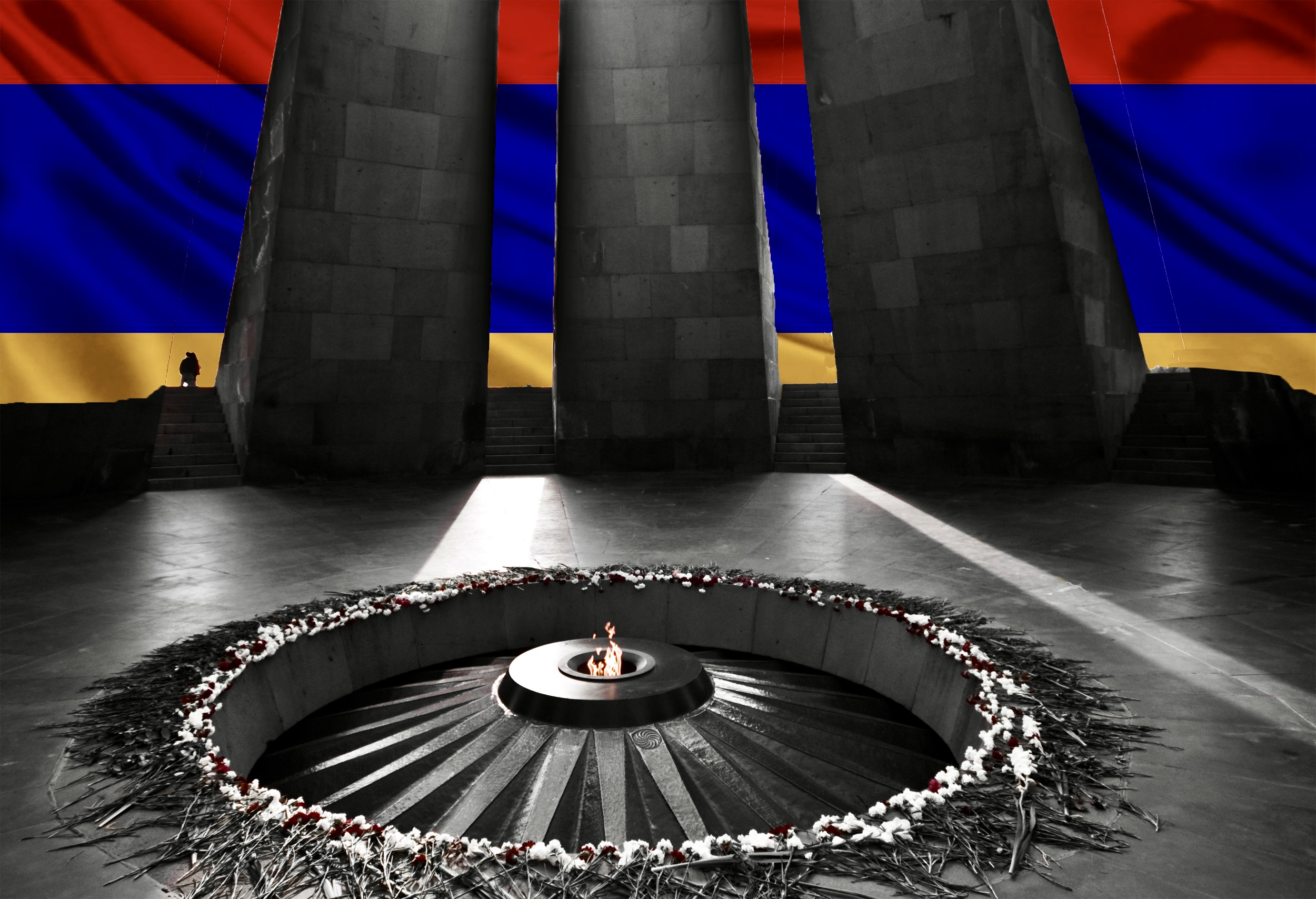
- Laying flowers at the Eternal Flame: The culmination of the day is a visit to the Tsitsernakaberd memorial (“swallow’s fortress”). Thousands of people bring flowers to the memorial and the Eternal Flame to honor the memory of the victims.
- Memorial services in churches: On this day, services are held in all churches of the Armenian Apostolic Church around the world in memory of the holy martyrs — victims of the genocide.
Interethnic tension and flag burning
The annual torchlight procession in Yerevan is traditionally accompanied by an extremely tense and provocative act — the burning of the Turkish flag by its participants. This gesture, symbolizing rejection of the policy of denial and centuries‑old injustice, provoked a loud reaction from the Armenian leadership in 2026.
- Condemnation by Pashinyan: Armenian Prime Minister Nikol Pashinyan publicly condemned the burning of the flag, calling it “irresponsible and unacceptable practice.” His press secretary Nazeli Baghdasaryan called the act an “obvious provocation.” Moreover, the prime minister himself had previously acknowledged that the issue of international recognition of the genocide is not a priority for his government in foreign policy.
- Anger of Dashnaktsutyun: In response, leaders of the Dashnaktsutyun party at the same procession accused Pashinyan of complicity with the enemy, stating that “we are being forced to abandon the birth certificate of our state — the Declaration of Independence,” and that “all this is being done with the complicity of Pashinyan.”
International recognition and Turkey’s position
Despite the fact that the Armenian Genocide is recognized by most countries of the world, including Russia and the United States, the Turkish authorities stubbornly deny the very fact of these historical events, calling them “civil unrest” under wartime conditions. This non‑recognition is the main stumbling block in Armenian-Turkish relations and the reason for the closed border between the two countries since 1993.
“To forget the Genocide is to betray our ancestors for the sake of imaginary material well‑being and a false peace today.
We have no right to forgive the Turkish fascists, because they do not ask for forgiveness — they do not repent, they continued the Genocide already in Artsakh. And they will not stop until they destroy us.
The Turkish fascists and their heirs are full of arrogance. And this arrogance will be broken, for no flesh that rises against God will stand before Him.
The innocently murdered souls demand truth. The spirit of Hayk hovers over his people, who live thanks to God — despite the will of all our enemies.
On this day, I call on politicians in Armenia and beyond not to speculate on the tragedy, not to persuade people to reconcile with those who look down on us.
We, Armenians, want dignity and honor. We do not want a life on our knees.
We pray to God for Truth and believe that He will calm the souls of our innocently murdered ancestors, so that they may await the day when all those who stood and stand behind the Armenian Genocide are punished!”, said Sarkis Tsaturyan, founder of the “Ashkharazhokhov” movement.
The Turkish authorities continue to suppress any attempt to honor the memory of the victims on their territory. The “April 24 Memory Platform” has for several years in a row tried to obtain permission to hold commemorative events in Istanbul. The city’s mayor’s office again refused, citing formal reasons. In response, the organizers stated that “marking April 24 is a democratic right” and that they will not give up their demands.