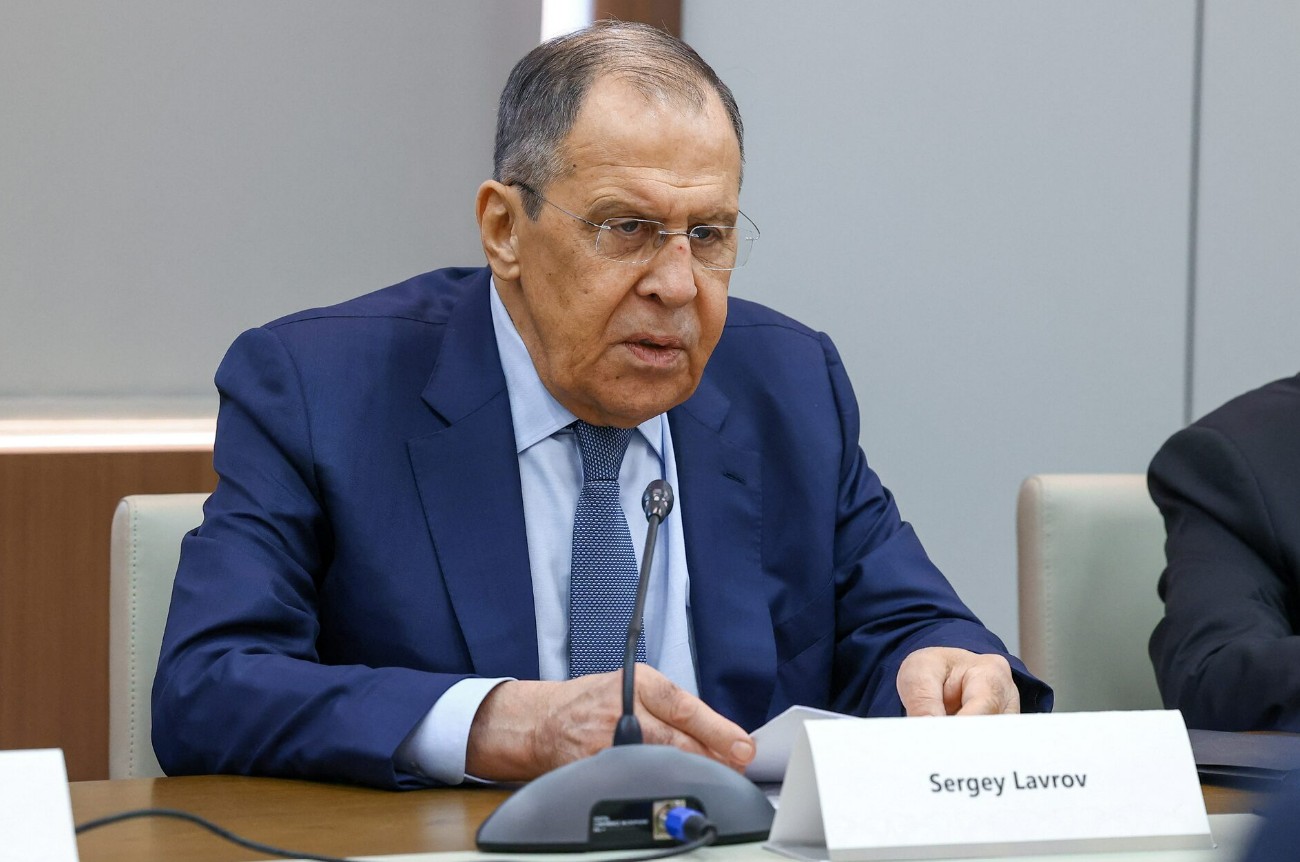
MOSCOW (Realist English). The Russian Government has submitted to the State Duma a bill on supporting the development of artificial intelligence technologies. The document, prepared under the supervision of Deputy Prime Minister – Head of the Government Apparatus Dmitry Grigorenko, is intended to become the “starting point” for forming a legal framework for AI regulation in the country.
The bill was finalised taking into account business proposals and is expected to be considered before the end of the spring session.
The Essence of the Bill: Definitions, Categories and Priorities
The main task of the document is to introduce a basic definition of artificial intelligence into Russian legislation and to ensure conditions for the priority development of domestic AI technologies. This is directly linked to issues of technological sovereignty and the secure operation of the country’s key information systems.
The bill introduces two categories of large foundational AI models:
- Sovereign model — must be fully developed in Russia.
- National model — may use open‑source solutions, but its essential characteristics must be determined by a Russian developer.
Both categories are required to store and process data on the territory of the Russian Federation. Sovereign and national models will receive priority access to state support, the list of which will be determined by the government. It is planned that such models will be primarily used at significant critical infrastructure facilities.
The main requirements of the bill apply to large foundational models — generative neural networks that underpin many AI services. At the same time, specialised models, computer vision technologies and individual AI services do not fall under the document’s scope.
Regulatory Principles and Powers
The draft basic law enshrines key terms, including definitions of “artificial intelligence” and “large foundational artificial intelligence model.” At the same time, it sets out the main principles of regulation in the AI sphere: technological independence, protection of human rights and freedoms, respect for free will, consideration of traditional Russian spiritual and moral values, and the priority of security.
The President of the Russian Federation is to be granted the authority to approve the National Strategy for the Development of Artificial Intelligence. The Government, in turn, will be able to determine measures of state support for the development, implementation and use of large foundational AI models, as well as to establish cases in which only sovereign or national models may be used.
In order to protect citizens’ rights, the bill provides for the possibility of labelling (informational warning) of audio and visual materials created using large foundational AI models.
Context: Betting on Technological Sovereignty
The bill was drafted against the backdrop of growing state attention to AI development. On June 23, it became known that working groups were being set up to remove barriers to AI development, which will focus on providing developers with access to data for training models, expanding access to computing power, and improving conditions for technological connectivity.
The bill enshrines the right of developers of Russian AI models to receive support measures and provides for incentives to introduce domestic AI solutions in key industries — energy, public administration and others. As explained in Grigorenko’s office, this is necessary to reduce dependence on foreign technologies.
The document was substantially adjusted in favour of AI developers, primarily commercial companies. The government stressed that the bill is aimed not at restrictions and strict regulation, but specifically at development.
Russian AI Models: What Works and Is Being Developed
Several large foundational models developed by domestic companies are currently operating in Russia. The bill classifies them as “sovereign” and “national” models, for which requirements for localisation of data processing on the territory of the Russian Federation are established.
Key Russian developments:
- YandexGPT (Yandex) — a universal text platform underlying the AI assistant Alice. It includes several versions, including YandexGPT 5.1 Pro, YandexGPT 5 Pro and YandexGPT 5 Light. The company is also developing YandexART and YandexVLM models.
- GigaChat (Sber) — a text neural network available in versions GigaChat 2 Max and GigaChat 2 Pro.
- Kandinsky — a Russian model for image generation.
According to the SLAVA benchmark, Russian AI models took the entire top‑6: first place — Alice AI LLM from Yandex, followed by YandexGPT 5.1 Pro, GigaChat 2 Max and others. Both leading neural networks — YandexGPT and GigaChat — are free and work from Russia without a VPN.
Foreign AI: Access, Restrictions and Blocks
The situation with foreign neural networks is ambiguous: some of them are unavailable from Russian IP addresses at the initiative of the developers themselves, and not due to decisions of the Russian authorities.
Effectively unavailable (blocked by developers)
- ChatGPT (OpenAI, USA) — unavailable in Russia from Russian IPs, as the company excluded Russia from the list of supported locations. Russian users face account blocking when attempting to access via VPN.
- Gemini (Google, USA) — also unavailable, including the Google AI Studio platform.
- Claude (Anthropic, USA) — unavailable from Russian IPs, developers actively identify and block accounts of Russian users.
- Grok (xAI, Elon Musk) — officially unavailable in Russia. Experts note that this neural network may be blocked due to scandals involving the generation of sexualised content and “undressing” people in photos.
- Microsoft Copilot — unavailable from Russian IPs.
Available or usable
- DeepSeek (China) — formally available, but processes requests in China, which creates risks under Russian legislation on data localisation (152‑FZ). Many Russian AI services are built on open‑source foreign models, including DeepSeek, Qwen and Llama, and are fine‑tuned for specific tasks.
- Qwen (China) — can be adapted for domestic use.
- Llama (Meta) — an open‑source model used in a number of Russian developments.
Legal Status: What Is Allowed and What Is Prohibited
There will be no ban on the use of foreign neural networks in Russia. Deputy Prime Minister Dmitry Grigorenko has repeatedly stated: “As for artificial intelligence — we are not considering bans at all, including on foreign neural networks.”
However, the final version of the bill removed provisions on a total ban, replacing them with a targeted approach:
- It is forbidden to use foreign AI in public administration and at critical information infrastructure facilities.
- Business and the private sector can independently choose any technological solutions.
- A transitional period for already deployed foreign AI solutions in sensitive areas has been extended to 2032. The main condition is that all data must be stored and processed exclusively on the territory of Russia.
- The Government will determine cases in which the use of exclusively sovereign or national AI models is permitted.
The bill only affects large foundational models (with no less than 1 billion parameters). Specialised models, computer vision technologies and individual AI services are not subject to regulation.