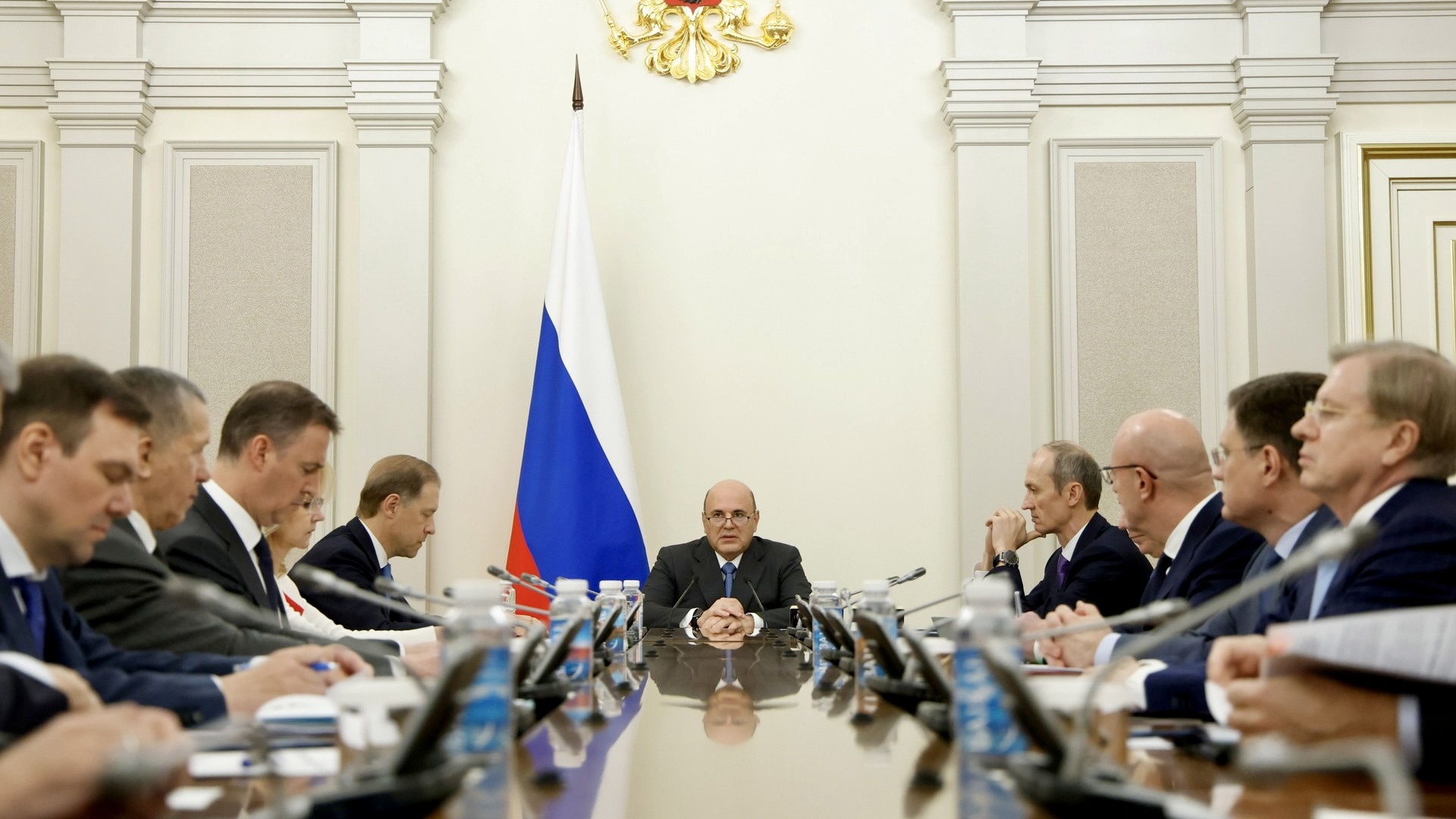
MOSCOW (Realist English). Prime Minister Mikhail Mishustin has issued a series of orders following the 11th Digital Industry of Industrial Russia (TsIPR) conference, held in Nizhny Novgorod from 18 to 21 May. The corresponding list of directives was published on the government’s website on 8 August.
The key innovation is the increase in grant co‑financing for particularly significant projects aimed at developing and implementing domestic digital solutions – from the current 50% to 80% of project costs, funded from the federal budget.
In addition, the government has ordered priority for Russian AI solutions in public procurement and accelerated transition of critical information infrastructure facilities to domestic software.
Key government orders
| Area | Order | Responsible Bodies | Deadline |
| Grant support | Increase project co‑financing to 80% of costs | Ministry of Digital Development, Ministry of Finance, RFIT | By 20 December |
| AI priority in procurement | Amend legislation to prioritise Russian large language models | Ministry of Digital Development, Ministry of Finance | By 15 December |
| Critical infrastructure software transition | Finalise regulatory framework for transitioning critical infrastructure | Ministry of Digital Development, Ministry of Industry and Trade | By 15 December |
| Regional tax breaks for IT companies | Expand use of reduced simplified taxation rates (no more than 3% on revenue, 8% on revenue minus expenses) | Regional governors | By 1 December |
| Advanced AI services | Formulate a list of AI‑based services for key economic sectors | Relevant ministries | By 25 December |
| Software procurement monitoring | Monitor procurement of Russian software by companies operating critical infrastructure | Ministry of Digital Development, Ministry of Industry and Trade | Ongoing |
| Consolidated project report | Report on implementation of major digital projects | Ministry of Digital Development, RFIT | By 1 September |
| Sectoral IT landscapes | Update IT landscapes and technical priorities for 2030–2036 | Industry competence centres, ministries | Ongoing |
Grant support: from 50 to 80%
The government will fine‑tune the mechanism for supporting particularly significant projects aimed at developing and implementing domestic digital solutions across various production sectors.
Currently, the maximum grant support is up to 50% of project costs. Following proposals from the Ministry of Digital Development, the Ministry of Finance and the Russian Foundation for Information Technology Development (RFIT), this ceiling will be raised to 80%.
Critical infrastructure software transition
The Ministry of Digital Development and the Ministry of Industry and Trade have been tasked with finalising and approving regulations governing the transition of critical information infrastructure (CII) facilities to domestic software.
At the same time, flexible mechanisms must be provided for businesses to avoid disruptions to technological and production processes. Under current rules, key CII facilities must transition to Russian software by 1 January 2028.
The ministries have also been instructed to monitor procurement of Russian software by companies operating CII facilities.
Priority for Russian AI in government procurement
To ensure priority demand for Russian large language models, the Ministry of Digital Development and the Ministry of Finance will, by 15 December, study the possibility of amending federal legislation to establish priority for domestic AI solutions in government procurement.
In addition, by 25 December, proposals will be prepared on a list of necessary and advanced AI‑based services for each key economic sector.
Regional tax breaks for IT companies
Regional governors have been recommended, by 1 December, to explore expanding the use of regional tax breaks under the simplified taxation system (STS) for IT sector organisations.
Reduced tax rates for such companies should be no more than 3% if tax is levied only on income, and no more than 8% if the STS is applied under the “income minus expenses” scheme.
Monitoring and reporting
The Ministry of Digital Development and RFIT will, by 1 September, prepare a consolidated report on the current status of particularly significant projects for implementing Russian digital solutions at industrial facilities. The report will include plans for scaling the most effective practices through 2030 and 2036.
TsIPR-2026 in Nizhny Novgorod
The 11th International Conference Digital Industry of Industrial Russia (TsIPR-2026) was held in Nizhny Novgorod from 18 to 21 May. It brought together more than 13,000 participants from 46 countries.
The conference’s key theme was industrial digitalisation, which forms the foundation of Russia’s economy. In his plenary address, Mikhail Mishustin noted that the high‑tech sector has enormous potential for further development, emphasising the conference’s role in strengthening the country’s technological sovereignty.
Strengths and pressure points
The most significant innovation – increasing grant support to 80% – substantially reduces the financial burden on industrial enterprises when implementing domestic digital solutions. The introduction of priority for Russian AI solutions in government procurement creates additional demand for domestic developments and stimulates industry growth.
However, the key question remains whether the Ministry of Digital Development and the Ministry of Industry and Trade can ensure a flexible transition of CII facilities to domestic software without halting production by the established deadlines. Furthermore, the effectiveness of regional tax breaks will depend on the readiness of regional authorities to expand their application.