DAMASCUS (Realist English). On 9 August, Syria’s Foreign Ministry announced the signing of a memorandum of understanding with Russia defining the future of two key Russian military facilities on Syria’s Mediterranean coast – the Hmeimim airbase and the naval logistics facility in Tartus.
As the Syrian Foreign Ministry noted, the document “opens the way to a new phase in Syrian-Russian relations” and is “the most significant event since the start of negotiations about a year and a half ago.”
What changes
Under the memorandum, civilian facilities at the bases will be transferred to Syrian management.
Damascus will take over the operation of Hmeimim Airport and the fourth commercial berth in Tartus port. These facilities will be gradually integrated into Syria’s civilian management system.
The military facilities, in turn, will be converted into joint training and qualification centres.
As the Syrian SANA news agency reports, the bases and other military facilities will be redefined as “joint training and qualification centres under new arrangements that ensure mutual interests.”
The transition period under the memorandum will not exceed three months, after which the new arrangements will enter into force.
Comparison of base status: before and after
| Parameter | Before Agreement (2017–2024) | After Memorandum (from 2026) |
| Status | Long-term lease (49 years) | Joint training centres |
| Civilian infrastructure management | Russian | Syrian |
| Military facilities management | Russian | Joint |
| Duration | 49 years (until 2066) | Transition period – 3 months |
| Legal basis | 2017 Agreement | 2026 Memorandum |
Source: Syrian Foreign Ministry statements, SANA
What existed before
Russia had two key military facilities in Syria. The Hmeimim airbase in Latakia province and the naval logistics facility in Tartus port were deployed to support the Syrian government during the civil war.
The agreement on their deployment was signed in 2017 for a period of 49 years. Tartus – Russia’s only Mediterranean base – was of critical strategic importance to Moscow.
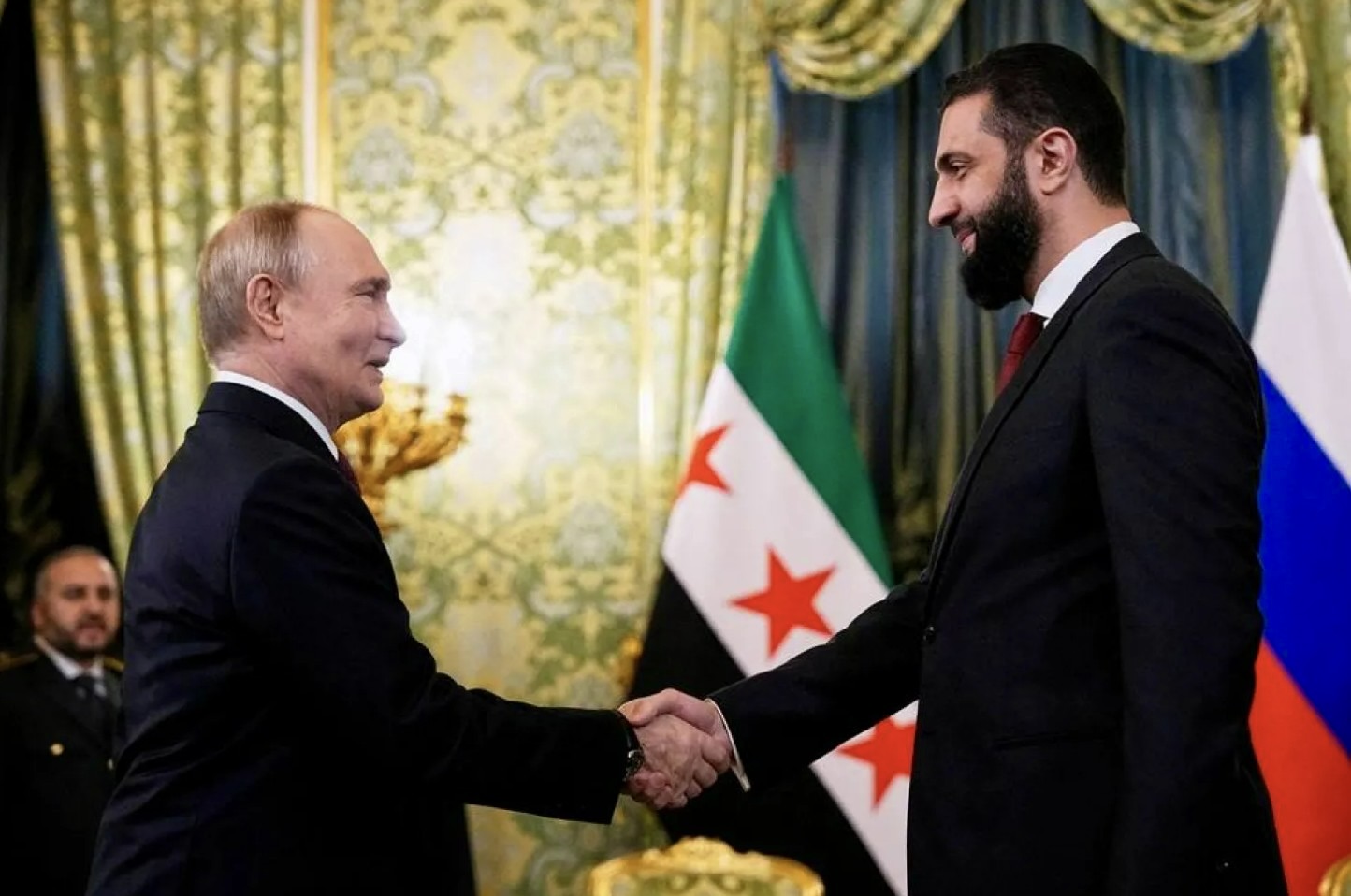
Following the change of power in Syria in late 2024, the country’s new leadership, headed by transitional President Ahmed al‑Shara, began reviewing the terms of foreign military presence, seeking to strengthen civilian control and sovereignty over strategic facilities.
In January 2026, al‑Shara visited Moscow, where he expressed a desire to maintain a limited Russian presence, but on new terms – with the re‑purposing of military facilities.
In January 2025, Reuters reported that Syria’s new authorities demanded Russia hand over Bashar al‑Assad in exchange for keeping the bases. Assad himself, after being ousted in December 2024, had been granted asylum in Moscow.
Context and consequences
The agreement marks a transition from a long‑term base lease model to a model of joint training centres with civilian control over infrastructure.
As the Syrian Foreign Ministry notes, “this step is the most significant event since the start of negotiations about a year and a half ago, opening the way to a new phase in Syrian-Russian relations.”
For Moscow, the agreement means losing the status of full‑fledged military bases in the Mediterranean, but retaining a presence in the form of joint training centres. For Damascus – regaining control over key facilities and strengthening sovereignty.
Strengths and pressure points
The signing of the memorandum allows both sides to save face. Damascus gains control over civilian infrastructure and reconfigures foreign military presence in line with new priorities.
Moscow retains influence in the region, albeit in a changed format, and avoids a full withdrawal of forces from Syria.
However, open questions remain. Will joint training centres be able to replace full‑scale military bases for Moscow, which were used as logistics hubs for operations in the Mediterranean and Africa?
How will the sides build interaction after the three‑month transition period? And most importantly – how sustainable is this compromise in the long term, given that Syria continues to build relations with the US, Europe and Arab countries?