

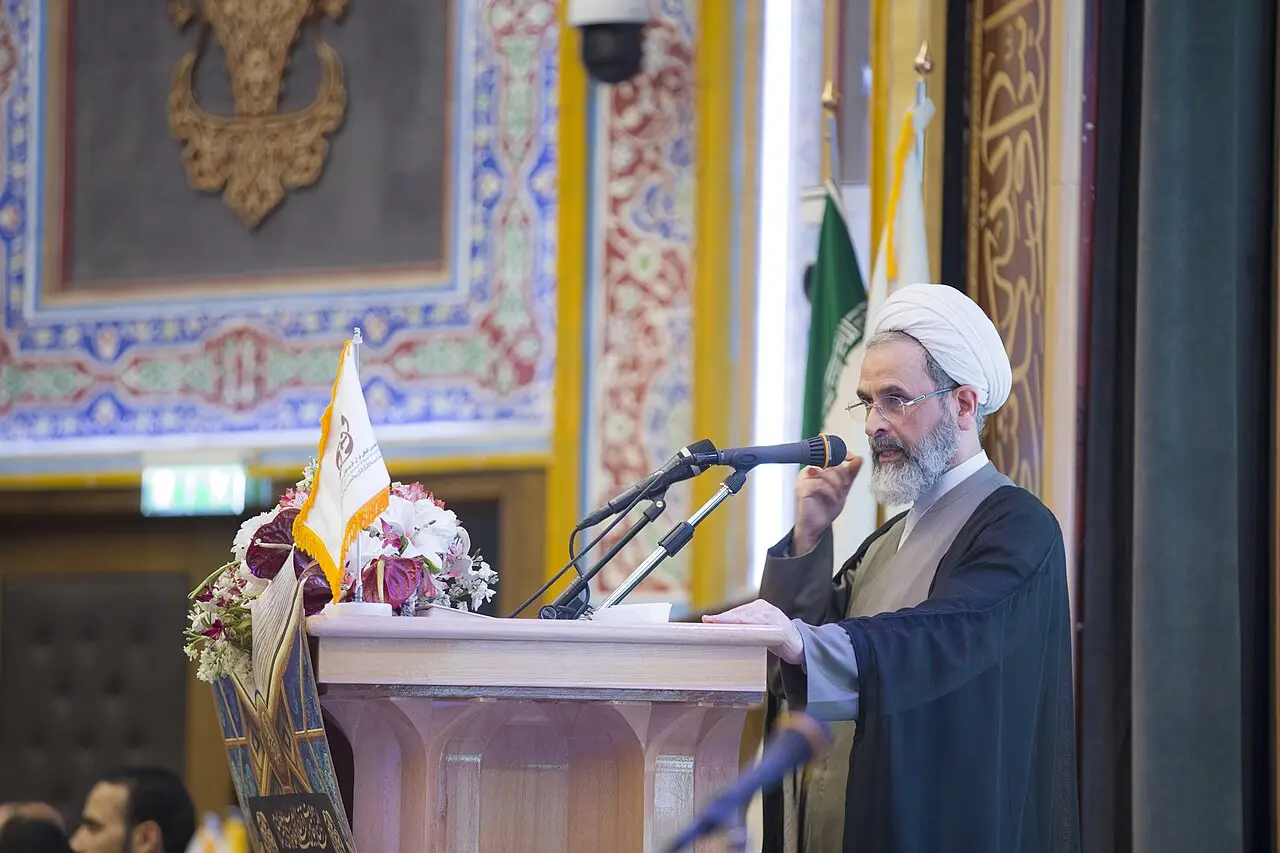
TEHRAN (Realist English). Iran has appointed Ayatollah Alireza Arafi to its interim leadership council, the body now responsible for governing the country following the killing of Supreme Leader Ayatollah Ali Khamenei.
The announcement was made by Mohsen Dehnavi, spokesperson for the Expediency Discernment Council, who said the council had selected Arafi to serve as the clerical representative on the temporary leadership body.
Under Article 111 of Iran’s Constitution, if the position of supreme leader becomes vacant, a three-person council must assume the leader’s полномочия until a permanent successor is chosen. The interim body is composed of the sitting president, the head of the judiciary and a religious jurist drawn from the Guardian Council.
With Arafi’s appointment, the emergency leadership structure is complete. He joins President Masoud Pezeshkian and Judiciary Chief Gholamhossein Mohseni Ejei in collectively exercising the powers previously concentrated in the office of the supreme leader. The council will remain in place until the 88-member Assembly of Experts convenes and elects a new permanent leader.
Ayatollah Arafi, born in 1959, is a prominent figure within Iran’s clerical establishment. Prior to this appointment, he served as director of Iran’s nationwide Islamic seminary network, a member of the Guardian Council responsible for vetting legislation and candidates, and as a member of the Assembly of Experts itself.
Considered a loyal insider within the political and religious hierarchy, Arafi has also led Al-Mustafa International University, an institution focused on promoting the Islamic Republic’s ideological outreach abroad. He is regarded as part of the traditional clerical elite, though he has publicly emphasized the importance of modern technologies — including artificial intelligence — in advancing the country’s ideological messaging.
The interim council’s mandate is limited. Its primary responsibilities include ensuring state continuity and overseeing the country during a period of military confrontation and political uncertainty, while the Assembly of Experts deliberates on a permanent successor to Khamenei.
The formation of the council signals an effort by Iran’s leadership to project constitutional order and ideological continuity amid a volatile transition at the top of the state.