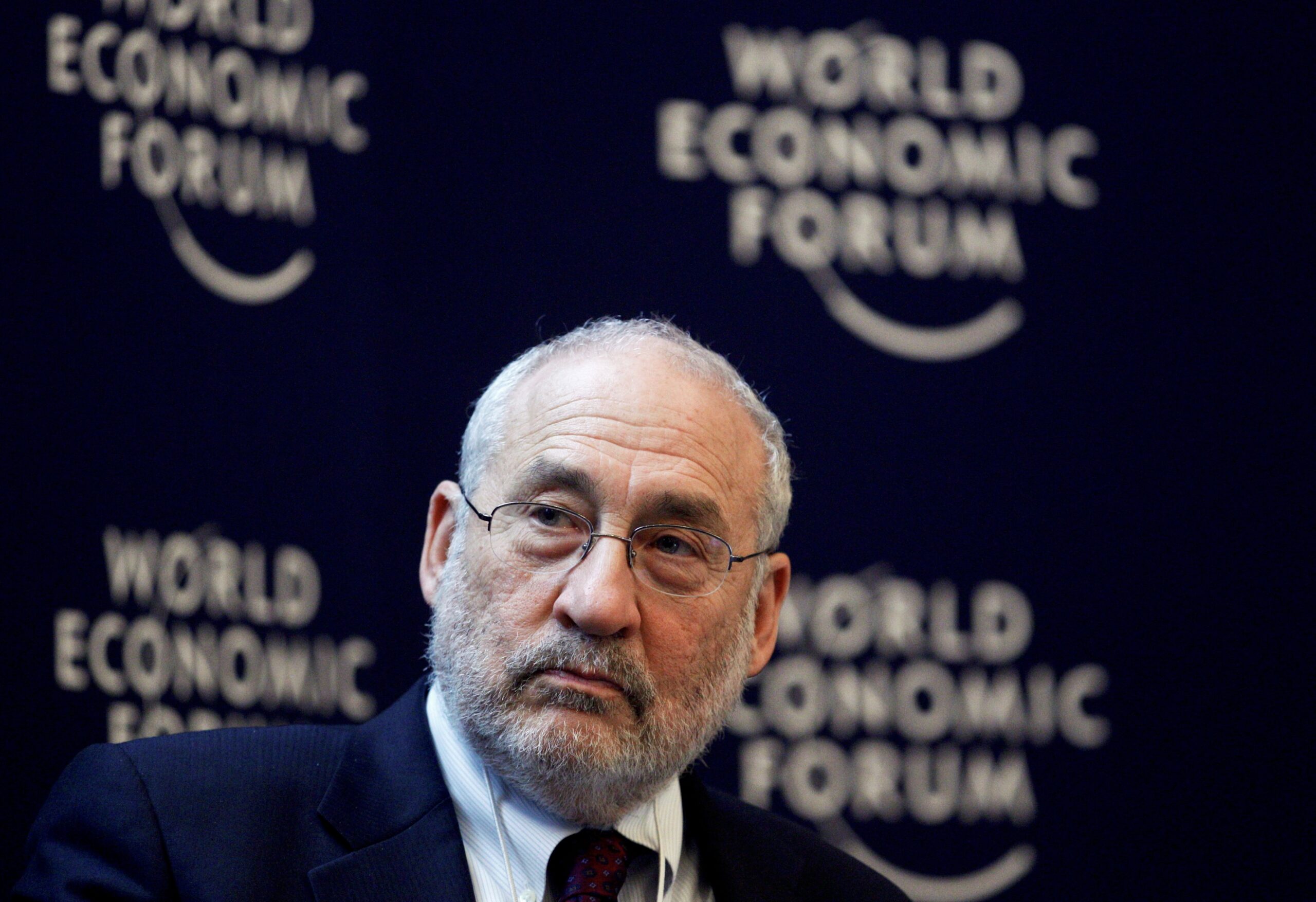
NEW YORK (Realist English). Kenneth Rogoff, a Harvard professor and former chief economist of the International Monetary Fund, has issued a warning to developed countries’ governments that are pinning their hopes on artificial intelligence as a solution to growing budget deficits.
In an article published in several leading outlets between April and August 2026, the economist argues that AI will not only fail to save budgets but will also create new risks – from mass unemployment among “white‑collar” workers to uncontrolled cyber threats and military escalation.
The AI tax paradox
Rogoff notes that the widespread belief that AI‑driven productivity growth will fill state coffers is “dangerously optimistic.” The key problem, in his view, lies in the redistribution of income: AI will increase capital’s share of total output while reducing labour’s share. And capital, as the economist reminds us, is significantly harder to tax than labour – especially amid growing wealth concentration and mobility.
“In the absence of determined efforts to raise taxes on capital income, it is unlikely that tax revenues will grow as fast as output,” Rogoff writes. Thus, even if GDP grows, government budgets may fail to receive the funds needed to service their debts.
Political inertia and demographics
Another of Rogoff’s arguments: even if tax revenues increase, there is no guarantee that political systems will not respond by increasing spending. “Being rich has never been a barrier to bankruptcy,” the economist notes wryly.
Developed countries are already facing rising defence and social spending against a backdrop of ageing populations and high interest rates.
Social risks: unemployment and disinformation
The transition to an AI economy, Rogoff warns, will not be “plain sailing.” Many fear a sharp rise in unemployment among white‑collar workers. And while sceptics call such forecasts “pessimistic,” the former IMF chief advises them to consider why many leading AI researchers share these concerns.
Even if the market eventually adapts, the speed of change could be “faster than anything we have experienced before.”
Rogoff is particularly troubled by risks stemming from a lack of regulation: new AI tools can help attackers breach protected systems, and deepfakes are becoming ubiquitous, threatening political stability. Yet, with almost no government regulation, model developers are focused on the race for leadership rather than on safety.
Military risks: ‘AI generals’ and escalation
The most ominous aspect, in Rogoff’s view, is the military application of AI. In the absence of international agreements regulating the use of autonomous weapons systems, all the technology’s advantages could be negated.
If “human generals” cannot match “AI generals” in speed of reaction and depth of planning, the result could be uncontrolled escalation of conflicts – where human judgment might have led to a more peaceful outcome.
Rogoff does not deny the enormous potential of AI, but insists that the path to a “golden future” will be fraught with deep and costly challenges.
In his view, developed countries’ governments should not count on technology to “solve” their budget problems on its own. Without decisive tax reforms, effective regulation and international agreements on the military use of AI, productivity growth may not save the economy – but rather, lead to its collapse.