TEHRAN (Realist English). The Secretary of Iran’s Supreme National Security Council, Mohsen Rezaei, has stated that the Strait of Hormuz will remain closed until the United States changes its behaviour and accepts Tehran’s conditions.
He made the remarks on 11 August in an interview with the semi‑official Tasnim news agency, and subsequently reposted them on his X account.
“As long as America does not change its behaviour and accept Iran’s conditions, the Strait of Hormuz will not be opened,” said Rezaei, a close ally of Supreme Leader Mojtaba Khamenei.
His comments are the clearest signal yet that even an agreement with Oman on an alternative transit route does not guarantee the restoration of shipping.
Tehran’s conditions
Rezaei listed Iran’s demands that must be met for the strait to reopen:
| Demand | Details |
| End to the war | Lifting the naval blockade of Iranian ports |
| Unfreezing of assets | Release of frozen funds (according to Reuters – up to $100 billion) |
| Regional ceasefire | End to conflicts in Lebanon and Gaza |
| Sanctions relief | Lifting all restrictions and withdrawal of US troops from the region |
| Compensation | Payment of war damages (by some estimates – up to $300 billion) |
“America must end the war, pay Iran its frozen assets, the war must end throughout the region, particularly in Lebanon and Gaza,” Rezaei was quoted as saying by Reuters.
Separate from Oman: position on transit talks
Rezaei specifically stressed that Iran’s talks with Oman on transit routes through the strait are unrelated to its reopening. “If an agreement is reached between Iran and Oman regarding a transit route through the Strait of Hormuz, that agreement will be a matter separate from the closure of the Strait of Hormuz,” he said.
As Reuters notes, this statement is the clearest signal yet that even reaching an agreement with Oman on a transit route will not mean the strait will immediately reopen to shipping.
For that to happen, the US must fulfil its obligations under the memorandum of understanding concluded between Washington and Tehran in June.
Positions of the parties
| Side | Position |
| Iran (Rezaei) | Strait closed until all US conditions are met: end to war, lifting of blockade, release of assets, regional ceasefire, compensation |
| US (Trump) | Demands compensation from Iran for “50 years of damage”; calls Iranians “very slogan‑oriented negotiators”; considers either economic strangulation or “a really, really strong hit” |
| Oman (mediator) | Negotiating with Iran on a transit route, but this is separate from reopening the strait |
| Pakistan (mediator) | Defence Minister Asif said they are “close to some kind of agreement” |
US and Pakistani reaction
The US administration has not yet officially commented on Rezaei’s statement. However, President Donald Trump has already made a counter‑demand: Iran must pay compensation for people killed in wars, attacks and protests over the past decades.
“We will ask for money for the damage they have caused over a 50‑year period,” Trump said at the White House on 10 August.
In an interview with Real America’s Voice, he called Iranians “very slogan‑oriented negotiators” and outlined his options in the war – “just go with the flow” and let Tehran collapse economically, or strike “really, really hard.”
Rezaei’s statement came during a visit to Tehran by Pakistan’s Interior Minister Mohsin Naqvi, who is one of the mediators in the conflict. Pakistani Defence Minister Khawaja Asif had earlier told Bloomberg: “Signals over the last two or three days indicate that we are close to some kind of agreement.”
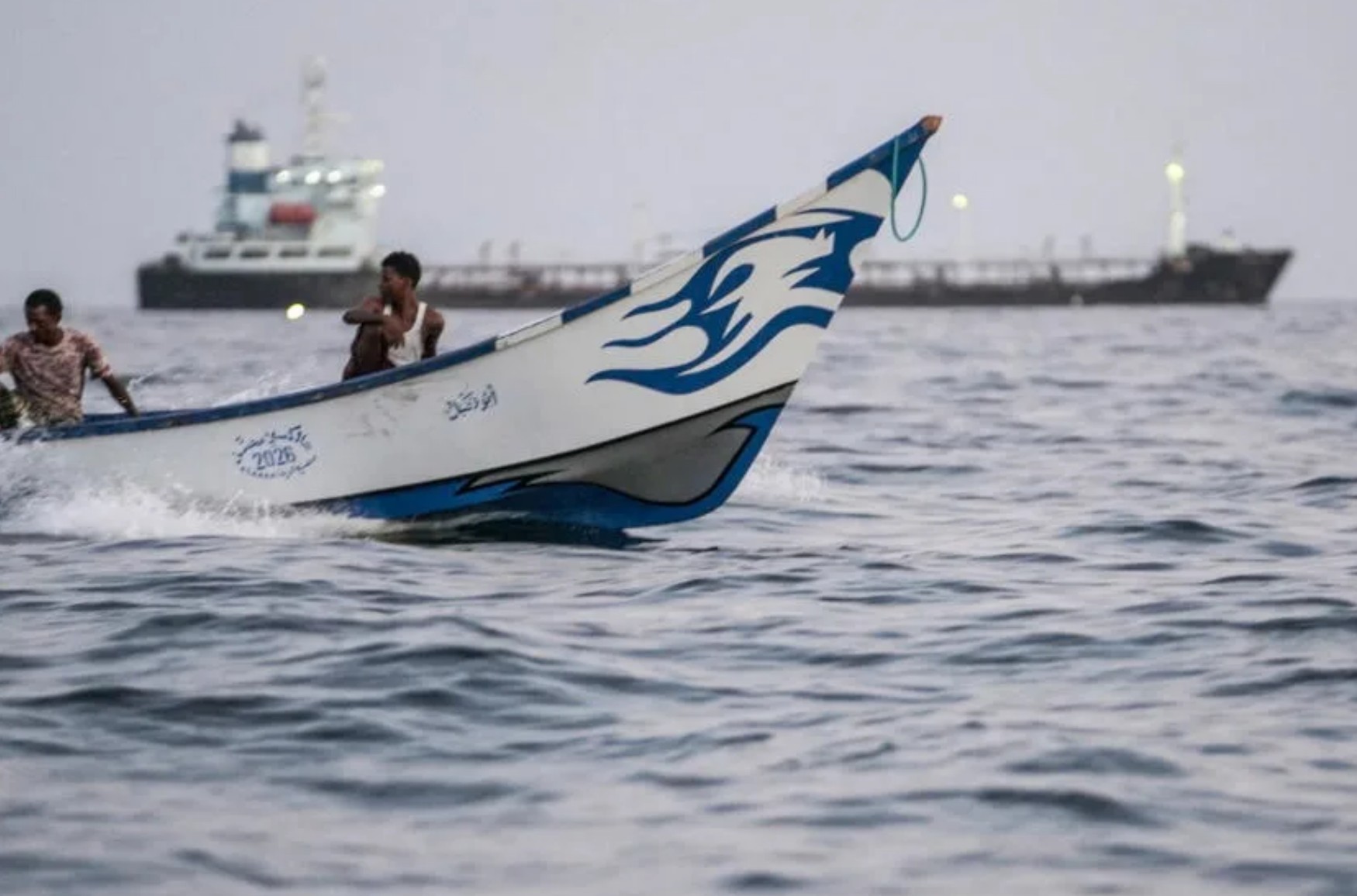
However, Tehran’s public position contrasts sharply with this optimism. As Al Jazeera notes, Iran has taken a hardline stance despite the Pakistani mediator’s visit and ongoing attacks on shipping in the Gulf of Oman and the Red Sea.
Strengths and pressure points
Iran is demonstrating its readiness for a prolonged and exhausting confrontation. Holding the Strait of Hormuz remains its main lever of pressure on Washington, US allies in the region and global energy markets.
However, Tehran’s list of demands – from ending the war to $300 billion in compensation – appears difficult to fulfil under current conditions.
The diplomatic paradox is clear: mediators report progress, while public positions in Washington and Tehran are hardening.
Iran is tying the reopening of the strait to a comprehensive settlement that goes far beyond the issue of shipping. The question is whether the sides can find a compromise – or whether the stalemate in negotiations will lead to a new escalation.