LONDON (Realist English). The scale of the plastic crisis in the world’s oceans has reached levels that scientists describe as a “red alert.” According to the third UN World Ocean Assessment, published in June 2026 and compiled by nearly 600 experts from 86 countries over five years, approximately 52.1 million tonnes of plastic waste enter the ocean annually, generating about 24.4 trillion microplastic particles in the upper ocean alone.
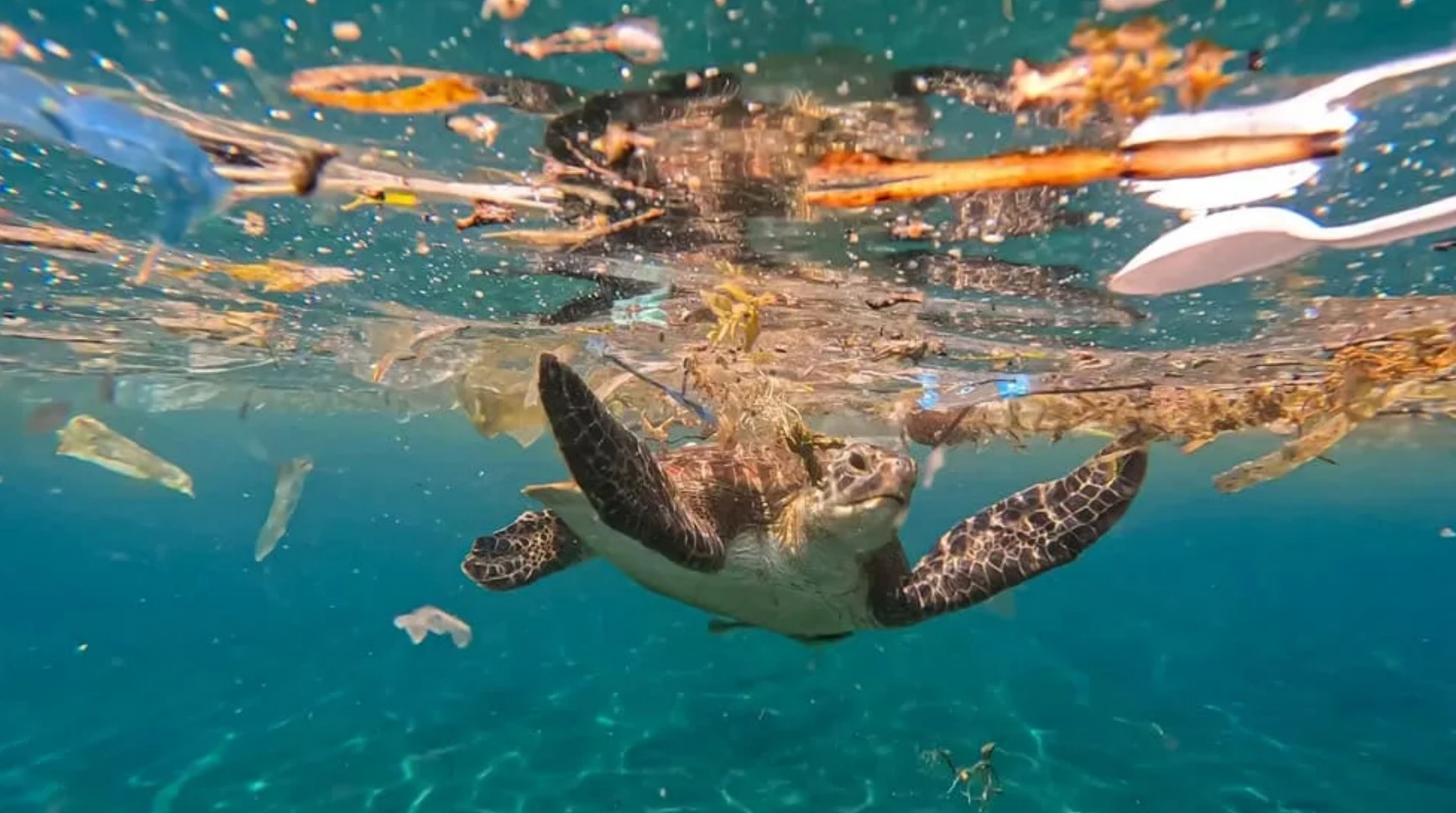
These particles affect more than 4,000 marine species through entanglement, ingestion, and chemical contamination.
But the most alarming finding comes from a landmark 15-year study published in August 2026, which for the first time links plastic ingestion to population decline in a wild seabird species.
The Sable Shearwater: A Population in Slow Collapse
Researchers from the Natural History Museum and Adrift Lab studied flesh-footed shearwaters on Lord Howe Island, Australia — among the most plastic-contaminated birds in the world. Parent birds mistake floating plastic for food and feed it to their chicks.
The study found that consuming just 0.5 grams of plastic reduces a chick’s likelihood of returning to the colony to breed by 12%.
Birds that ingest more than two grams are labeled “the walking dead” — they are unlikely to ever return home. As many as one-fifth of chicks have at least a gram of plastic in their systems.
Dr Alex Bond, Principal Curator of Birds at the Natural History Museum, said: “For a long time, people have said plastic doesn’t cause population change in the wild. That’s simply not true.
For the first time, using data from 15 years of research, we’ve been able to show that the more plastic seabirds consume as chicks, the less likely they will be able to return to the colony and have chicks of their own as adults.”
The researchers warn that while the Lord Howe population is currently in slow decline, this could change rapidly as the impacts of plastic pollution catch up with the colony.
Beyond Ingestion: The “Plastisphere” and Hidden Health Threats
Plastic in the ocean does more than physically choke or poison wildlife. Research conducted in the Indian Ocean, particularly around Réunion Island and Madagascar, has revealed that floating plastic debris serves as a “taxi” for antibiotic-resistant bacteria.
Scientists have found that plastic fragments concentrate organic contaminants, pesticides, antibiotics, hormones, and heavy metals on their surfaces. Under intense solar UV radiation, these biofilms — dubbed the “plastisphere” — become ideal environments for genetic exchange between microorganisms, including the transmission of antibiotic-resistance genes.
At the Kélonia sea turtle rehabilitation center on Réunion, turtles that ingested plastic have developed persistent infections resistant to multiple antibiotics. Analyses confirmed that the floating plastic fragments in the seawater supply were dominated by proteobacteria, including Vibrio species — some of which cause cholera or coral diseases.
In Madagascar, a study in a lagoon found that nearly 90% of analyzed macroplastics harbored bacteria potentially pathogenic to humans.
“The result is declining fish stocks, threatened global food webs, and tourism jobs at risk,” the IUCN notes regarding plastic pollution in Oceania. In Samoa alone, the estimated societal cost of marine plastic is USD 5.8 million.
The Broader Crisis: Ocean Health Under Siege
Plastic pollution is not occurring in isolation. The UN assessment documents a “growing crisis” as climate change, pollution, overfishing, and biodiversity loss converge to threaten marine ecosystems.
Key findings from the assessment include:
- Sea level rise has accelerated from a maximum of 1.9 mm per year before 2015 to 4.3 mm per year in 2023
- Arctic warming is occurring at four times the global average
- Coral cover in the Caribbean has declined by more than 80% since the 1970s
- If global warming exceeds 1.5°C above pre-industrial levels, 90% of coral reefs will die
- The proportion of depleted global fish stocks has risen from 10% in 1974 to 37% in 2021
“The next decade is decisive: without rapid and coordinated global action, ocean health will continue to decline, threatening climate stability, biodiversity resilience, food security, livelihoods and the well-being of billions of people,” said Ian Butler, one of the assessment’s lead authors.
Regulatory Momentum: IMO and the Global Plastics Treaty
In February 2026, the International Maritime Organization’s Sub-Committee on Pollution Prevention and Response finalized a draft 2026 Strategy and Action Plan to Address Marine Plastic Litter from Ships, reaffirming the ambition to achieve zero plastic waste discharges to sea from ships by 2030.
The plan includes targeted measures on plastic pellets (“nurdles”) and fishing gear. The Sub-Committee recommended developing a new mandatory code to regulate the maritime transport of plastic pellets in freight containers under MARPOL and SOLAS conventions. It also approved a draft circular promoting fishing-gear marking systems to combat abandoned, lost, or discarded gear.
At the intergovernmental level, negotiations toward a Global Plastics Treaty continue. As of mid-2026, more than 90 countries signed a declaration urging a swift and ambitious treaty including targets for reducing primary plastic polymer production.
The Cook Islands, speaking on behalf of Pacific Small Island Developing States, has advocated for dedicated mechanisms for identifying, retrieving, and remediating existing plastic pollution, supported by predictable and accessible financing.
IUCN’s legal analysis ahead of the Bangkok Heads of Delegation meeting (27–30 September 2026) emphasized that the treaty must address the full life cycle of plastics — from production and product design through waste management and remediation.
What You Can Do
While systemic change requires government action and corporate accountability, individual choices contribute to reducing plastic flow into the ocean:
Reduce single-use plastics: Cigarette butts and plastic packaging dominate the litter found in waterways. Choosing reusable alternatives when possible reduces demand for virgin plastic production.
Support protected areas: A 2026 study of 445 protected areas in 52 countries found that protection reduces contamination by up to seven times. Support for marine protected areas and coastal conservation directly benefits wildlife.
Participate in local cleanups: Community-led plastic audits, like those supported by IUCN in Vanuatu, Tonga, and Samoa, help identify pollution hotspots and inform local solutions.
Advocate for policy: Support for a binding Global Plastics Treaty and IMO regulations can drive the systemic changes needed to stem the flow of plastic into the ocean.
Make informed choices: Avoid products containing microbeads, support brands with genuine plastic reduction commitments, and dispose of fishing gear responsibly.
As Dr Bond concluded: “Without immediate action to stem the flow of plastic into our oceans, this is an issue that will only continue to get worse.”