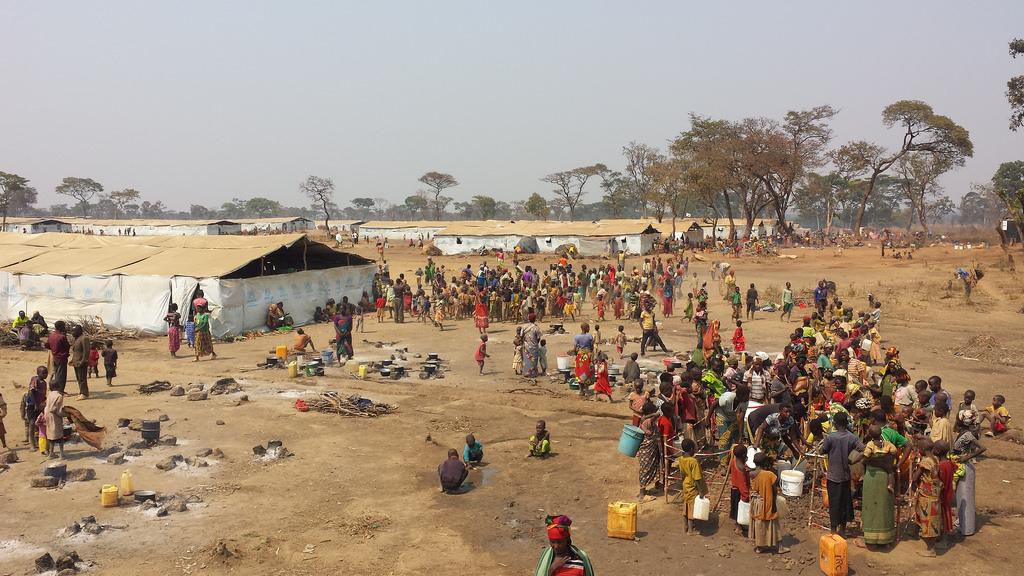
DAR ES SALAAM (Realist English). Thousands of Burundian refugees living in camps in Tanzania are being forced to leave as authorities demolish homes and infrastructure, prompting many to return to their home country after years in exile.
Burundi’s Interior Minister Leonidas Ndaruzaniye said this week that more than 100,000 Burundian nationals are expected to be repatriated by June under an agreement between the two governments, according to local media reports.
As of late 2025, about 142,000 Burundian refugees were living in two Tanzanian camps — Nduta and Nyarugusu — according to the United Nations refugee agency (UNHCR). Most had fled Burundi during years of political unrest, repression and economic hardship.
Refugees say Tanzanian security forces have been overseeing the destruction of homes inside the camps in order to pressure residents to leave.
“They began destroying our houses in early January,” said Gerard, a 33-year-old former nurse who lived in Nduta. Like other refugees interviewed, he gave only his first name out of fear of retaliation.
According to his account, officials arrived with heavy wooden logs and used them to break the walls of mud-brick houses while security personnel prevented residents from resisting.
Refugees say entire sections of the camps have been dismantled, including churches, while schools and health facilities have been shut down. Some also reported being prevented from leaving the camps to cultivate farmland.
Researchers and human rights advocates say such measures effectively amount to forced repatriation.
“It is essentially coercion and therefore highly problematic under international law,” said Stephanie Schwartz, a researcher at the London School of Economics.
The UNHCR has expressed concern about the situation. In a statement, the agency said it had observed actions by Tanzanian authorities that placed “significant pressure” on Burundian refugees to register for return.
Some refugees also claim that authorities used other camp residents to assist with the demolitions. Jackson, a 41-year-old resident of Nyarugusu camp, said Congolese refugees from a nearby section were ordered to carry out some of the destruction.
“Officials tell people to leave their homes immediately. If they hesitate, the demolitions begin,” he said.
Tanzania and Burundi signed an agreement in December aimed at facilitating the return of up to 3,000 refugees per week. According to UNHCR figures, roughly 28,000 Burundians have already returned this year.
Tanzanian officials did not respond to requests for comment on the allegations.
A senior Burundian government official, speaking anonymously, rejected accusations of forced repatriation and described Burundi as stable.
“The refugees are returning because the country is peaceful,” the official said, adding that only the homes of people who had agreed to return were being dismantled.
Human rights groups, however, warn that some returnees face harassment or persecution after going back to Burundi, where critics accuse the government of suppressing dissent.
For many refugees, the choice is increasingly stark.
Jackson said families in the camps must decide between remaining without shelter after their homes are demolished or registering for what authorities describe as “voluntary” repatriation.