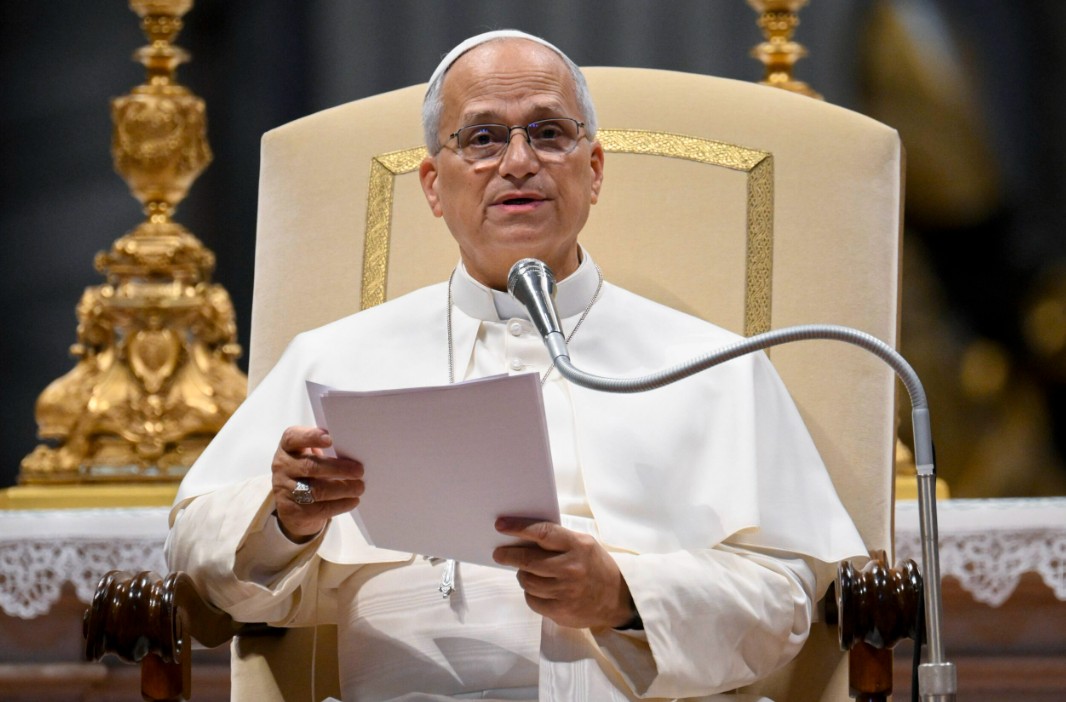
VATICAN CITY (Realist English). On 6 November, Pope Leo XIV will set off on one of the most ambitious foreign tours by a pontiff in recent decades. The trip, which will last until 17 November and cover Uruguay, Argentina and Peru, includes 12 flights, two helicopter trips and a prayer in the Andean highlands. According to AFP, this is a return to the continent with which the pontiff has been closely connected for much of his life: before his election to the throne, Robert Francis Prevost served in Peru for almost twenty years, including as bishop in the city of Chiclayo from 2015 to 2023.
Health and scale of the trip
The trip will take place less than three weeks after surgery performed on 13 October. Doctors confirmed that the surgical intervention was successful and without complications, and subsequent examinations showed that the process is localised and no additional oncological treatment is required. Despite ongoing recovery, the Vatican has confirmed that the trip will go ahead according to the previously published programme.
The scale of the event is impressive: the pontiff is expected to be greeted by millions of believers, and in Argentina alone, according to government estimates, up to seven million pilgrims may attend meetings with the pope. The programme includes more than 50 events: from open-air masses to meetings with indigenous peoples of the Amazon, victims of church violence, the elderly and people with disabilities.
Route and political context
The tour will begin in Uruguay, Latin America’s most secular country, where the pope will be received by left-wing President Yamandú Orsi. Relations between the local authorities and the Church are complicated by disagreements over same-sex marriage, abortion and euthanasia, which was legalised last year; Pope Leo XIV is expected to call for the defence of life.
In Argentina, the homeland of his predecessor Pope Francis, the pontiff will meet President Javier Milei — a right-wing libertarian whose relations with Francis were tense. Although Milei’s contacts with Leo XIV have been less conflictual, local church leaders openly criticise the social costs of the president’s economic reforms, which have left millions of vulnerable citizens below the poverty line.
The trip will end with an emotional return to Peru. “I know he is looking forward to returning to Peru. It means a lot to him personally… he was very determined in his intention to go,” AFP quotes Vatican expert Elise Ann Allen, who has written a biography of the pontiff.
In Lima, the pope will meet President Keiko Fujimori, daughter of the late Alberto Fujimori, who was serving a sentence for corruption and crimes against humanity. Leo XIV is expected to address Peru’s acute problems: a wave of crime linked to contract killings and extortion, the cocaine industry and its impact on indigenous peoples, as well as political instability, since Fujimori is the ninth head of state in recent years.
The upcoming tour is not merely a pastoral visit but a serious test for the pontiff, who will have to combine recovery from surgery with an intensive schedule that includes the Andean highlands. As Christopher White of Georgetown University noted, “this was already going to be an intense trip… a feat even without surgery. Now it will be scrutinised even more closely.”
The trip will be the most closely watched foreign visit of Leo XIV to date, and its outcome will depend not only on logistics and the pope’s health but also on how successfully he can balance his spiritual mission with the inevitable political expectations in a region where his word carries significant weight.