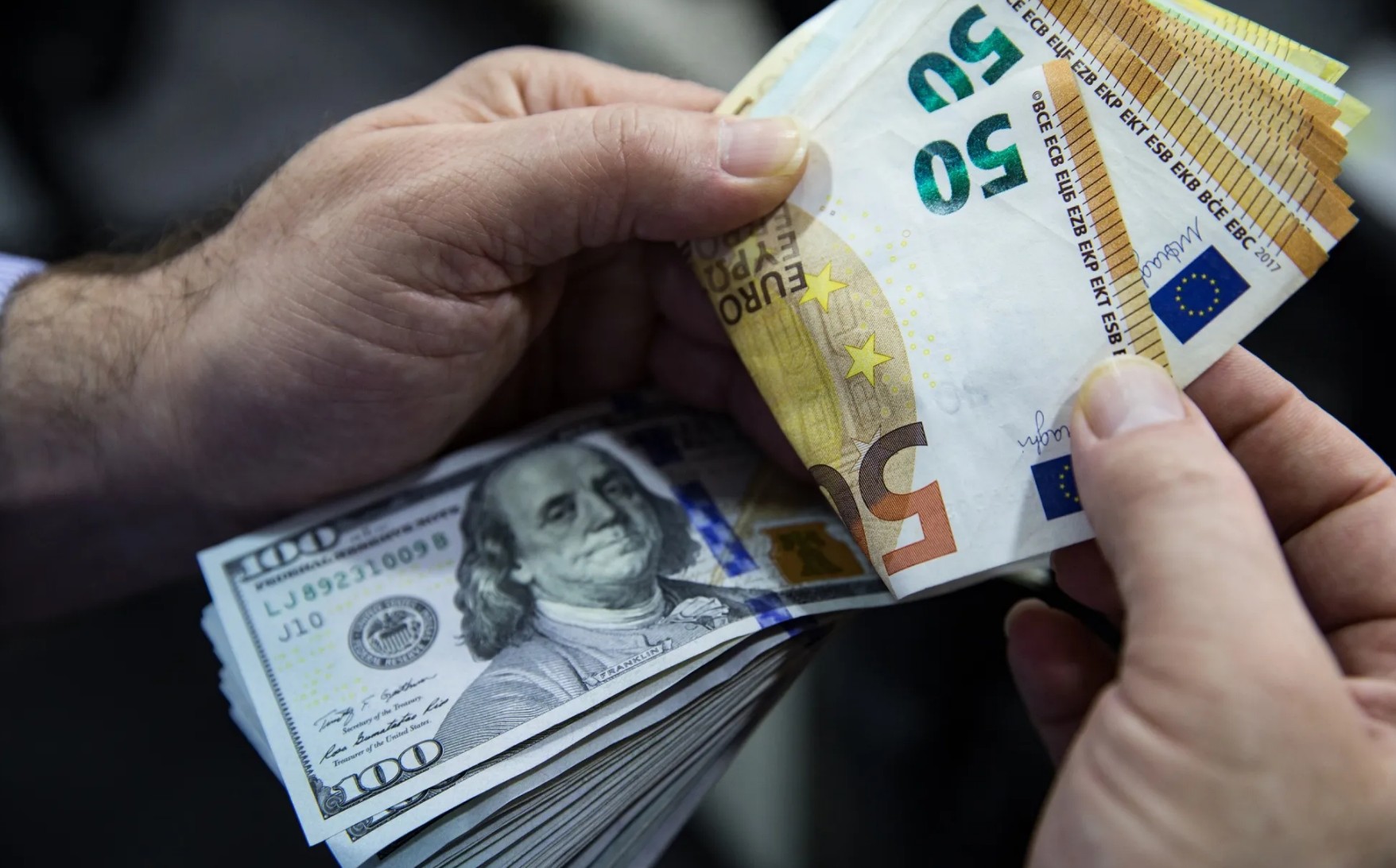
BANGKOK (Realist English). The euro may break its five-week losing streak. Federal Reserve Chairman Kevin Warsh’s speech at the IMF annual meetings in Bangkok forced traders to sharply cut bets on an October rate hike, the dollar weakened, and the euro got a breather.
Warsh’s speech: refusal to prejudge, pressure on the dollar
During the annual IMF and World Bank meetings, Warsh clearly stated that he would not “prejudge” the outcome of the Fed’s next rate decision and did not see the need to disclose in advance possible actions at the two remaining meetings of the year. “This is a new chapter for the Fed, we don’t do that anymore,” Warsh said.
This statement came against the backdrop of core inflation for September exceeding expectations. After the data was published, October rate-hike bets temporarily rose to 55%, but after Warsh’s speech they quickly fell to about 15%.
The dollar index fell 0.9% — the largest one-day drop since July. A Saxo Markets strategist noted that the market had expected Warsh to repeat the “inflation is too high” thesis, but he did not reinforce a hawkish stance, and this “insufficient hawkishness” directly caused the dollar to weaken.
Technical picture for the euro: rebound, not reversal
EUR/USD rebounded from a recent low near 1.1150 to above 1.12. On the daily chart, the price remains below the 20- and 50-day moving averages, MACD is in negative territory, and the medium-term downtrend structure is unchanged. On the four-hour chart, 1.1243 is key resistance — only a break above it would open the path to 1.1276 and then 1.1300. Support is at 1.1188 in the short term, while 1.1160 is the lower boundary on which the continuation of the current rebound depends.
Market scenario: pause in October, December — data-dependent
After Warsh’s speech, the market consensus shifted: the October 27–28 meeting — keeping rates unchanged, December — a possible final hike. Goldman Sachs analysts also adjusted their forecast, believing the Fed will pause in October but retain the option of a hike in December.
Warsh simultaneously emphasized that most of the world is pursuing “synchronized monetary policy tightening,” which means “there are no free riders.” He acknowledged that inflation is not exclusively an American problem, and the Fed will adhere to a data-driven decision-making model.
What this means
Whether the euro can truly break its losing streak depends on two conditions: first, whether pressure on the dollar persists — if subsequent economic data again strengthens rate-hike expectations, the dollar could quickly recoup its losses; second, whether the eurozone itself can provide support.
Currently, fiscal pressure in France has not eased, and the widening spread on French government bonds limits the euro’s rate advantage. Warsh’s “silence” gave the euro a window for a breather but is not a signal of a trend reversal. Whether 1.1243 is broken or not will be key to understanding whether this rebound is a short-term correction or an intermediate turning point.