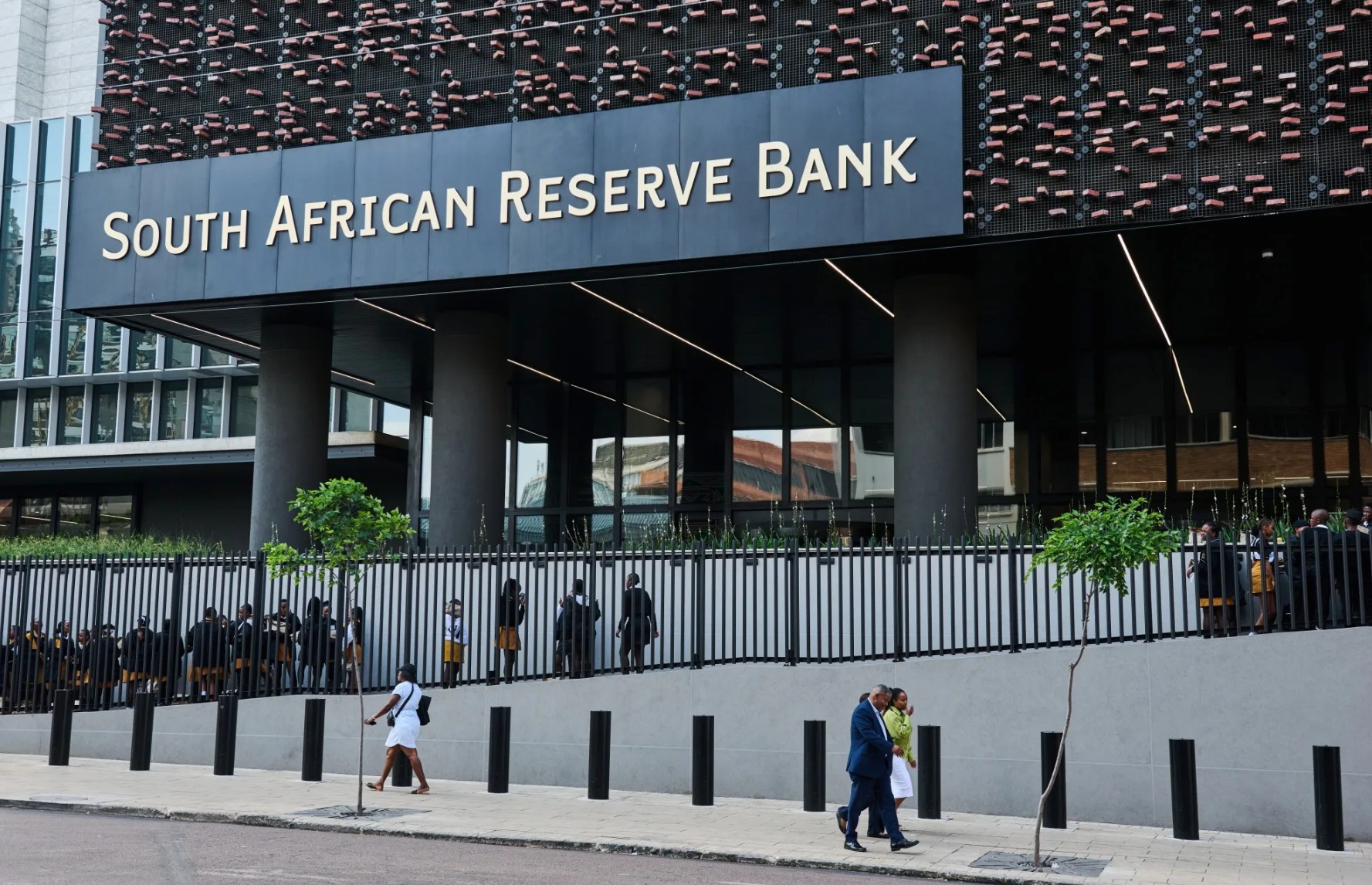
JOHANNESBURG (Realist English). The South African Reserve Bank (SARB) plans to create a cash management company in 2027 — the central element of its “Cash Smart Strategy.” The strategy aims to address the high cost and fragmentation of the cash system so that cash remains an accessible, affordable, and reliable payment instrument in the modernization of South Africa’s payment system.
Timeline and goals
Pradeep Maharaj, Executive Director of the SARB’s payment ecosystem modernization project, said at a briefing on Friday: “We want to complete the governance architecture, director appointments, and everything else by March 2027. We want the cash utility to acquire the first industry cash centres by the end of the year.”
Why a cash utility is needed
The key problem of South Africa’s cash system is cost and fragmentation. According to central bank estimates, the annual total cost of cash in South Africa is about 89.6 billion rand, ultimately borne by consumers. Direct costs (fees, security, transportation) and indirect costs (travel time, queues, opportunity costs, crime losses) are distributed almost equally.
The current system suffers from serious infrastructure duplication: several banks and cash-in-transit companies independently deliver cash to the same locations, and each bank maintains its own ATM network in overlapping areas. The central bank warns that as cash usage declines, fixed costs are spread over fewer transactions, the average cost per operation rises, and ultimately consumer fees increase.
White-label ATMs and shared infrastructure
The key function of the cash utility is to unify cash demand forecasting and centralize delivery, eliminating the current indirect subsidization of several private operators. The central bank also plans to consolidate bank-owned ATMs into “white-label ATMs” — machines owned and operated by the utility, which clients of any bank can use at low fees or free of charge.
Maharaj said: “Full interoperability will be ensured, so we can reduce fees to almost zero.” He acknowledged that this could affect commercial banks’ revenues but “hopes that it will to a greater extent reduce their costs and compensate for the losses.”
Regulatory framework
The central bank plans to expand cash regulation from banks to cash-in-transit companies, retail chains, and some payment providers, possibly introducing an operating licensing system. The draft rulebook is expected in January 2027, industry consultations will continue until May, and the final version — by June 2027.
The central bank also plans to discuss with major retailers such as Shoprite and Pick n Pay the possibility of entering the utility’s capital and operating as licensed wholesale cash operators. These retailers collect up to 100 billion rand in cash annually.
Why cash in South Africa is still important
Despite the growth of digital payments, cash in South Africa remains indispensable. According to the FinScope 2023 study, 99% of adult South Africans use cash to buy food and groceries, and 71% call it their most frequent method of payment. Cash transactions account for about two-thirds of total transaction volume, with more than 180 billion rand in circulation, equal to 2.5% of GDP.
In a June 2026 position paper, the central bank clearly stated that cash should be regarded as “systemic public infrastructure,” not as an obsolete instrument. The strategy’s three pillars are: affordable cash, accessible cash, ethical cash.
What this means
South Africa’s cash utility plan is essentially an intervention in a structurally inefficient system. The current model forces consumers to pay for duplicate infrastructure and fragmented logistics, while rural and low-income communities face the most serious risk of “cash deserts” — banks withdrawing ATMs from low-profit areas, leaving residents to travel long distances to withdraw cash. White-label ATMs and shared cash centres, if implemented, could reduce overall system costs and ensure basic accessibility.
However, the challenges are obvious. Commercial banks may resist transferring their ATMs to a shared network, retailers’ willingness to enter the utility’s capital is uncertain, and the regulatory framework must balance efficiency and competition.
Maharaj acknowledges that the transformation “may take up to three years.” During this time, cash usage is expected to continue declining — the central bank estimates that at a digitalization level close to India, Brazil, and the EU, cash usage could fall by 30–40%. The question is whether cost reduction can outpace the rise in unit costs due to falling volumes.