WOLFSBURG (Realist English). Renault has joined forces with Volkswagen and Stellantis to demand that the European Union introduce strict “Made in Europe” rules to protect the automotive industry from the onslaught of cheap Chinese electric vehicles.
In an unprecedented joint appeal to the European Parliament, the three auto giants — which account for more than 60% of car production in the EU — proposed a “70:70” formula. According to their initiative, 70% of all cars sold in the EU must consist of components and technologies, 70% of which are produced within the bloc.
The “70:70” Formula: What the Auto Giants Propose
On June 12, Stellantis, Volkswagen and Renault — Europe’s three largest carmakers — sent a joint commitment to the European Parliament in support of a “Made in Europe” programme. The core idea is to introduce a simple, transparent mechanism for defining a “European” car.
Under the three companies’ plan, a car would qualify for “Made in Europe” status if it meets the following criteria:
- 70% of value added (components, materials, technologies, engineering and R&D) must come from the EU27, as well as Iceland, Liechtenstein and Norway.
- Furthermore, 70% of all vehicles sold by a manufacturer on the European market must be produced to this standard (the “70:70 within the EU27” rule). The remaining 30% may be imported from third countries (China, Japan, Turkey) without losing the certificate.
“We want to guarantee that Europe remains a global power in the automotive industry. We need a mechanism that favours European cars and industry, and that mechanism must be simple, easily implemented and controlled,” the three companies said in a joint statement.
The Reason: China’s Advance and Pressure on the Auto Industry
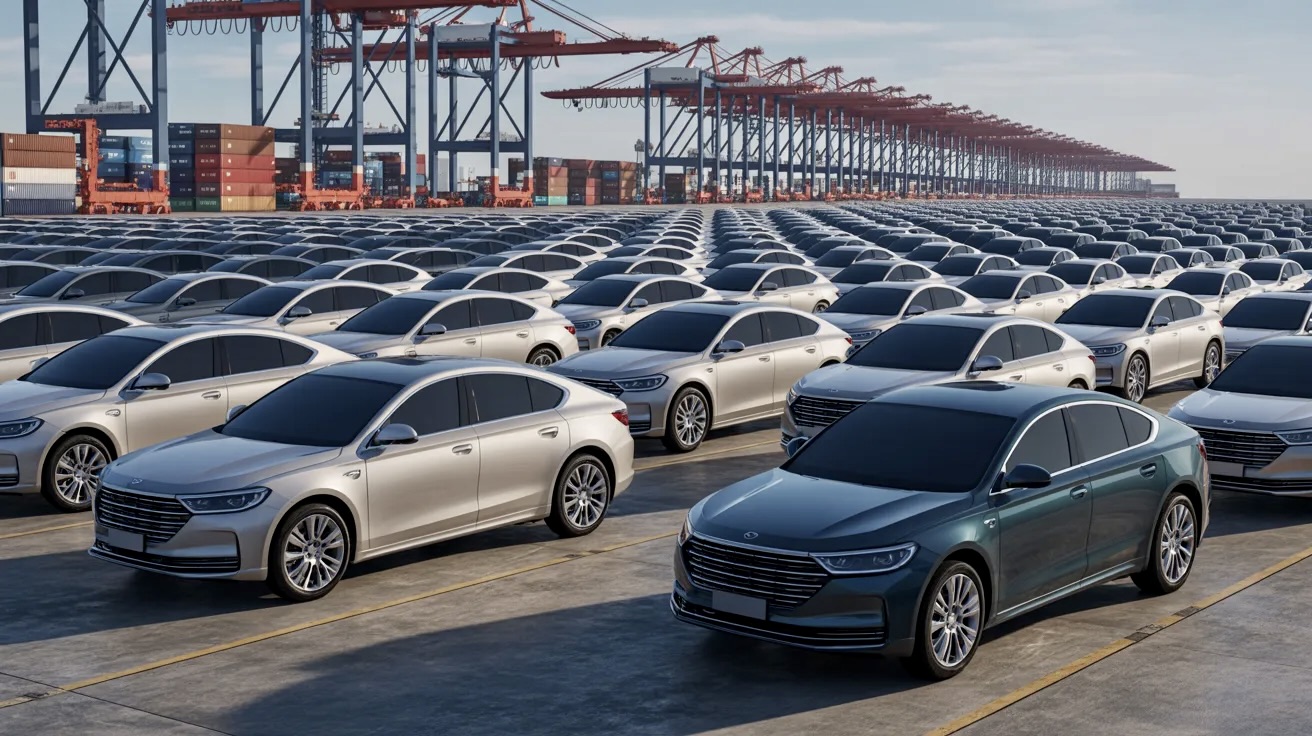
The main motivation for this unprecedented alliance is the threat from Chinese carmakers, which are actively ramping up exports of inexpensive electric vehicles to Europe. Models such as the BYD Atto 3 and MG4 are already gaining market share, largely due to their price. If the three giants’ proposal is accepted, these cars could automatically lose state subsidies and tax breaks for buyers, significantly weakening their competitive advantage.
Moreover, European manufacturers point to systemic problems: high energy costs, labour costs and regulatory pressure make production inside the EU significantly more expensive than in neighbouring countries (Turkey, Morocco) or in China. According to the ACEA association, about 3 million fewer cars are sold in Europe each year than in 2019, further underscoring the need for political support.
The Main Obstacle: The Battle Over Batteries
The weakest link in the localisation strategy is batteries. This key component of electric vehicles is currently produced mainly in China. Europe is only beginning to build its own network of “gigafactories” and cannot yet supply itself with enough batteries.
Therefore, the three carmakers have proposed postponing the deadline for mandatory localisation of battery cell production from 2028 to 2030. They have also requested state financial support for European battery manufacturers such as Verkor and Automotive Cells Company (ACC) to accelerate the scaling up of their capacity.
Reaction and Prospects
The European Commission has already presented a draft “Industrial Accelerator Act” aimed at raising the share of manufacturing in EU GDP from 14.3% to 20% by 2035. However, the three auto giants’ proposal has met with a mixed response. Several manufacturers, including Toyota, Jaguar Land Rover and Honda, have expressed concern that the new requirements could increase compliance costs and ultimately lead to further price increases for consumers.
The coming months will show whether this powerful industrial alliance can convince Brussels to adopt rules that will protect it from foreign competitors, but that do not turn into excessive protectionism that harms the European consumer itself.