GENEVA (Realist English). On July 28, FIFA President Gianni Infantino announced a plan that could permanently change the global football industry.
The world football governing body intends to create a subsidiary company — FIFA Forward Enterprise (FFE) — valued at $20 billion , which would manage the commercial operations of the World Cup and other tournaments.
It plans to sell minority stakes (up to 20%) to private investors, potentially raising up to $4.2 billion.
The lead investor in the project would be Thrive Eternal , a company founded by Joshua Kushner — the brother of Jared Kushner, son‑in‑law of US President Donald Trump. This information was confirmed by Reuters and other global media outlets, citing a FIFA statement.
“This Is Not FIFA’s to Sell”: UEFA’s Fury
The European football governing body (UEFA) attacked Infantino’s plan with unprecedented ferocity. In an official statement, the organisation said the proposal “crosses a line that football’s governing institutions should never cross.”
“The soul and governance of football are not assets for sale — especially with complete opacity over who gains financially,” UEFA’s statement read. “None of us owns football. This is not FIFA’s to sell.”
UEFA called on all 55 national associations under its umbrella to take the project “extremely seriously.” The European body also questioned the transparency of the deal and who exactly would benefit financially from the commercialisation of the world’s biggest tournament.
FIFA’s Arguments: “Democratisation of Football”
Infantino, for his part, defended the plan as a way to increase funding for football development worldwide. According to him, the goal is to “unlock the commercial potential and opportunities that FIFA possesses.”
“Football is the most popular sport in the world,” Infantino said. “Parts of the game have turned this popularity into remarkable commercial value. We celebrate this success and want it to continue, because it lifts the entire game. Our task is to make sure the rest of football grows along with it.”
FIFA insists it will retain exclusive control over FIFA Forward Enterprise and all aspects of football governance: competitions, the match calendar, regulations, and sporting decisions.
Financial Incentives for 211 Federations
A key element of Infantino’s plan was the promise of generous payouts to the 211 national federations under the FIFA umbrella. Instead of the current $8 million for development under the 2027–2030 commercial cycle, each federation would receive $20 million upfront, and then $22 million and $24 million in subsequent cycles.
However, critics note that after the record‑breaking World Cup 2026, which generated about $12 billion in revenue for FIFA, it is unclear how these sums will compare to the revenue from the 2030 tournament, which will be hosted by Spain, Portugal, and Morocco.
Second Round: Repeat of the 2018 Attempt
This is Infantino’s second attempt to bring private capital into World Cup management. In 2018, he proposed a secret $25 billion deal, which failed after fierce resistance from UEFA, which saw a threat to its crown jewels — the Champions League and the European Championship.
As the Associated Press notes, the current plan “deepens the rift between Switzerland‑based FIFA and UEFA, with Europe positioning itself as the guardian of the game, while FIFA, a non‑profit organisation, is focused on expanding access through financial largesse.”
Reaction: UK Prime Minister Joins Criticism
British Prime Minister Andy Burnham also joined the criticism of the plan. In a post on social media platform X, he said: “The World Cup is not a commodity. It is the greatest competition in world sport, and it has never belonged to anyone to sell.”
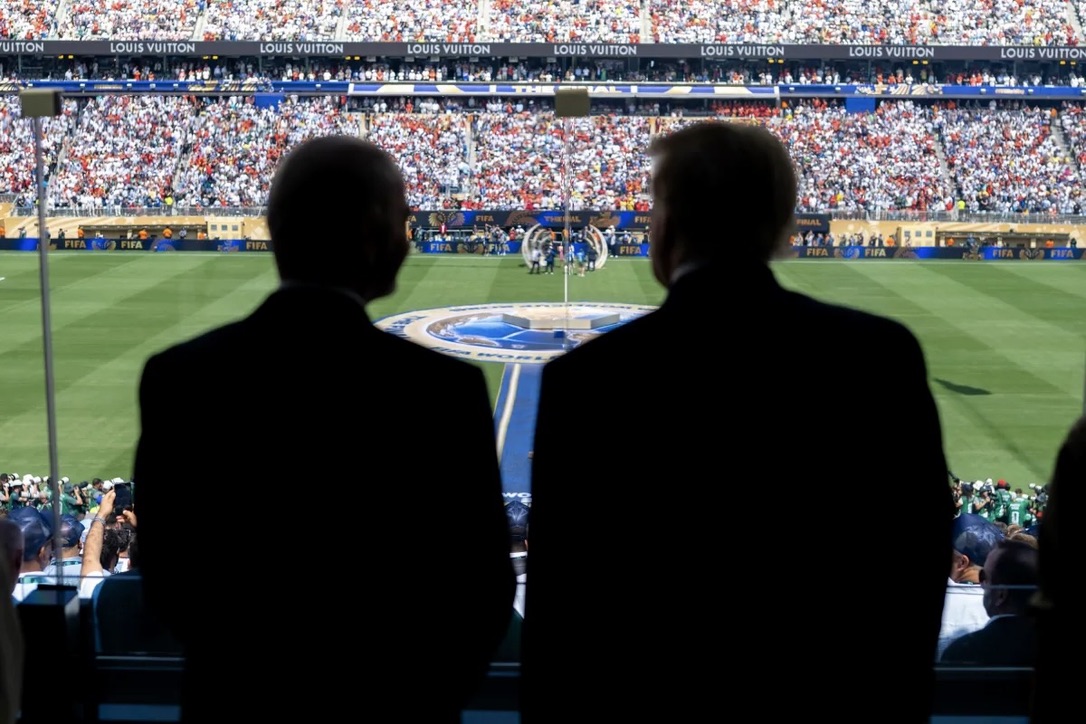
The plan must be approved by the 211 national federations under FIFA. Infantino already presented it to member organisations on July 18 in Manhattan, on the eve of the World Cup 2026 final. However, as Reuters notes, the proposal “deepens the rift between FIFA and European football governance.”
UEFA has made it clear: even if the plan is approved, European football structures will continue to fight against what they see as the “selling of football’s soul.”
The question is whether Infantino can persuade 211 federations with money — or whether UEFA can mobilise enough resistance to bury the plan, as it did back in 2018.