MOSCOW (Realist English). The Russian Foreign Ministry has issued an unprecedented warning to Russian citizens planning to travel to Thailand. The ministry spoke of a “real hunt” launched by US intelligence services against Russians on Thai territory.
The reason is the bilateral extradition treaty between Thailand and the United States, as well as the practice of extraterritorial application of US sanctions, which allows Washington to prosecute citizens of third countries, including Russia.
A “Real Hunt”: What the Threat Is
On June 13, the Russian Foreign Ministry issued an official statement calling on Russians to “be extremely cautious about travelling to Thailand.” The ministry stressed that the United States, disregarding local authorities, is conducting special operations to detain Russian citizens on Thai territory. Thailand is among the countries that Russia considers to have a heightened risk of detention at the request of US authorities.
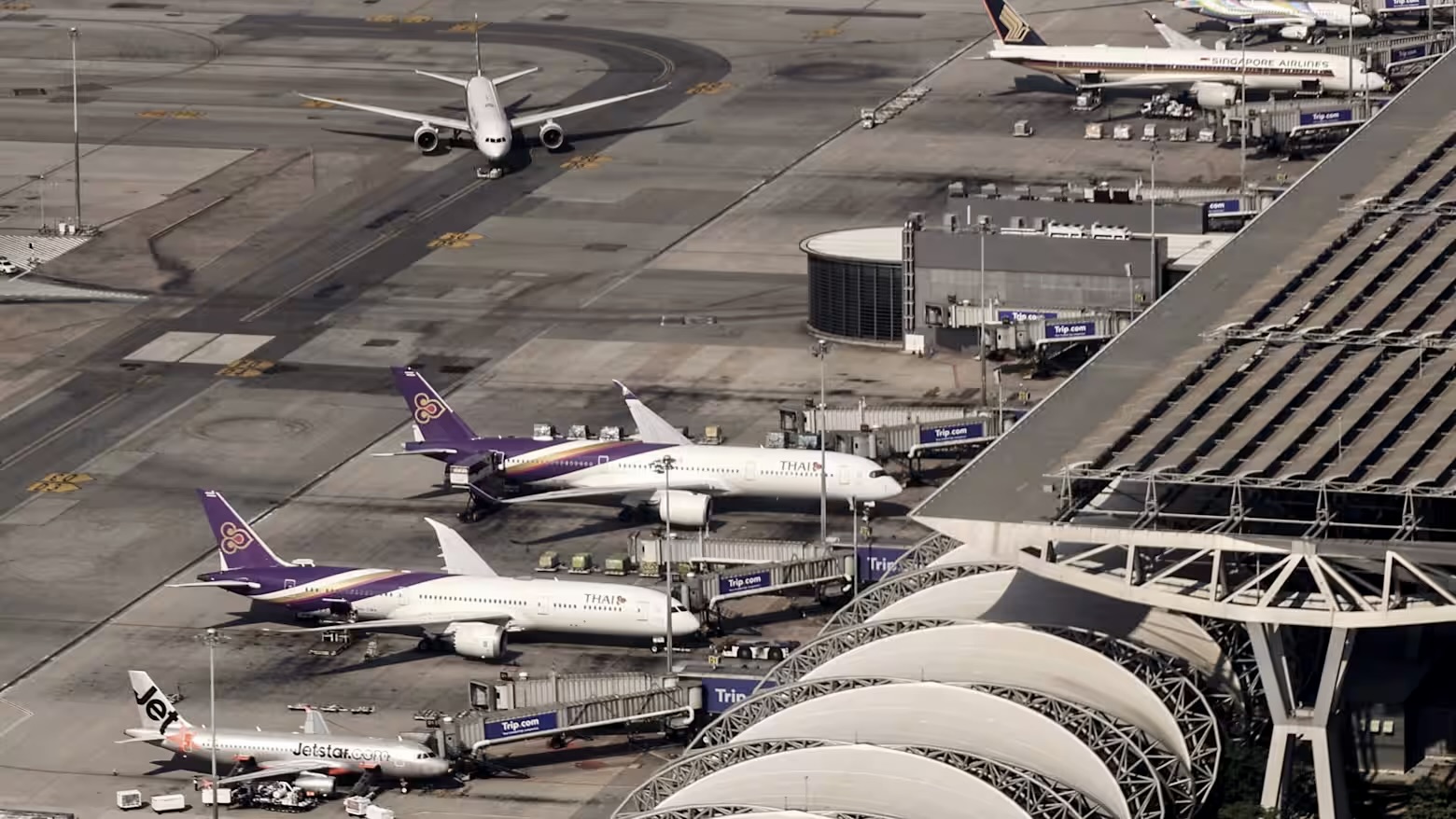
Russians who have any reason to believe they might be of interest to US authorities are strongly urged to completely refrain from travelling to Thailand, including even transit transfers at local airports. At the same time, Thailand’s tourism industry remains extremely popular: more than 1.8 million Russian tourists visit the kingdom each year.
Precedent: The Viktor Bout Case and a New Round After 2022
The Russian Foreign Ministry recalled that the “vicious practice” of detentions began back in 2008 with the arrest of businessman Viktor Bout at the request of the United States. After extradition, he spent more than a decade in US prisons. However, according to diplomats, after the start of the special military operation, “Washington’s repressive justice machine” has only been gaining momentum. The United States has imposed numerous extraterritorial sanctions on strategic segments of the Russian economy, which means many Russians, “without even knowing it, risk ending up in the crosshairs of the Americans.”
Russian diplomats have previously stated that US intelligence services may use commercial or tourist offers to lure citizens abroad, where they then face the threat of detention.
High‑Profile Case: Extradition of Hacker Denis Obrezko
The immediate trigger for the harsh warning was the case of 36‑year‑old Russian Denis Obrezko. He was arrested in Phuket back in November 2025 during a joint operation by the FBI and local police. In June 2026, he was extradited to the United States, where he appeared before a federal court in Boston. US authorities suspect him of ties to the Void Blizzard hacker group, which is linked to Russia’s FSB. He has been charged with conspiracy to gain unauthorised access to a protected computer and is being held without bail. The Russian Consulate General in Thailand said that Washington ignored existing bilateral agreements on legal assistance between the countries in this case.
According to the Russian Foreign Ministry, more than 100 Russian citizens have been detained in various countries and subsequently extradited to the United States over the years. Other recent cases are also telling. In February 2026, a Russian was detained in Sweden at the request of the United States on suspicion of violating export restrictions. In April 2026, Russians Oleg Olshansky and Sergei Ivin were extradited from Bulgaria; the US prosecution is seeking at least $350 million from them in a sanctions evasion case. On June 10, 2026, two more suspects (a Russian and a Ukrainian) were arrested in Georgia on charges of cryptocurrency laundering.
Extradition Treaty and Extraterritorial Sanctions
The main reason for Russians’ vulnerability in Thailand is the bilateral extradition treaty between Washington and Bangkok. This treaty allows the United States to seek the arrest and subsequent extradition of individuals on Thai territory on a wide range of charges: from cybercrime and sanctions violations to money laundering and ties to hacker groups.
At the same time, the US practices the extraterritorial application of its sanctions legislation. As the Russian Foreign Ministry noted, US justice “effectively extends its jurisdiction to citizens of third countries.” This means that a Russian citizen who has never been on US territory can be charged by a US court with violating US laws (for example, evading sanctions) and placed on an international wanted list. Experts note that US actions to force third countries to comply with its restrictive measures “have no basis in international law and encroach on the sovereignty of other states.” As a result, any Russian, even one arriving in Thailand for a holiday, risks being detained by local police on a warrant issued by a US court thousands of miles away.
Reaction of the Tourism Industry and Practical Implications
Amid the stark warnings, the Association of Tour Operators of Russia (ATOR) offered a somewhat more measured assessment. The organisation said it was unaware of cases of ordinary tourists being detained at the request of third countries, but acknowledged that citizens “who are aware of potential claims from other countries” should follow the Foreign Ministry’s recommendations.
The Foreign Ministry also advised Russians in Thailand to always have the contact details of Russian diplomatic missions with them. The ministry stressed that consuls will continue to provide assistance within their powers.
Despite the warnings, the situation is paradoxical: on the one hand, 1.8 million Russians visit Thailand each year without incident, and ATOR calls the cases of detention “extremely isolated.” On the other hand, even isolated cases of extradition create a real risk for those who might be on the “grey lists” of US justice.
For the first time at such a high level, the Russian Foreign Ministry has declared Thailand a high‑risk zone for its citizens due to the activity of US intelligence services. The situation exposes the global problem of extraterritorial application of sanctions: any country that has an extradition treaty with the United States is potentially dangerous for Russians who may be wanted for political or economic reasons.