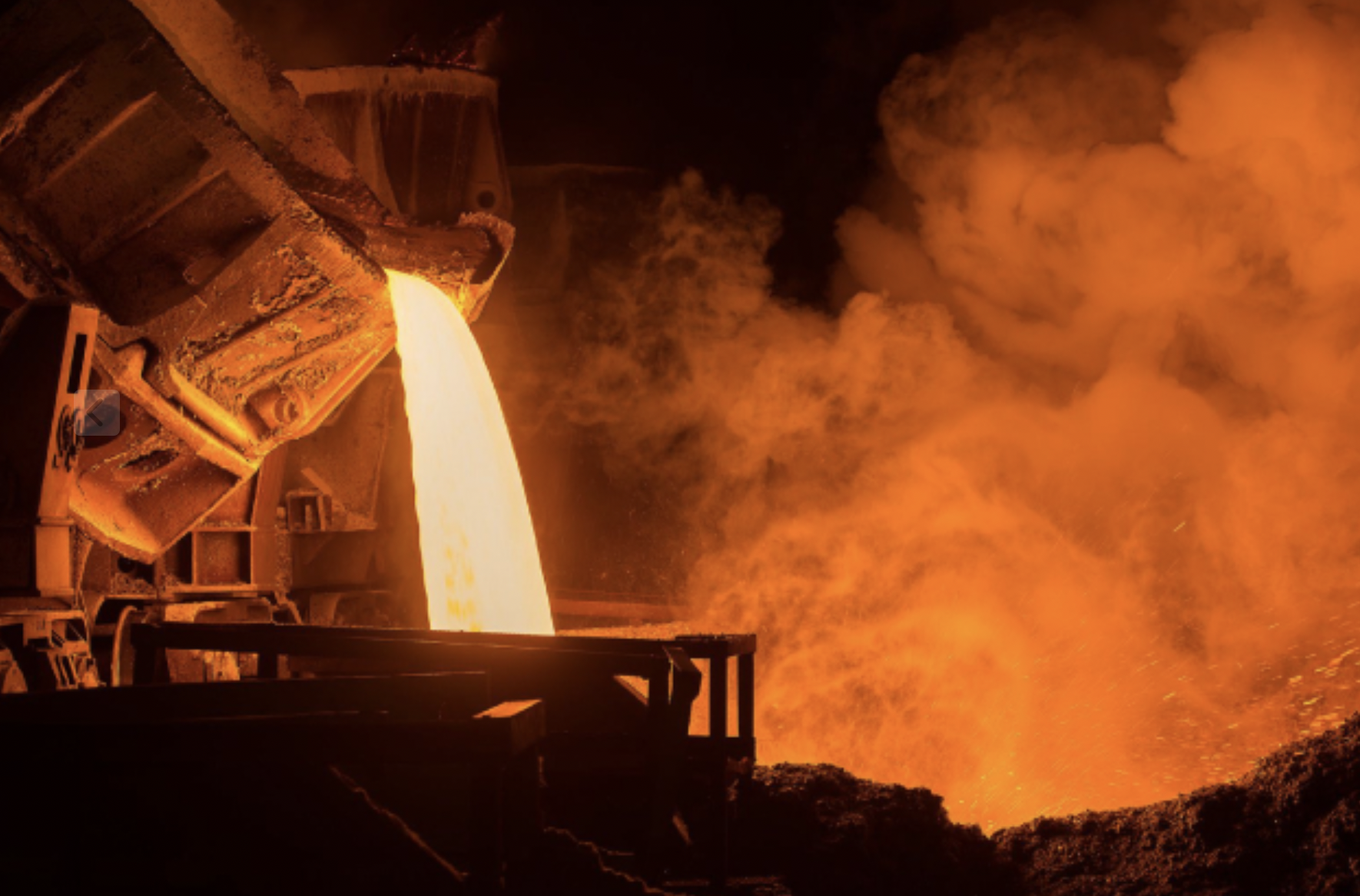
MOSCOW (Realist English). At the end of the first quarter of 2026, Russian ferrous metallurgy showed the deepest production decline in recent years. According to data from the Chermet Corporation, steel production fell by 10.4% year-on-year to 15.6 million tons, and in March the decline accelerated to 13.1%. Finished rolled metal production fell by 6.4% to 14 million tons, while steel pipe production collapsed by 28% (to 2 million tons). Iron ore mining fell by 7.6% to 24.6 million tons.
Declining domestic demand
The key reason for such a sharp downturn was a catastrophic decline in domestic demand. According to BCS analysts, flat steel consumption in Q1 fell by 12% year-on-year, and long steel consumption by 9%. In March, the decline reached 15% and 12% respectively. Experts attribute this to tight monetary policy and high interest rates, which are stifling construction — the main consumer of metal products.
Viktor Tarnavsky, head of the analytical unit of the Metallosnabzhenie i Sbyt magazine, predicted at a meeting of the Metall-Expo organizing committee on March 24 that the rolled metal market capacity by the end of 2026 will fall by 10% compared to 2025, not exceeding 35 million tons. At the same time, in the first months of the year, the sales decline, according to his data, amounted to minus 20–35%. Boris Krasnozhenov, head of the analytical department at Alfa-Bank, confirmed that demand for metal in the domestic market continues to decline due to slowing business activity caused by high interest rates.
Exports: slabs save the situation, but not for long
The only source of foreign exchange earnings remains exports of semi-finished products. In March, Russian producers shipped 1.9 million tons of steel products for export via the Russian Railways network. In 2025, slab supplies to the European Union increased by 18% to 3.73 million tons. The main volumes were sent to Belgium (1.3 million tons), Italy (837 thousand tons) and the Czech Republic (826 thousand tons).
However, the quota for Russian slabs until September 30, 2026, is 3 million tons, after which it will be reduced to 2.62 million tons per year, and from October 2028, a complete cessation of imports is expected.
“It will not be easy for Russian exporters to compensate for lost volumes, but there is an opportunity to redirect flows to the markets of Asia, Africa and Latin America,” noted an analysis by Gazprombank.
At the same time, exports to Middle Eastern countries fell by 4.6% year-on-year in 2025 to $3.3 billion, which is 44% less than in 2021.
Growing imports and industry support measures
An additional pressure factor on Russian producers is growing imports, primarily of Chinese products. In response, the Russian Steel Association proposed a package of support measures: reducing the tax burden, protecting the domestic market, and expanding the use of domestic products. In particular, it is proposed to revise the parameters of the steel excise tax, raising the price threshold at which the tax is levied from 30,000 to 43,470 rubles per ton, as well as extending the excise tax to importers of rolled metal and introducing increased railway tariffs for them at the level of 40–45%.
Prices and financial indicators
In March, average prices for steel products in Russian metal trading continued to decline: the consolidated price index for ferrous rolled metal in the Central region fell by 2.23 points (-0.28%). Prices fell for eight of the accounted types of products, with the maximum drop (-1.9%) recorded for electric-welded pipes. At the same time, rebar rose in price by 1.23%.
Analysts at BCS Mir Investitsy retain a “negative” outlook for the shares of Severstal, MMK and Mechel, and a “neutral” outlook for NLMK shares. In their opinion, “a production decline has been observed in the steel industry for two-thirds of the quarter,” and the Q1 report can be expected to show a decline in demand and sales.
At the same time, Finam analyst Alexey Kalachev reaffirms his “buy” recommendation for Severstal shares, noting that the company has passed the peak of investments under its “Strategy-2028” and was able to increase production and sales volumes against the backdrop of a general industry downturn, and its shares look undervalued.
Non-ferrous metallurgy: Rusal invests in the future
Against the backdrop of the crisis in ferrous metallurgy, the aluminum industry is demonstrating a technological breakthrough. Rusal commissioned the first industrial electrolyzer with inert anodes as part of its program to replace the Eco-Soderberg technology. The new technology makes it possible to eliminate greenhouse gas emissions during electrolysis and ensures the release of pure oxygen.
As reported by the company’s technical director, Viktor Mann, Rusal is moving towards industrial scaling of aluminum production using advanced inert anode technology, which has been tested since 2017.
Evgeny Antipov, head of the Department of Electrochemistry at the Faculty of Chemistry of Moscow State University and an academician of the Russian Academy of Sciences, called the industrial implementation of inert anode technology “a serious success for Russian science and a Russian company.”
At the same time, the company completed the modernization of the Sayanogorsk Aluminum Smelter with investments of 16 billion rubles, which will increase the output of baked anodes and improve the efficiency of electrolysis. Six thousand tons of aluminum have already been produced using the new technology and supplied to customers.
Forecasts: recovery no earlier than 2027
Analysts forecast a full recovery of the ferrous metals market no earlier than 2027. The key drivers could be a softening of monetary policy, which could support demand recovery, as well as the implementation of a state support program for the industry. As noted by MMI, “in past years, spring brought seasonal demand, but this year there is none, and the main industries and consumers of rolled metal are reporting a decline in their performance and project financing.”