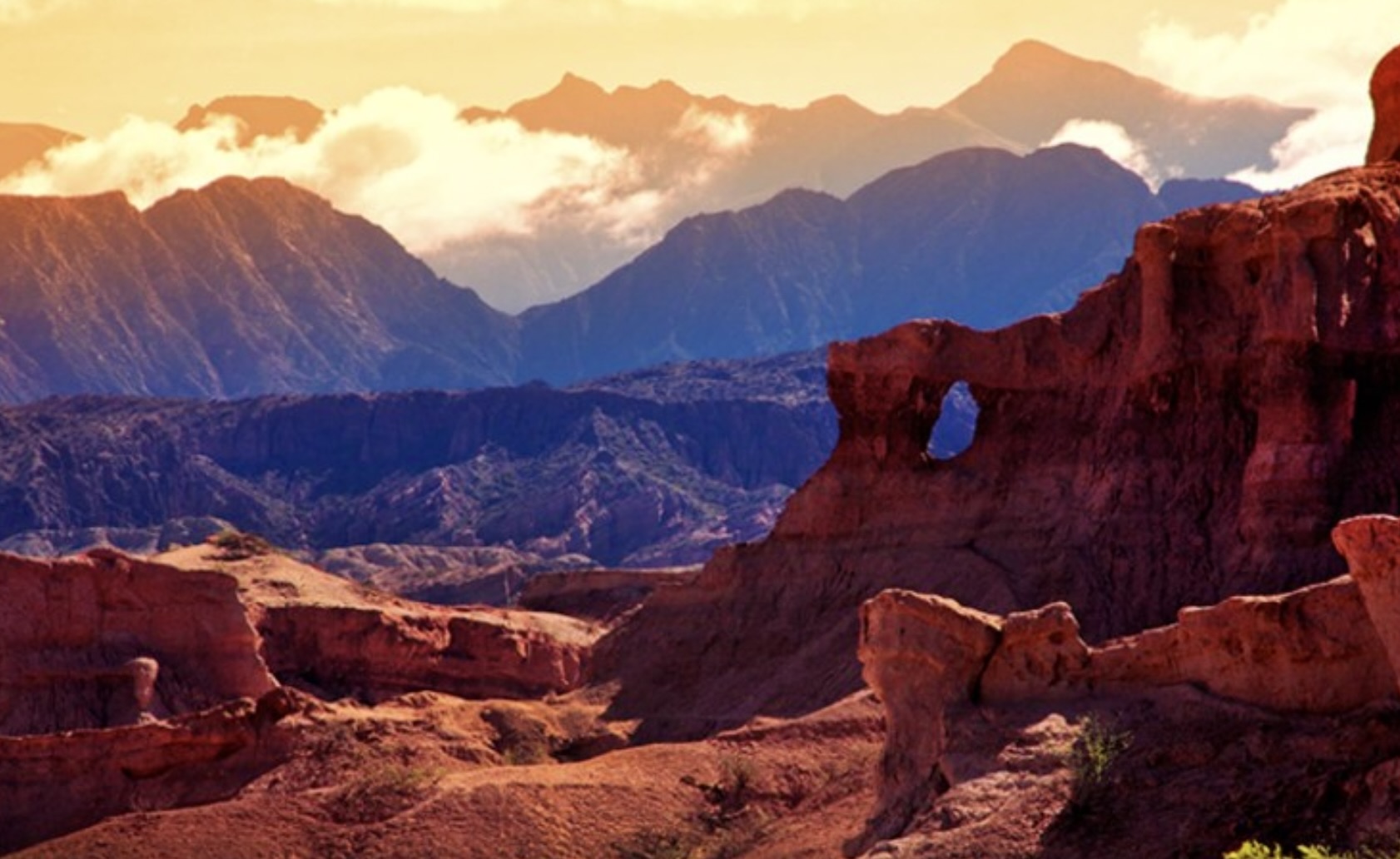
BUENOS AIRES (Realist English). While the rest of the world discusses “apocalypse” in a metaphorical sense, tech billionaires are preparing for it literally. A group of Silicon Valley entrepreneurs is turning a 32,000‑hectare ranch in the foothills of the Argentine Andes into a fully self‑sufficient refuge for nuclear war, climate catastrophe or global economic collapse, the Financial Times reports.
The project, named Wamani in Mendoza province, was acquired in December 2023 by Spanish‑Argentine entrepreneur Martín Varsavsky (net worth approximately $700 million) together with five other investors. Among them are Alec Oxenford, a tech entrepreneur and Argentina’s ambassador to Washington, and Dan Lubetzky, founder of Kind (the snack bar company).
‘We are already in World War III’
Varsavsky, who owns 50% of the ranch, does not hide his catastrophic forecasts. “We’re already in World War III, the fronts are already drawn,” he told the Financial Times. “Having a shelter just makes sense.”
The ranch already features prefabricated houses, geodesic domes and an airstrip. The buildings are powered by solar panels. Plans include bringing in livestock, developing agriculture and installing solar‑powered computer systems to store large language models, creating an autonomous digital network in case of a collapse of global infrastructure.
To date, nearly $10 million has been invested in the project.
Why Argentina?
According to Varsavsky, Argentina and the Southern Cone in general are one of the best places to survive a serious international crisis, thanks to their distance from major nuclear powers and abundant food and energy resources.
“We came to the same conclusion by chance: of all the places to shelter in the event of World War III, Argentina is the best,” he said.
A key factor in the country’s appeal has been President Javier Milei. His free‑market policies, according to Varsavsky, have increased Argentina’s attractiveness to Silicon Valley investors.
Varsavsky, who supports Milei, accompanied him to meetings with tech leaders in the US and proposed that the government create strategic reserves of semiconductors and transformers, as well as introduce a “quiet visa” for investors wishing to use the country as a haven in the event of a global crisis.
Thiel and ‘Plan B’
The project has also attracted Peter Thiel – co‑founder of PayPal and Palantir, one of the most influential and controversial investors in Silicon Valley. This year he acquired a residence in Buenos Aires.
According to The New York Times, Thiel’s move to Argentina is not just a change of address, but a strategic “Plan B.” In April 2026, he arrived in Buenos Aires with his husband and two daughters. Thiel bought a $12 million mansion in the exclusive Barrio Parque district and acquired land in Uruguay near Punta del Este, where, according to rumours, a bunker for a nuclear apocalypse may be built.
Thiel’s motives are multifaceted:
- Tax: California is considering a 5% billionaire wealth tax, which would cost him $1.4 billion.
- Political: concern about the future of the US and a possible return of the Democrats.
- Apocalyptic: Thiel has publicly warned about the threat of nuclear war and uncontrolled AI development.
‘Simulacrum’ of survival?
The Wamani project is not the only one. An Argentine entrepreneur is already building a ranch in Mendoza, which he describes as a refuge for World War III.
However, the project has its limitations: the province of Mendoza periodically suffers from strong winds from the Andes, and climate change could worsen water shortages in the region. Varsavsky nevertheless says the project will expand.
As the author of ChainCatcher ironically notes, when a tech oligarch provides a nation with forecasting and management tools while simultaneously reserving escape routes for himself, a legitimate question arises: how should we understand the relationship between tech capital, state power and personal risk?
Tech billionaires are betting on the Southern Cone as an “ark” for Western civilisation. Varsavsky does not hide his ambitions: “If China takes Taiwan or Russia takes the Baltics, we’ll be there the next day.”
While some build shelters, others ask: are these people preparing for the inevitable – or are they, through their pessimism, simply creating the reality in which they want to survive at any cost?