BERLIN (Realist English). Germany, which Washington has for decades criticised for inadequate defence spending and “freeloading” within NATO, has made a tectonic pivot in 2026.
Berlin has doubled defence spending since 2022, bringing it to a record €124 billion in 2026.
This makes Germany the second‑largest defence budget in NATO after the United States — and presents new challenges: can the bureaucratic machine translate money into real combat power?
What Has Changed: From Freeloader to NATO’s Engine
Over a decade, Germany has gone from spending less than 1% of GDP on defence to having the second‑largest defence budget in the Alliance.
| Indicator | 2014 | 2026 | 2029 (plan) | 2035 (plan) |
| Defence spending | ~€32 bn (1% of GDP) | €124 bn (2.69% of GDP) | €152 bn | 3.5% of GDP |
| Rank in NATO | — | 2nd after US | — | — |
| Bundeswehr size | ~180,000 | ~185,400 | — | 260,000 |
| Reserves | ~30,000 | 70,000 | — | 200,000 |
The Bundestag approved the 2026 defence budget of €108.2 billion: €82.69 billion from the core budget and €25.51 billion from the Bundeswehr special fund (Sondervermögen). The total expenditure reported to NATO reaches €124.7 billion.
By 2029, spending is to rise to €152 billion, and by 2035 Germany intends to reach the NATO target of 3.5% of GDP. According to the Federal Defence Ministry, this represents a tripling of defence spending compared with 2023.
Strategic Breakthrough: The First Military Strategy in German History
On April 22, 2026, Germany published what has been called the first military strategy in the Bundeswehr’s history. The document, titled “Military Strategy and Plan for the Armed Forces” with the subtitle “Responsibility for Europe,” was signed by Chief of Defence General Carsten Breuer.
The strategy provides for a three‑phase force build‑up:
- Full readiness by 2029;
- Capability expansion by 2035;
- Technological superiority by 2039.
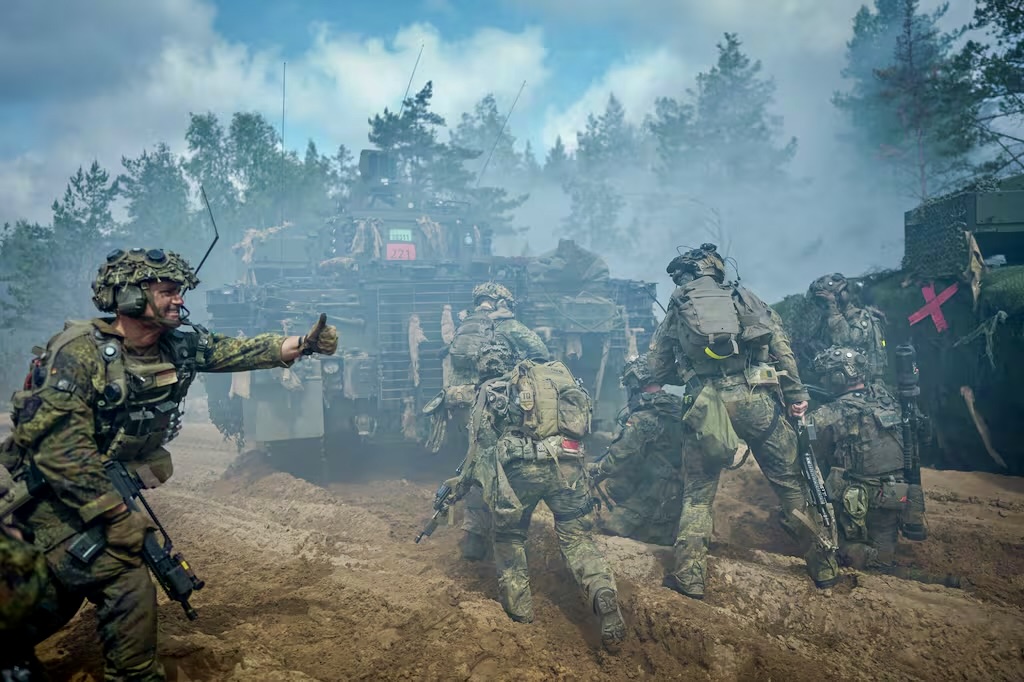
The Bundeswehr is to grow from its current ~185,400 to 260,000 service members by 2035, while reserves are to expand from 70,000 to 200,000. Germany has also confirmed its intention to make the Bundeswehr “Europe’s strongest conventional army.”
Arms Procurement: Tomahawks and Closing Strategic Gaps
On July 9, 2026, Chancellor Friedrich Merz announced a deal with the United States to purchase Tomahawk cruise missiles. According to Merz, this decision will help Germany “close a major strategic gap in its defence.”
Earlier, in May 2026, Trump announced a reduction in US military presence in Germany, making independent development of strategic capabilities even more urgent for Berlin.
At the same time, Germany is investing billions in military procurement: in 2026, €45 billion has been allocated for this purpose, and in 2027, the figure will exceed €60 billion.
New Challenges: Money Is There — But Is the Army?
Despite the impressive figures, experts warn that Germany risks getting bogged down in bureaucracy. As the Bruegel think tank notes, Berlin’s problem is no longer financial readiness but “slow, fragmented implementation.”
The Bundeswehr’s procurement system, built for peacetime, is struggling to adapt to the new pace. Recruitment and retention also remain challenges: a significant portion of new recruits leave service within the first six months.
Historic Opportunity or Bureaucratic Dead End?
Germany has done what Washington demanded for decades: it has ceased to be NATO’s “weak link” and has taken real responsibility for European security. As Chancellor Merz declared, “NATO has become more European than ever.”
General Breuer directly linked this pivot to the US reorientation toward the Indo‑Pacific region, which he called America’s “first strategic priority.”
Yet open questions remain. Can the German bureaucratic machine digest a record €124 billion, or will the money disappear into endless tenders and delays? Will the Bundeswehr be able to attract and retain 260,000 service members in a country where military service has long been unpopular? And most importantly — is Germany prepared not only to pay but also to use this force in the event of a real threat, or will “Responsibility for Europe” remain just a rhetorical flourish?
For now, Berlin has made its bet. The answer to these questions will determine whether Germany becomes a genuine leader of European defence or remains a “paper tiger” with a record budget and an army that cannot effectively spend it.