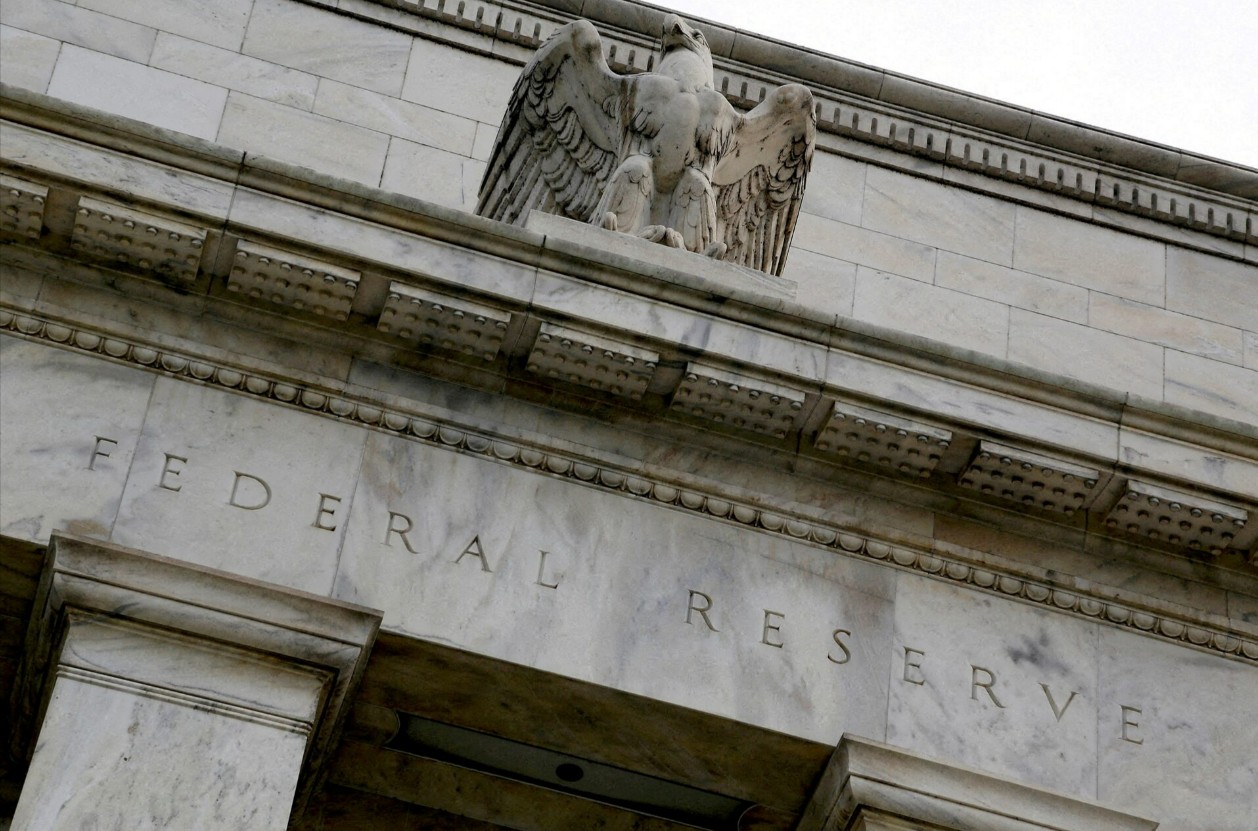
ST. LOUIS (Realist English). On 22 September, gold continued to decline as hawkish signals from Federal Reserve officials reinforced market expectations that high interest rates will persist for a longer period.
Spot quotes fell 0.4% to $4,327.74 per ounce, while December gold futures lost 0.4% to $4,364.90. Pressure on the metal came from several factors at once: rising Treasury yields, a stronger dollar, and statements from Fed officials about the need for further policy tightening.
“Overnight, the Fed, through Musalem, made it clear that more rate hikes will likely be needed to cool prices. We remain in the short-term range between $4,300 and $4,400 per ounce,” said Jamie Dutta, market analyst at trading platform Nemo.money.
Hawkish Fed Signals
The Federal Reserve raised rates by 25 basis points last week — the first hike since 2023 — and Chair Kevin Warsh indicated that further increases are possible in the coming months. St. Louis Fed President Alberto Musalem and Chicago Fed President Austan Goolsbee continued to signal the need for further tightening to reduce inflation driven by strong demand and rising energy prices.
According to CME FedWatch data, traders estimate the probability of a December rate hike at 90%, up from 80% a week earlier. “Tighter monetary policy is a headwind for gold, meaning more than one Fed rate hike before year-end will likely hurt the precious metal,” Dutta stressed.
Market Paradox: Gold Doesn’t Give In
Despite policy tightening, gold is showing unexpected resilience. After the Fed’s decision was announced on 16 September, the metal first fell sharply — from $4,360 to $4,240 — but by 17 September it had rebounded almost 2%, returning to $4,339.
“I suspect the market may have overdone positioning ahead of the rate hike, and now that it has happened, those positions are being closed,” explained independent analyst Ross Norman.
Analysts at Investing.com noted a shift in the market’s character: in June, gold fell 1.4% and 3.3% on two consecutive days merely on expectations of tightening, whereas in September the actual rate hike and hawkish forecasts led to a rise above $4,300.
This indicates that the “marginal price setter” is now reacting more strongly to positioning and price dynamics than to macroeconomic variables.
What Next: Inflation and the FOMC Meeting
The key event for the market will be the release of August inflation data, which will determine the trajectory of Fed policy. According to analysts’ estimates, gold will remain in the $4,300–$4,400 range until new signals emerge.
The technical picture points to a possible test of the 100-day moving average at $4,319 and the 50-day at $4,295.