
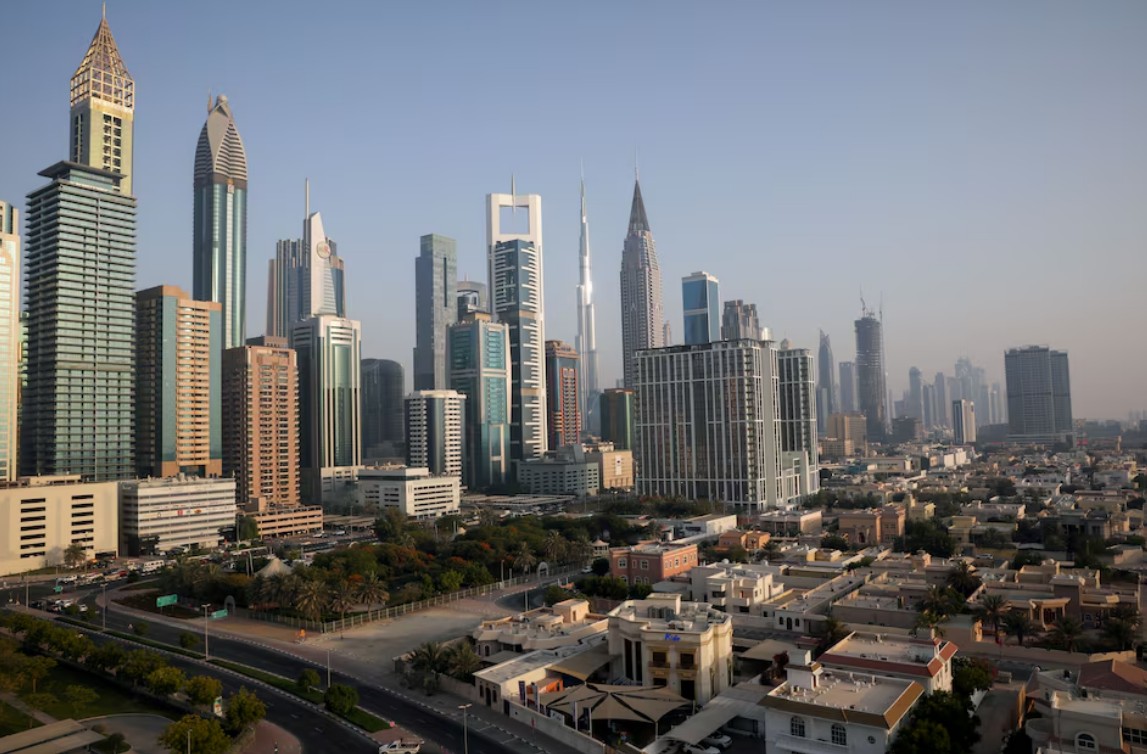
DUBAI (Realist English). Dubai’s stock market has fully recovered the losses sustained since the start of the war with Iran and returned to late-February levels. According to Bloomberg, the DFM General index rose by about 14% in November — the largest monthly gain since April 2020. For the year to date, Dubai ranks second among Gulf markets, behind only Oman.
Drivers of recovery: government support and returning residents
Government support and resilient economic activity played a key role in the turnaround. According to Cantor Fitzgerald analyst Kato Mukuru, state spending and support proved stronger than expected, offsetting the outflow of foreign capital. In addition, residents who left the country at the height of the conflict have begun to return, supporting domestic demand.
Capital flow data confirm this picture. Foreign investors have withdrawn about 11.6 billion dirhams from UAE equities since February, with three-quarters of the outflow occurring in March. However, local and regional buyers absorbed these sales, allowing Dubai’s market to recover by about 13% from its March low even before the November surge.
Reassessment by Wall Street
The recovery has forced major banks to revise their views on the UAE market. JPMorgan upgraded UAE equities from “neutral” to “overweight” in early November, noting that the country is “cheap and far more resilient than we thought.” Morgan Stanley joined the revision, also raising its recommendation to “overweight” and noting that Dubai’s recovery complements Abu Dhabi’s investment cycle.
According to MSCI UAE, equities are trading at around 9.4 forward earnings versus an average above 10 over the past decade, leaving room for further re-rating.
Structural shifts: from real estate to services and banks
Rotation is underway within the market. Foreign investors sold real estate most actively — about 7 billion dirhams, mainly Emaar and Aldar shares. Funds flowed into the banking sector (FAB, Emirates NBD, ADCB), logistics (ADNOC Logistics), telecoms (du) and services companies (Talabat). During the 23 November session, the DFM index rose 1.3%, supported by Dubai Islamic Bank, which gained about 11% on expectations of a strategic acquisition.
As observers note, the key feature of the situation is the combination of a stock market recovery with continued geopolitical risks in the region. The market’s rise is occurring amid ongoing concerns about shipping through the Strait of Hormuz: in late November, Iran’s Navy reported that three tankers caught fire after hitting mines. XTB MENA analyst Milad Azar noted that the durability of the momentum will depend on earnings growth, liquidity and geopolitical events.
In addition, part of the improvement in forecasts rests on macroeconomic assessments. The IMF revised its forecast for UAE economic growth in 2026 from an expected 3.9% contraction to 0.2% growth, and projects 7.3% growth in 2027. For the UAE market, the immediate effect will be most noticeable primarily in the sustainability of foreign capital inflows and in the dynamics of the banking sector — and that is precisely where it is most sensitive for confirming the turnaround.