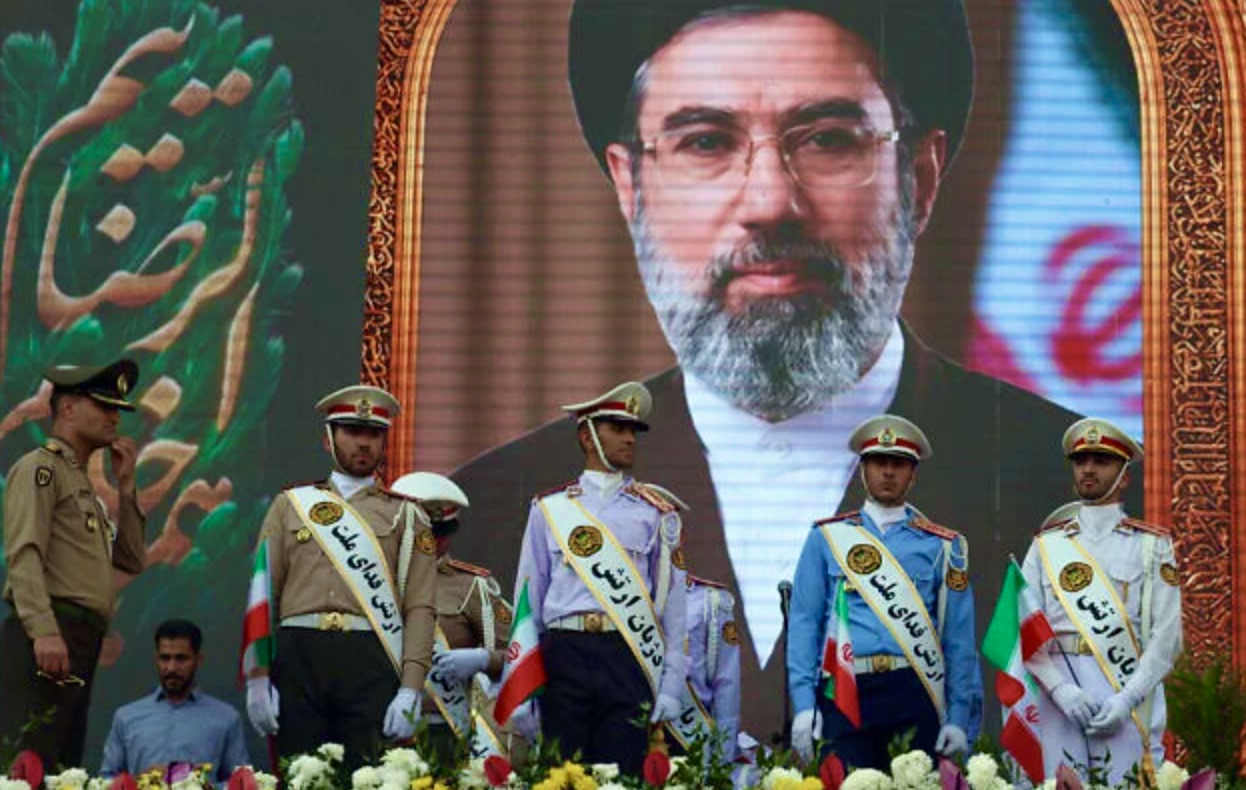
TEHRAN (Realist English). Mojtaba Khamenei, 56, who became Iran’s Supreme Leader in March 2026 following the death of his father in a joint US-Israeli strike, expressed his wish to appear at his funeral, which is taking place from July 4 to 10.
According to The New York Times, the new leader wanted to personally recite the funeral prayer over his father’s body on July 9 in Mashhad, at the shrine of Imam Reza. However, Iranian security services, including the Islamic Revolutionary Guard Corps (IRGC), rejected this request.
The main reason for the refusal is the fear that Israeli forces might attempt to eliminate Mojtaba Khamenei during the public ceremony or use his appearance to track his location. As experts note, Israel has previously used funeral processions to eliminate political leaders.
‘Marked for Death’ and Strikes on the Family
Tehran’s concerns are supported by direct threats from Israeli leadership. Earlier, Israeli Defence Minister Israel Katz publicly stated that Mojtaba Khamenei was “marked for death.” An official Israeli source effectively confirmed The New York Times reports that the new Supreme Leader is a target.
On February 28, 2026, during the first strike of the US-Israeli military campaign against Iran, 86-year-old Supreme Leader Ali Khamenei was killed, along with Mojtaba Khamenei’s wife and 16-year-old son. Mojtaba himself was wounded in the same strike and has not appeared in public since.
Domestic Political Rift: The Struggle for Khamenei’s ‘Legacy’
The authorities’ refusal and the new leader’s absence from the ceremony are exacerbating the rift within Iran’s leadership. According to The New York Times, hardliners are demanding that Mojtaba Khamenei appear in public or release an audio recording, threatening otherwise to withdraw support for negotiations with the US.
Against this backdrop, two main factions have emerged:
- ‘Pragmatists’ — President Masoud Pezeshkian and Parliament Speaker Mohammad Bagher Ghalibaf — have persuaded the new leader to support negotiations with the US to ease the economic crisis.
- Conservative ‘hawks’ advocate continuing the war and revenge, calling negotiations “betrayal.”
As the publication notes, after the funeral, Mojtaba Khamenei is expected to make a series of key personnel appointments that will indicate which side he supports. At the same time, according to The New York Times, his prolonged absence from public view raises questions about his actual ability to govern the country.
Meanwhile, the multi‑day funeral procession, which is expected to draw up to 10 million mourners, is intended to demonstrate the regime’s unity and resilience. However, the absence of the central figure — the new Supreme Leader — turns the mourning into a symbol not so much of continuity as of a deep crisis within Iran’s elite.
The coming days will show whether Mojtaba Khamenei can consolidate power from the shadows or whether his invisibility will prove fatal for the Islamic Republic.