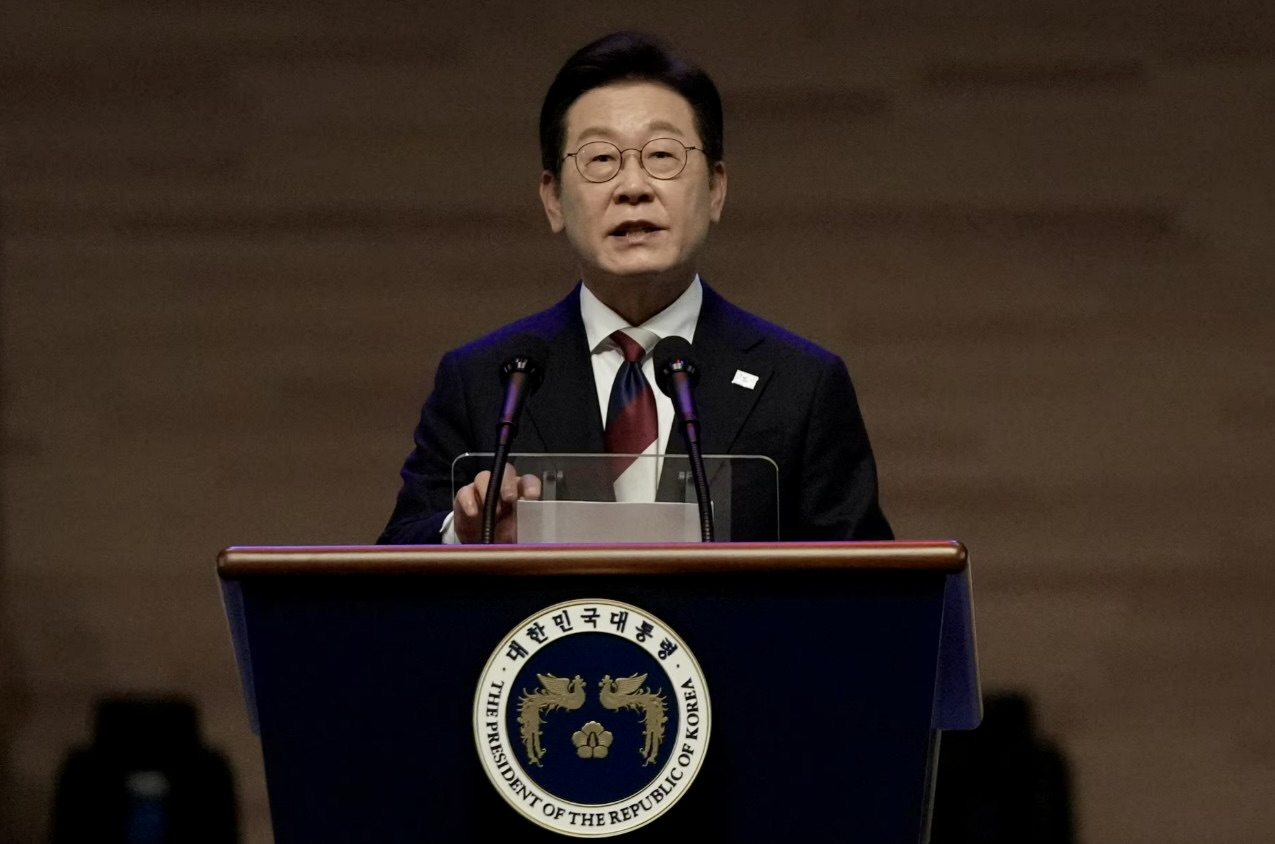
SEOUL (Realist English). On 15 August, South Korean President Lee Jae‑myung, during a ceremony marking the 81st anniversary of Korea’s liberation from Japanese colonial rule, called on North Korea to begin direct talks on officially ending the Korean War (1950–1953).
The president proposed replacing the “unstable armistice system” with a full peace regime and discussing practical steps to curb North Korea’s nuclear programme.
“I intend to undertake a journey to end the war and replace the unstable armistice system with a peace regime,” Lee said, stressing that peace on the Korean Peninsula could contribute to stability and cooperation in Northeast Asia.
Key provisions of the initiative
| Area | Substance of Proposal |
| Ending the war | Official conclusion of the Korean War and replacement of the 1953 armistice with a peace agreement |
| North Korea’s nuclear programme | Discussion of ways to halt North Korea’s nuclear programme within the framework of talks |
| Non‑confrontational approach | Commitment to “peaceful coexistence,” rejection of unification by absorption, respect for North Korea’s existing system |
| Multi‑layered security | Creation of a system for tension control and crisis prevention on the peninsula |
| Reducing hostility | Ending confrontation, mutual respect and “reducing hostility in perceptions, norms and systems” |
Pyongyang’s response: silence and disregard
At the time of publication, no official response had been received from Pyongyang. North Korea has ignored all previous conciliatory gestures from Seoul, including initiatives outlined in last year’s Liberation Day speech.
Pyongyang has also criticised South Korea’s plans to build nuclear‑powered submarines and its joint military exercises with the United States.
Relations with Japan: an additional track
In his address, Lee also touched on relations with Japan, noting the revival of “shuttle diplomacy” between the two countries over the past year. According to him, this has strengthened trust and expanded cooperation in the areas of supply chains, energy and advanced technology.
The president expressed hope for a “new era of peace and prosperity” with Japan as a “close neighbour.”
Lee Jae‑myung’s initiative is a continuation of his consistent line of dialogue with Pyongyang without preconditions.
The rejection of unification by absorption and the willingness to respect North Korea’s existing system could create a basis for a first step in negotiations. Including the nuclear issue on the dialogue agenda makes the initiative more realistic from the perspective of the international community.
However, serious challenges remain. Pyongyang has demonstratively ignored all previous appeals from Seoul and continues to expand its nuclear capabilities. Moreover, the Trump administration in Washington generally does not support direct inter‑Korean talks without taking US interests into account, and may view North Korea’s nuclear ambitions as a threat.
There is a risk that Lee’s proposal will remain just another declaration without practical follow‑through if Pyongyang and Washington do not show reciprocal interest.