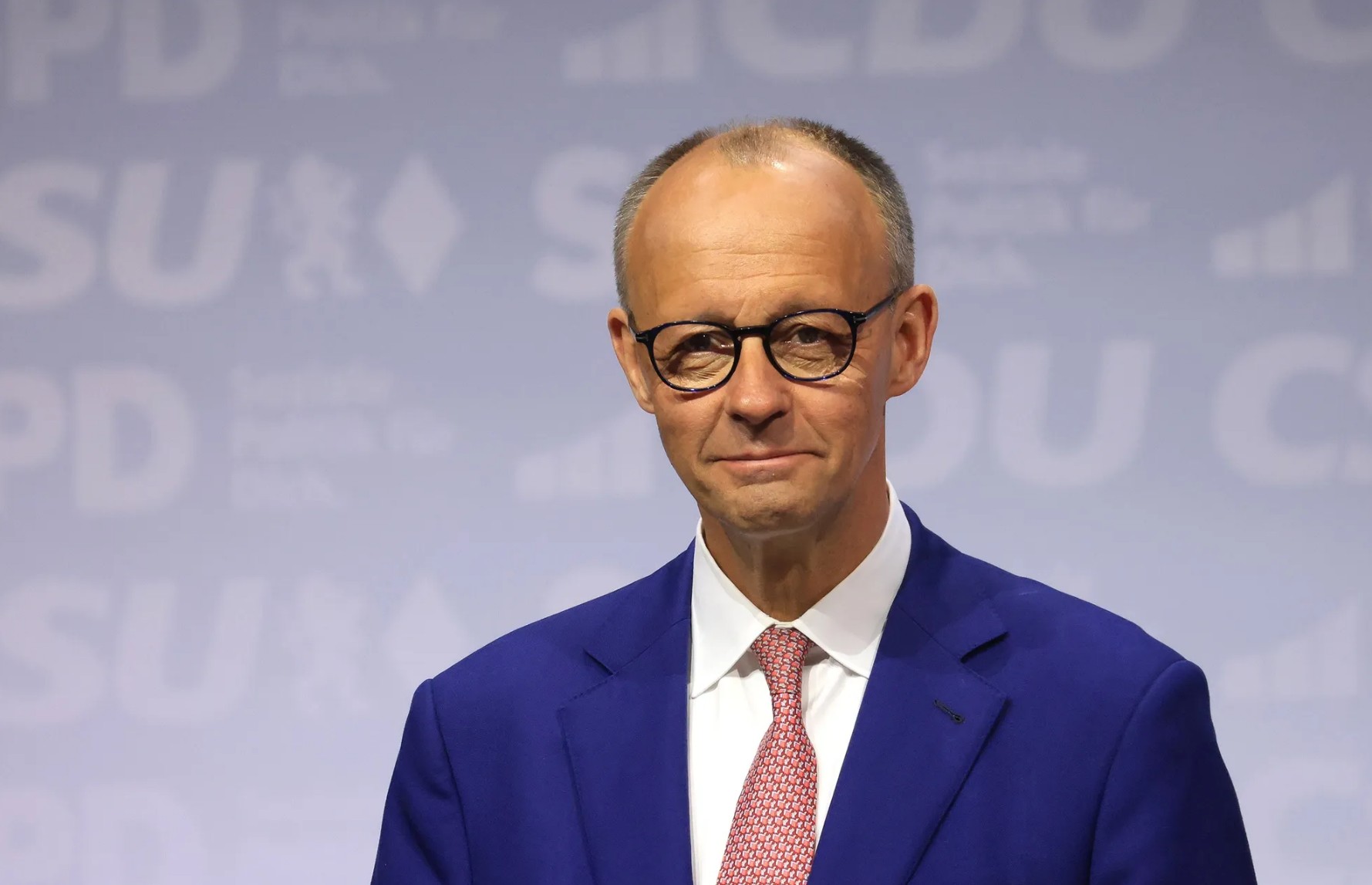
BERLIN (Realist English). German Chancellor Friedrich Merz will hold separate meetings in the coming days with the two main contenders to succeed the head of the European Central Bank. This marks the entry of the struggle for the ECB leadership into the post-Lagarde era’s practical phase.
Two frontrunners
Pablo Hernández de Cos — current General Manager of the Bank for International Settlements (BIS), previously Governor of the Bank of Spain for eight years. In surveys of monetary policy experts, he is recognized as the most qualified candidate, receiving the highest scores for central bank experience, consensus-building ability, and European credentials. He is generally classified as a centrist with a slight lean toward dovish policy.
Klaas Knot — former President of the Dutch Central Bank. In a Bloomberg survey of economists, he ranked first and is considered the most likely successor, although the same survey shows other candidates surpass him in qualifications. He is classified as a moderate hawk.
Merz’s meeting with Knot will take place in the coming days, with de Cos — in the coming weeks.
Why the process has accelerated
Lagarde may leave early. Lagarde’s eight-year term formally expires in October 2027, but this week she stated she does not rule out leaving several months before the end of her mandate. She had previously negotiated for over a year with the World Economic Forum about a chair position; a decision is expected in October or November.
Three vacancies at once. In addition to the ECB head post, the term of Chief Economist Philip Lane expires in May 2027, and German Executive Board member Isabel Schnabel has announced her early departure in early January 2027. Schnabel’s departure has already created conditions for eurozone finance ministers to launch the official selection procedure in October.
Pressure from the French political clock. One motive for Lagarde’s early departure is to give outgoing French President Emmanuel Macron a say in choosing her successor before the 2027 French presidential election, and to prevent the far right, should it come to power, from influencing the choice of ECB leadership.
Germany’s position
Merz’s meetings with the two candidates indicate that Berlin is no longer seriously considering the nomination of Bundesbank President Joachim Nagel for the ECB head post.
The obstacle for Nagel is that European Commission President Ursula von der Leyen is already German, and if another German headed the ECB, it would mean two key EU institutions simultaneously led by Germans — politically unacceptable to other member states.
Germany’s alternative goal is the chief economist post. Analysts note that the chief economist often shapes the direction of ECB monetary policy debate more than the bank’s head: Otmar Issing and Jürgen Stark exerted deep influence precisely in this role. Among potential German candidates are Markus Brunnermeier of Princeton, Ulrike Malmendier of Berkeley, and Tobias Adrian, who recently left the IMF.
France’s demands
France, in turn, is seeking the chief economist post. Paris is considering Agnès Bénassy-Quéré, Vice-Governor of the Bank of France, and Laurence Boone, former OECD chief economist. France has an advantage in terms of gender diversity of candidates, which in this personnel game could become an important asset.
Possible combinations
Personnel appointments at the ECB are highly politicized, and the simultaneous presence of several vacancies significantly increases the likelihood of a “package deal.” The Greek Prime Minister predicted last week that leaders would reach a “grand deal,” deciding all three vacancies in one package.
One possible combination: Knot becomes ECB head (hawk), France gets the chief economist post (a balance toward doves), Germany gets the market operations department vacated by Schnabel, Spain gets a banking supervision post (if Dutch Executive Board member Frank Elderson departs). If de Cos becomes head, then Germany may get the chief economist post.
The final decision is expected in October or November 2026, to complete the arrangement before the French presidential election. In the ECB’s 28-year history, neither a German nor a Spaniard has ever headed the bank — this historical tradition will be broken in the current rotation.