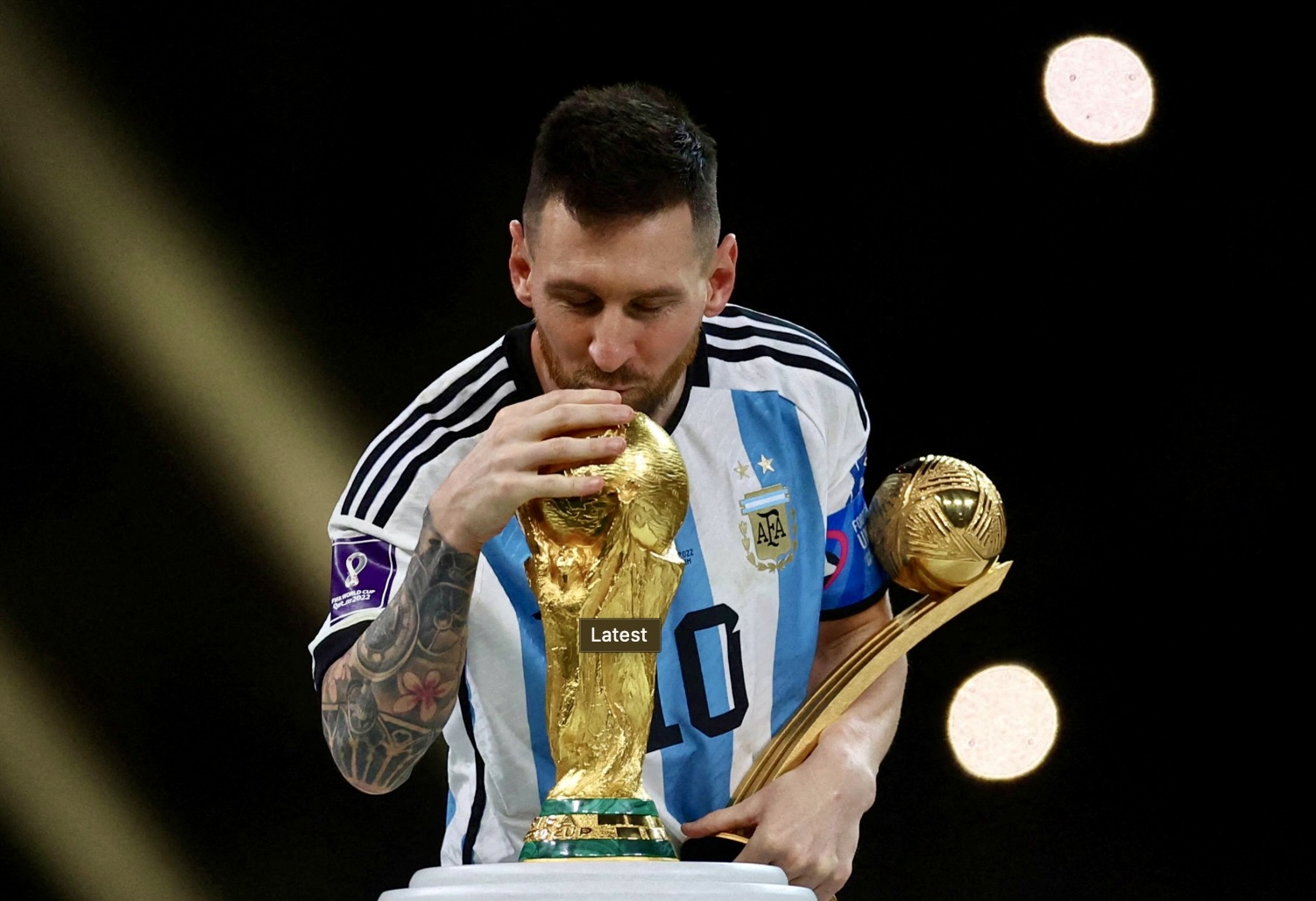
BUENOS AIRES (Realist English). On the evening of August 31, Lionel Messi officially announced the end of his career with the Argentina national team.
The eight‑time Ballon d’Or winner confirmed on social media what Argentine fans had suspected since July 19: after Argentina’s defeat to Spain in the World Cup final at MetLife Stadium in East Rutherford, Messi left the pitch not merely as a losing finalist, but as a man who had played his last match for the Albiceleste.
“Long after the final, after much thought, I want to announce to everyone that I am ending my career with the national team,” wrote the 39‑year‑old captain. “This decision hurts me, and it still hurts my heart, but I understand that the time has come.”
He later admitted that he had written the farewell letter on July 21 — two days after the final. However, he delayed publication due to the death of his father Jorge, who passed away on August 8 after a prolonged illness.
The Immigrant Who Could Have Become Spanish
Lionel Messi is an immigrant. At 13, he left Rosario with his family, fleeing a diagnosis of growth hormone deficiency that required expensive treatment. Argentine clubs refused to pay, and only Barcelona agreed to cover the costs.
At the Spanish club, he immediately shone. The Spanish federation began actively urging the young “Flea” — as he was then known — to play for Spain’s national team. Had he agreed, he would surely have three or four World Cup titles. He chose Argentina.
“As a child in an interview, he said his dream was to play for Argentina,” CNN reports. The Argentine Football Association organised a friendly match for the youth team to “lock” Messi in for Argentina. On June 29, 2004, a few days after his 17th birthday, his journey with the Albiceleste began.
20 Years, 207 Matches, 125 Goals and Triumph in Qatar
Over two decades, Messi played 207 matches for the national team and scored 125 goals, making him Argentina’s all‑time top scorer. He has been captain since 2011.
His journey with the national team was filled with disappointments: the 2014 World Cup final, three consecutive Copa América finals — all of which created an image of a “loser” and a “traitor,” as critics at home called him. Messi was compared to Maradona — and the comparison was inevitable, unfair and a heavy burden.
Everything changed in 2021: victory in the Copa América, then the 2022 World Cup in Qatar, followed by another Copa América in 2024. “Messi turned from a loser into a hero of a golden generation,” AP notes.
The Last Final and Tears on the Pitch
On July 19, 2026, Argentina lost to Spain in the World Cup final — 0‑1. Messi remained standing on the pitch, gazing at thousands of compatriots. Some thought he was angry. In fact, he was saying goodbye.
“He was saddened by the defeat in the final, but he wept inconsolably because he knew: this was his last match for the national team,” CNN writes. He wanted to imprint every moment, every sound, every feeling in his memory — because he would recall this day countless times.
“I Leave with a Clear Conscience”
In his farewell letter, Messi explained his decision. “I gave it my all, I have no more strength, and besides, a young generation is coming that deserves to be here,” he wrote. “I will miss your voices from inside the stadium. Now I will become one of you, always cheering for the team from the stands — in good times and in bad.”
He thanked the coaches, teammates, management and everyone who had been by his side. And he closed the letter with words that explain everything: “Thank God for giving me the chance to be born Argentine.” “Love for one’s homeland does not depend on where you live.”
Coming Home
“Messi, the immigrant who never forgot his homeland,” CNN titled its piece. And that is perhaps the most accurate description of his journey. He left as a child, grew up in Europe, became a billionaire — and yet never for a day stopped being Argentine. Spain actively called him to its national team — he refused. He still speaks with his native Rosario accent.
Yet questions remain. Can Argentina find a replacement for the man who was called “Maradona’s successor” at just 17? Will the new generation — Julián Álvarez, Lautaro Martínez — possess the same obsession and love for the shirt? And most importantly — do Argentines realise they are saying goodbye not just to a footballer, but to the last link connecting them to a golden era when the Albiceleste dominated the world?
Now Messi will become a fan. But he will forever remain the man CNN called “the greatest player in football history.” And the one who, having left his homeland in search of life, never betrayed it in search of glory.