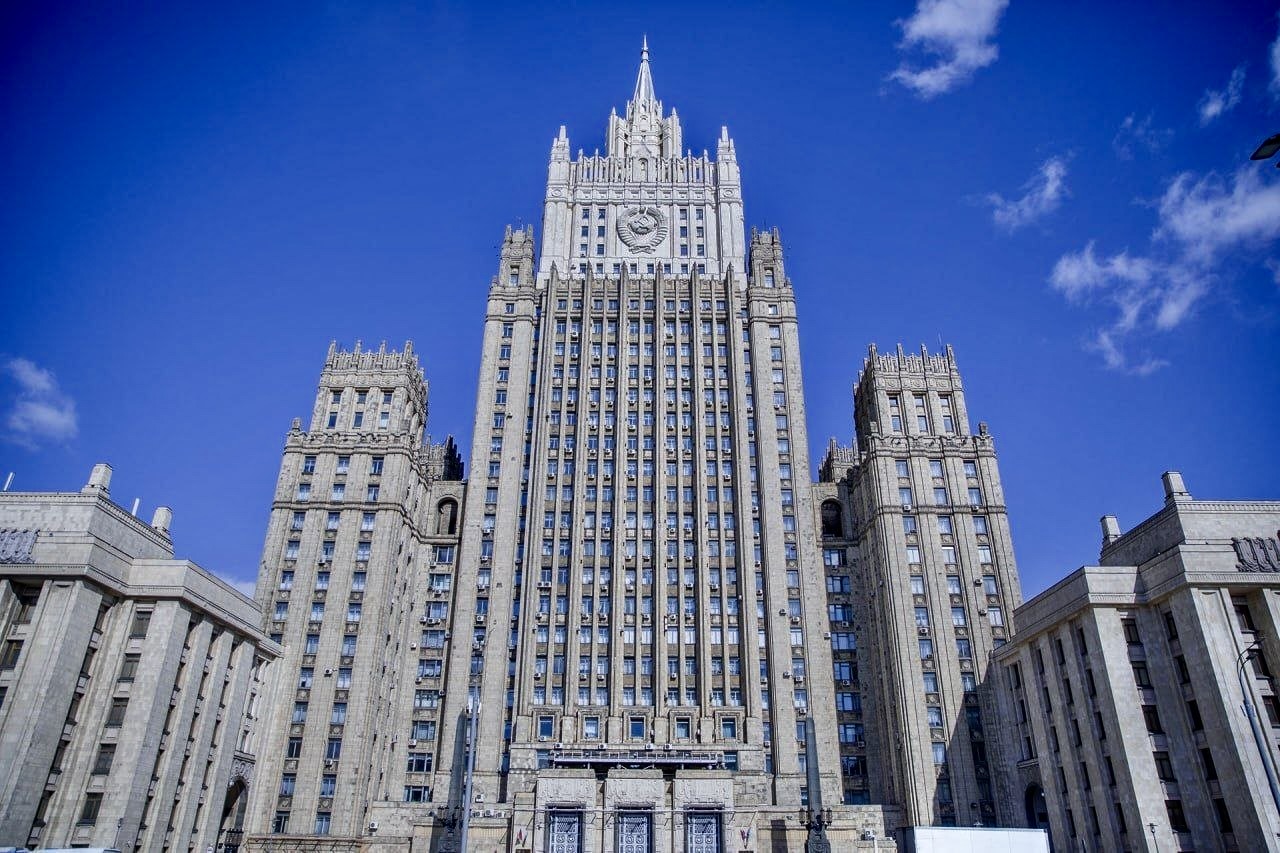
MOSCOW (Realist English). On September 1, Moscow hosted political consultations on the Middle East and Africa between Russian Deputy Foreign Minister Georgy Borisenko and his Turkish counterpart, Musa Kulaklıkaya.
During the talks, considerable attention was paid to the explosive situation in the Persian Gulf, created by US and Israeli aggression against Iran. The Russian side stressed the need for a sustainable and full ceasefire and the rapid relaunch of a political‑diplomatic process based on the “Islamabad Memorandum.” Moscow also shared with its Turkish colleagues its proposals under the updated Concept for Collective Security in the Persian Gulf.
The Palestinian‑Israeli conflict was also discussed in detail, particularly the situation in the Gaza Strip. The Russian side, as before, reaffirmed its unified position in favour of a comprehensive resolution of the Palestinian issue on the internationally recognised legal basis, which envisages the creation of an independent, territorially integral and viable State of Palestine. An exchange of views also took place on the situation in Iraq, Syria, Lebanon, Sudan and Libya.
On the African track, the sides exchanged experience in organising events under the Russia‑Africa Partnership Forum and the Turkey‑Africa cooperation mechanism. Both sides noted their mutual desire to promote Africa as an independent and influential centre of global development and to assist African countries in strengthening their sovereignty and increasing their representation in global decision‑making.
August Background: Ankara’s Diplomatic Activity
The consultations were just one episode in a busy diplomatic August between Moscow and Ankara. In the month preceding the meeting, the Turkish side launched several initiatives that were received with wariness in the Kremlin.
Black Sea Ceasefire: A Rejected Offer
In early August, Turkey proposed a moratorium on strikes against ships in the Black Sea. Turkish Foreign Minister Hakan Fidan said on August 8 that Ankara had offered Russia and Ukraine an agreement on a ceasefire in the waters. However, Moscow refused.
On August 14, Russian Foreign Ministry spokeswoman Maria Zakharova stated that Moscow “sees no prerequisites for an improvement in the situation” and no grounds to agree to the proposed ceasefire. Moreover, the Russian side noted that no official approach had been received from Ankara — the proposal was made only through the media, which Moscow considered disrespectful.
Grain Deal: An Attempt at Revival
On the last day of August, Turkey again announced it was preparing a plan to resume safe grain passage through the Black Sea. Fidan confirmed that Ankara was in contact with Moscow and Kyiv on the issue. However, the Russian side has already made it clear that a return to the previous “grain deal” is considered “inappropriate.”
The Syrian Dossier: Turkish Ambitions and Russian Irritation
The greatest tension in bilateral relations remains around Syria. Ankara continues to insist on the need to take its security interests along its southern borders into account. At the same time, Turkish forces, according to media reports, continue operations on Syrian territory. Russia, for its part, in August signed a memorandum with Syria’s transitional government on maintaining military bases at Khmeimim and Tartus.
The Gas Hub: Promises and Reality
The energy agenda remains one of the few areas where Moscow and Ankara maintain mutual interest. Presidents Putin and Erdoğan had previously tasked their governments with working out the creation of a “gas hub” in Turkey. Russia increased gas exports to Europe via the TurkStream pipeline by 3.4% in January‑August.
However, according to media reports, Erdoğan plans to discuss energy cooperation with Putin at their upcoming meeting in Bishkek — which may indicate that the project details have still not been agreed.
Political Background: The Bishkek Meeting
The Moscow consultations took place on the same day that Russian President Vladimir Putin and Turkish President Recep Tayyip Erdoğan met in Bishkek on the sidelines of the SCO summit.
Ahead of the meeting, Kremlin spokesman Dmitry Peskov called for waiting for concrete Turkish proposals on a Ukrainian settlement — which can be interpreted as sceptical expectation rather than an advance of trust. Energy, Syria and Black Sea security were also expected to be on the agenda.
Partnership Without Illusions
Russia and Turkey continue to maintain dialogue on the Middle East and Africa. As was stated following the consultations, the sides confirmed the importance of maintaining a “high dynamics of political dialogue” in the interests of resolving crisis situations.
Yet behind the diplomatic rhetoric, the reality is becoming ever clearer: Ankara continues to play its own game. Turkey is trying at once to act as a mediator between Russia and Ukraine, expand its influence in Africa, maintain a military presence in Syria, and promote energy projects with Moscow — yet each time it comes to concrete commitments, the Turkish side either drags its feet or acts unilaterally.
Open questions remain. How sincere are Ankara’s assurances of commitment to a “balance of interests”? Can Moscow extract real steps from Turkey on Syria and Black Sea security — or will Erdoğan continue to use dialogue with Russia as a tool for bargaining with the West and strengthening his own international position?
For now, Moscow continues consultations; Ankara continues its game. And judging by August’s events, the Kremlin’s patience with Erdoğan’s double game is gradually wearing thin.