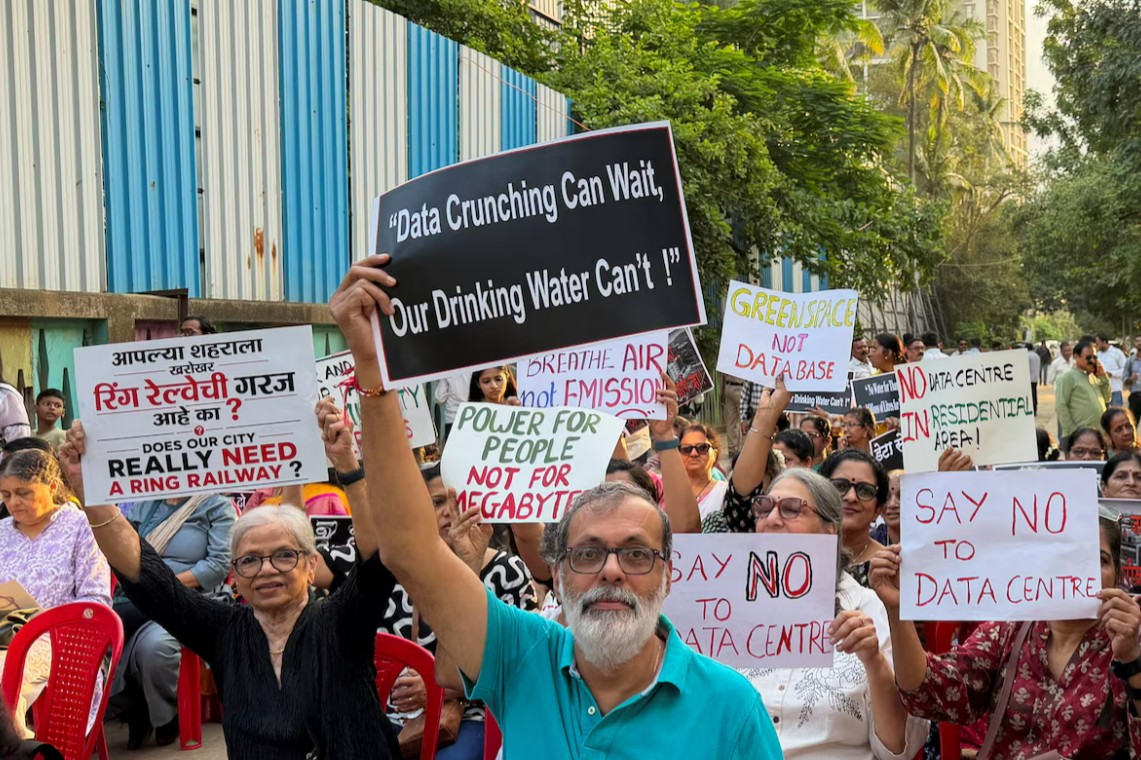
NEW DELHI (Realist English) . India is striving to become a global data processing center for the AI era. Prime Minister Narendra Modi wants to position the country as a computing hub “storing the world’s data.” However, in Thane and Visakhapatnam, residents — fearing water shortages, power grid overload, and environmental damage — are organizing protests.
Modi’s AI ambitions
The Modi government systematically laid out its vision at the India AI Impact Summit in February 2026. Modi proposed the M.A.N.A.V. framework (morality and ethics, accountable governance, national sovereignty, accessible and inclusive AI, lawful and effective systems). He emphasized: AI must serve humanity, not dominate it.
India’s differentiated path is this: since it is difficult to compete with the US and China in foundation models, the country is betting on the physical infrastructure of AI. This means data centers, computing clusters, and power supply. The goal is to become the global “computing back office” for AI.
Scale: from 1.5 GW to 26.3 GW
India’s data center capacity grew from approximately 375 MW in 2020 to about 1.5 GW in 2025. This is more than a fourfold increase in five years. Wood Mackenzie forecasts: by 2030, operational capacity will reach 12 GW. The average annual growth rate is about 40%.
Electricity demand is even more impressive. India’s Ministry of Power initially estimated the additional load from data centers at 13.56 GW. A few weeks later, the figure was almost doubled to 26.3 GW by 2031–32. Deloitte forecasts: by fiscal year 2030, data centers will consume about 57 TWh. TERI’s estimate is slightly lower — about 50 TWh.
Projects are advancing: tech giants are betting
HyperVault, owned by TCS, received 264 acres of land in Hyderabad in September 2026. An AI data center with capacity up to 1 GW is planned. Expected investments — up to 700 billion rupees, about $8.5 billion. The project will use direct liquid cooling of chips. It is aimed at advanced AI companies and hyperscalers.
Blackstone led a funding round for Indian AI cloud platform Neysa worth more than $1.2 billion. Plans are to deploy more than 20,000 GPUs in India.
Nvidia led an extended funding round for Indian AI startup Sarvam AI worth $74 million. The company is training an AI model with a trillion parameters on a cluster of 10,000 Nvidia Blackwell GPUs.
Where the resistance comes from: Thane and Visakhapatnam
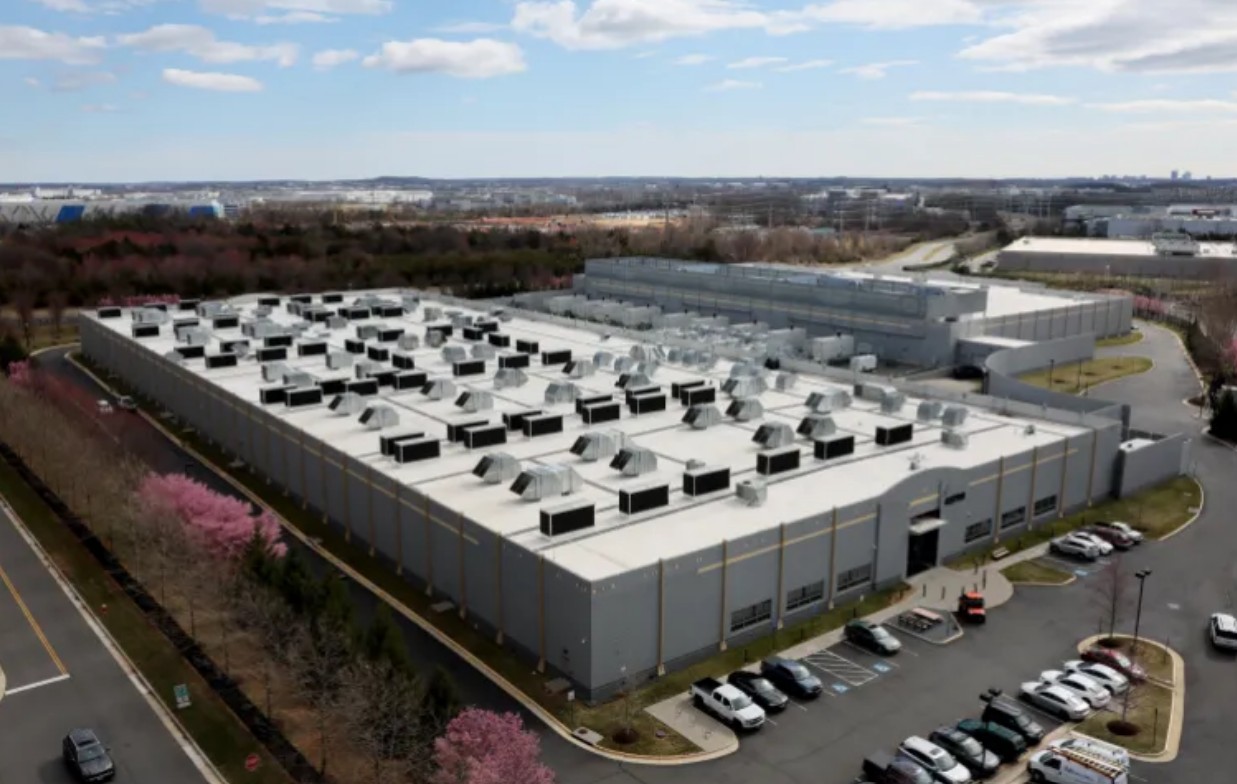
Thane (Maharashtra). Amazon plans to build a hyperscale data center on a plot of about 53–58 acres in the Balkum and Majiwada areas. Nearby are large residential areas, 5 schools, and 3 hospitals. Residents have organized several rounds of protests.
Concerns include water. Protesters claimed the facility needs 12 million liters per day. Amazon denies using water for cooling. The company states that the permit is only for drinking and sanitary water for employees — 0.01 million liters per day. Residents also fear the load on power grids, constant noise from cooling equipment and backup generators, and heat emissions.
Visakhapatnam (Andhra Pradesh). Google and the Adani group plan a 1 GW data center cluster on three plots with a total area of about 480 acres. The focus of protests is the proximity to the Kambalakonda Wildlife Sanctuary. The local population of 2.5 million people daily needs 480 million liters of water but receives only 410 million. Restrictions have already been introduced everywhere. Activists fear that guaranteed water supply for data centers will worsen the deficit. The case has been referred to the Andhra Pradesh High Court.
Water: the key contradiction
India has 4% of the world’s fresh water reserves. At the same time, it carries 18% of the planet’s population. S&P Global estimates: in the current decade, 60–80% of Indian data centers may face high water stress. In 2025, data centers consumed about 150 billion liters of water. By 2030, this figure is expected to more than double.
Official reaction and industry position
Amazon and local authorities decisively defend the projects. They state that electricity and water will come from dedicated sources and will not affect public resources. Amazon emphasizes: its data centers in India do not use water cooling. Air systems are used, and noise protection measures will be taken.
Air systems are used, and noise protection measures will be taken. Google also states that it conducted independent environmental, watershed, and acoustic audits. The results have been incorporated into the project.
Industry experts note: data center cooling can account for 30–40% of energy consumption. The transition to liquid cooling and AI-optimized management is a key direction for improving efficiency. The CEO of Tata Power stated: thanks to the expansion of storage and renewable sources, India is capable of coping with the surge in electricity demand related to AI.
But the problem lies in the mismatch of timelines. A data center can be built in about two years. The accompanying grid infrastructure requires more time. This means: the power system may not keep pace with the expansion of computing capacity.