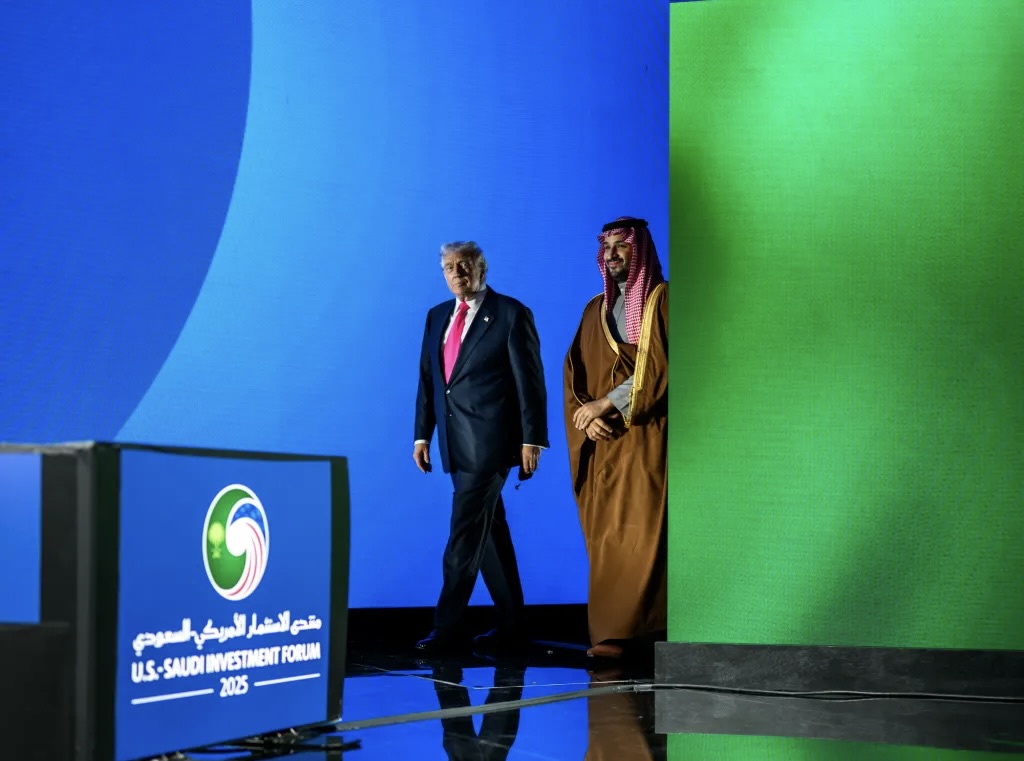
WASHINGTON (Realist English). The Trump administration has tentatively agreed to allow Saudi Arabia to enrich uranium on its own soil, but final approval of the deal is still pending.
According to CNN, citing sources and reviewed documents, the draft agreement — known as a “Section 123 Agreement” (after the relevant provision of the 1954 Atomic Energy Act) — is still awaiting the president’s signature, even though talks between Washington and Riyadh were concluded as early as October 2025.
The key feature of the agreement is that it does not require Saudi Arabia to sign the Additional Protocol to its safeguards agreement with the International Atomic Energy Agency (IAEA). The Protocol grants expanded inspection powers to IAEA inspectors to verify possible undeclared nuclear facilities. Without it, experts warn, the deal could open the door for Riyadh to develop nuclear weapons.
According to one CNN source, the special provision allowing a certain degree of uranium enrichment and/or plutonium reprocessing on Saudi territory is “unprecedented” for this type of agreement.
Why the Deal Is Stalled
Although negotiations on Saudi Arabia’s civilian nuclear programme were completed last year, the document has still not been signed. CNN highlights two main reasons for the delay.
First — the war with Iran. As sources note, the ongoing US‑Israeli military conflict with Iran, which Trump said was partly launched to prevent Tehran from acquiring nuclear weapons, has played a role in postponing the signing.
Second — concerns in Congress. Some lawmakers believe the administration is delaying the signing for fear of disapproval and the passage of a bipartisan resolution that could block the deal from taking effect. By law, once signed, the agreement must be submitted to Congress for review, which has not yet happened.
Expert Reaction and Comparison with the UAE
Non‑proliferation specialists are sounding the alarm. Unlike the “gold standard” — the 2009 agreement with the UAE, where the Emirates adopted the Additional Protocol and renounced enrichment and reprocessing — the Saudi deal contains no such strict restrictions. Instead of the Additional Protocol, oversight would be carried out through a bilateral safeguards agreement between the US and the Kingdom.
Kelsey Davenport of the Arms Control Association noted that the Additional Protocol was created precisely to give the IAEA greater access after it became clear that basic safeguards agreements were insufficient.
Andrea Stricker of the Foundation for Defense of Democracies warned that even under US oversight, there is no safe way to permit enrichment or reprocessing on Saudi soil, as Riyadh could ultimately nationalise such facilities.
Saudi Crown Prince Mohammed bin Salman has previously stated that if Iran develops nuclear weapons, Saudi Arabia will also seek to acquire them.
The “Section 123 Agreement” remains in limbo. The Trump administration briefed some members of Congress on the deal’s basic parameters earlier this year, but the final decision rests with the president. The White House did not respond to CNN’s requests, instead referring to Energy Secretary Chris Wright’s October 2025 statement that negotiations had concluded.
As CNN notes, uranium enrichment and plutonium reprocessing are the two primary pathways to producing the material needed for nuclear weapons. Most countries do not produce it themselves but purchase it from suppliers.
The deal with Saudi Arabia, if signed in its current form, would represent a major departure from established non‑proliferation norms and could trigger a nuclear arms race in the Middle East.