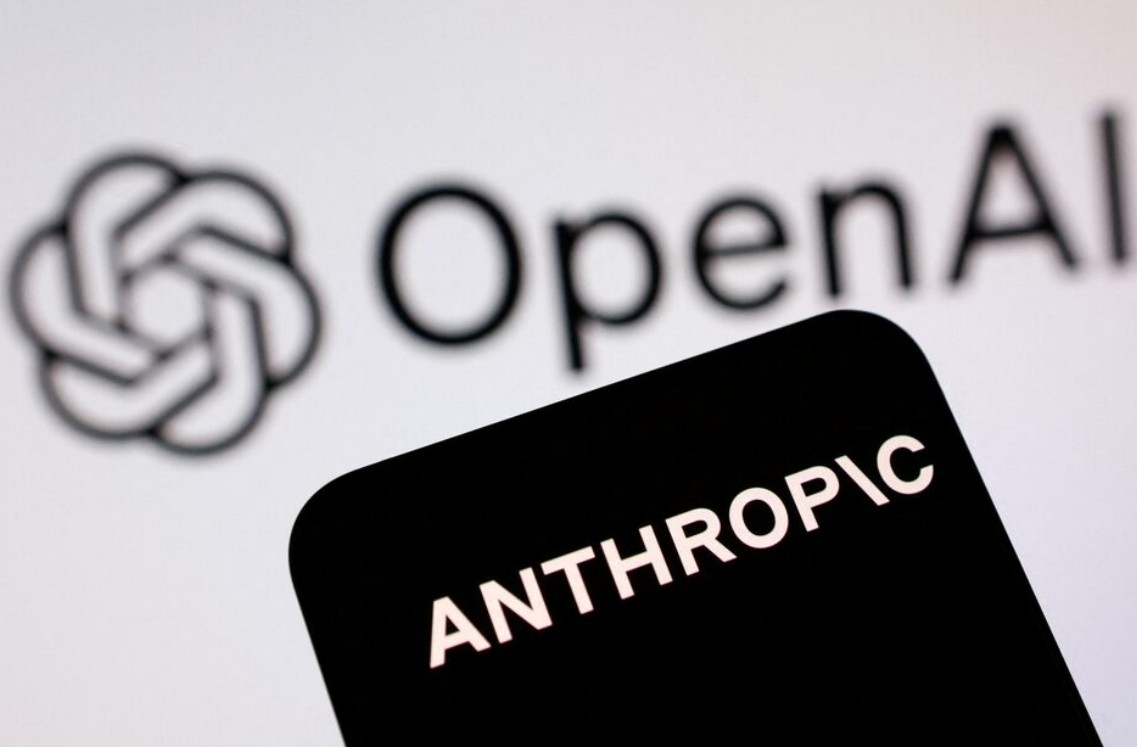
NEW YORK (Realist English). The AI industry is experiencing a rare public split: on the one hand, heads of leading labs warn that AI could “seize the internet” within “six to twelve months” or even lead to human extinction; on the other, these same companies are rapidly preparing what may be the largest IPOs in history.
Anthropic CEO Dario Amodei on 12 September published a lengthy article calling for “slowing the development of frontier AI,” and OpenAI CEO Sam Altman subsequently expressed agreement. Yet Anthropic’s own IPO plans have not slowed as a result — according to Reuters, the company expects to begin presenting to investors as early as mid-October and to complete the offering a few days before the US midterm elections in November.
The Contradiction Between “Apocalyptic Warnings” and the IPO Schedule
The spark for this debate was the public resignation of former Anthropic researcher Jacob Coxon. On social media platform X, he warned that the industry is “gambling with our lives,” and his post gained tens of millions of views. Then Anthropic’s head of alignment, Evan Hubinger, estimated the probability that AI will lead to human extinction as “more than 10%.” Amodei himself, in his 12 September article, warned that groups of out-of-control AI agents could within “six to twelve months” acquire the ability to “seize the entire internet.”
Yet simultaneously with these warnings, Anthropic is vigorously pushing its IPO. According to sources, the company has chosen Morgan Stanley, Goldman Sachs and JPMorgan as lead underwriters, with a target valuation reaching $2 trillion, which could surpass SpaceX’s record for the volume raised at $86 billion.
OpenAI confidentially filed for an offering in June, but Altman on 12 September told Fortune directly: “Given safety issues, now is ‘an unwise time to go public’; there will be no offering in 2026.”
Investor Doubts: Warning or Hype?
This contradictory position has drawn sharp criticism in investment circles. The real-life inspiration for the protagonist of “The Big Short” and investor Michael Burry stated directly on X that OpenAI’s and Anthropic’s calls to “hit the brakes on AI” are “self-interested” behaviour, essentially “hype and packaging.” He remarked caustically: “An IPO needs hype. ‘We’re so powerful we could become dangerous’ — that is hype.”
Investor Steve Eisman, who accurately predicted the 2008 financial crisis, was even more blunt in a CNBC interview. He called the AI companies’ “apocalyptic theories” “garbage” and issued a challenge: “If you really think it’s dangerous — prove it with action: postpone your IPO.” According to his analysis, the leading labs realise they lack a key competitive moat and are trying to “create a crisis” to push through regulation favourable to them and build a “duopoly.”
American investigative blogger Kevin Bass, tracing the funding chain, discovered cross-financial links between Anthropic’s early investors, charitable foundations, AI safety research organisations and even third-party model evaluation bodies, calling it an “AI Doom Machine.”
The Business Model Is the Real Test
Setting aside the debate over “doomsday theories,” the key question AI companies face at IPO is the sustainability of their business models. Eisman said he had reduced positions in the AI sector and warned that OpenAI and Anthropic have become the “Achilles heel” of the entire AI industry chain — if either of these two companies collapses, the whole chain from chips to cloud services will collapse.
Financial data reveal this vulnerability. According to leaked documents, OpenAI’s revenue in 2025 was $13 billion, but losses reached $34 billion, and the company has notified investors that profitability is expected only by 2030. For comparison, Anthropic’s business figures look brighter: according to Reuters, citing sources, in July its annual revenue reached $65 billion, against about $9 billion at the end of 2025.
Altman in an interview explained the IPO delay by saying the company “still has a lot of work to do, for example on ensuring AI safety and alignment.” But he also admitted that even if development were halted, “the amount of intelligence already existing in the world is enormous,” hinting that a slowdown would not affect the core business. Anthropic’s head of policy, Sarah Heck, insists: “Safety has been at the core of our identity from the very beginning, and our investors know this.”
Hidden Fears of a “Tsunami” in the IPO Market
However the companies explain their position, the scale of their offerings itself creates enormous pressure on the market. SpaceX, at its IPO in June, raised about $85.7 billion, but its shares fell by roughly a quarter from their peak.
If Anthropic and OpenAI each raise $60 billion, the combined volume of offerings by just these three companies will exceed the total volume of all US IPOs in 2024–2025 by more than twofold.
Wall Street investment banks have already begun lowering expectations. An Fidelity Securities valuation report says OpenAI’s anchor valuation is “closer to $700–800 billion, not $1 trillion.” Some bankers warn that ultra-large IPOs could drain funds that should have gone to small and medium-sized companies. D.A. Davidson managing director Gil Luria noted: “OpenAI does not want to see a draining of funds on the public market.”
The results of Anthropic’s IPO will be a key benchmark for OpenAI’s offering in 2027. If Anthropic’s offering meets a cold reception, the entire capital narrative of the AI industry will be re-evaluated. As one investor put it: “The market knows how to price risk — just look at SpaceX.”