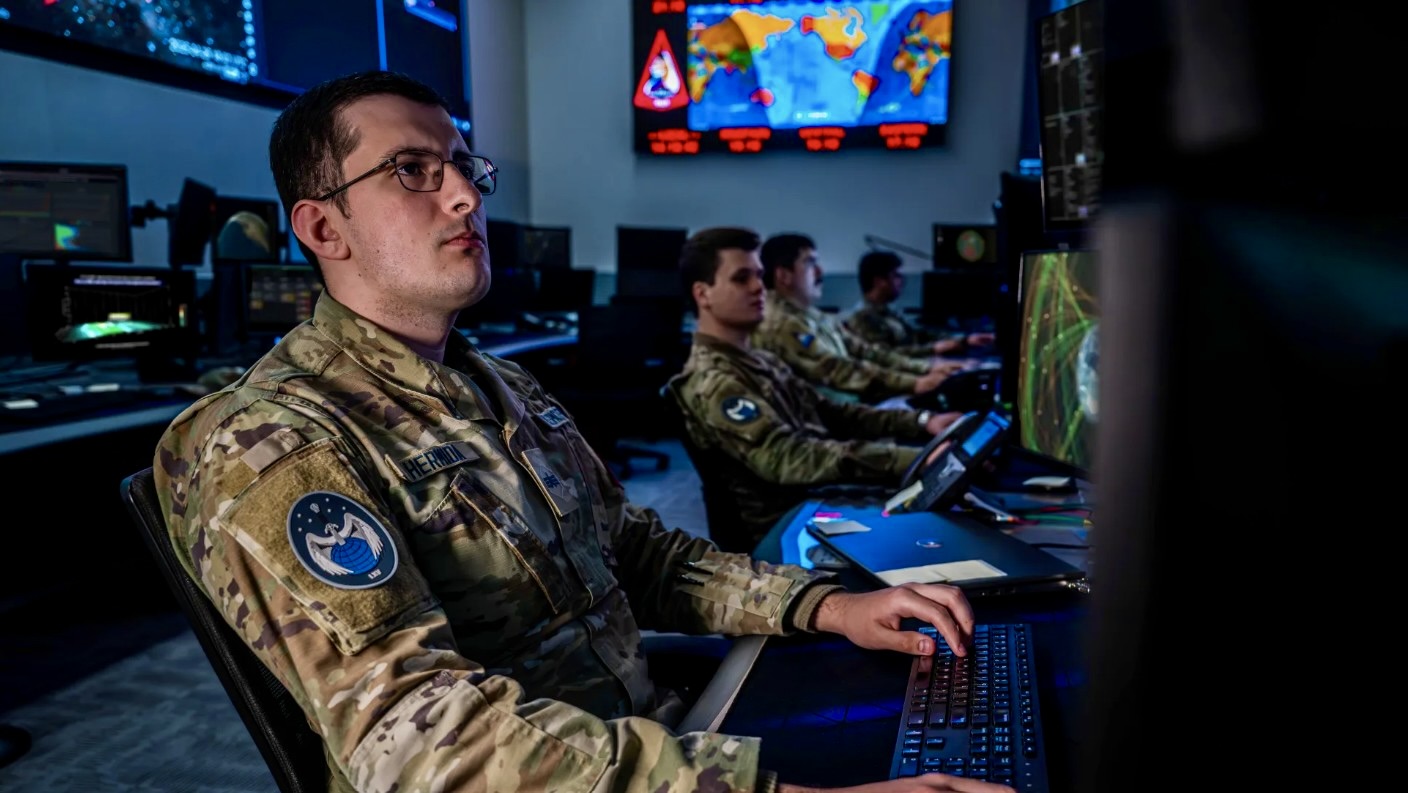
PARIS (Realist English). In an interview with France 24, researcher at RAND Europe’s defense, security and justice group Melusine Lebret stated that the growing militarization of space cannot be understood simply by asking whether a satellite is civilian, military or “armed.”
According to her, purely civilian systems can be “repurposed” for military capabilities. This blurring of the boundaries between civilian and military uses of space is becoming a central characteristic of the modern space race.
Legal Vacuum: What the 1967 Outer Space Treaty Prohibits
The key problem is that the 1967 Outer Space Treaty prohibits the placement in orbit of only weapons of mass destruction — nuclear, chemical, biological. Conventional types of weapons are not formally banned.
“There is a regulatory vacuum, because Article 4 of the 1967 treaty prohibits only weapons of mass destruction and nuclear weapons in orbit,” explained space law expert Letizia Cesari.
It is precisely in this grey zone that the confrontation between the great powers is unfolding. Russia, the US, China and India have for decades explored ways of conducting warfare in space beyond the treaty — including disabling enemy satellites critical for military communications, intelligence and navigation.
What Is Known About US Capabilities
The US acknowledgment was the first official confirmation of the deployment of weapons in orbit. US Air Force Secretary Troy Meink stated that Washington possesses “orbital space control weapons” capable of protecting joint forces from hostile actions.
A US Space Force representative clarified that this refers to “kinetic and non-kinetic means for affecting enemy capabilities,” which can be used for both offensive and defensive purposes.
Non-kinetic means may include lasers to blind satellites, electromagnetic or cyber jamming of data transmission channels. Kinetic means involve the physical destruction of spacecraft.
Arms Race: What Russia and China Can Do
Russia and China reacted sharply to the US acknowledgment. The Chinese Foreign Ministry warned of the inadmissibility of turning space into a “battlefield” and called on Washington to “stop expanding military capabilities and preparing for war in space.”
“China will not stand aside and do nothing,” said independent military commentator Song Zhongping, noting that Beijing already has its own orbital station. “Whether China will place weapons in space depends solely on whether the US moves in that direction.”
Russia insists on the complete demilitarization of space. Kremlin spokesman Dmitry Peskov stated that Moscow counts on “broad international consolidation” to continue work on complete demilitarization.
Diplomacy Fails: UN Security Council Unable to Agree
Attempts to settle the situation diplomatically have failed. In September, the UN Security Council rejected a Russian draft resolution banning weapons in space. An alternative draft supported by the US and Japan also failed earlier.
The Russian draft concerned all types of weapons, whereas the American-Japanese one focused only on weapons of mass destruction. The vote split 7-7, and the resolution did not receive the required nine votes.
“We are witnessing this negative, quarrelsome position among the leading space powers, which seem more interested in scoring points against their opponents than in constructive dialogue,” commented former Canadian Ambassador for Disarmament Paul Meyer.
Why This Matters for the Whole World
The consequences of the arms race in space go far beyond the military sphere. Satellites provide navigation, aviation, weather forecasts, telecommunications, banking transactions and the operation of power grids. Their destruction would affect millions of people around the world.
Moreover, an explosion in orbit would create a cloud of debris moving at about 28,000 km/h, which could damage other spacecraft and render entire orbits unusable.
“Many have an interest in the ability to operate safely and reliably in space,” Meyer noted.