TEHRAN (Realist English). On the night of July 9, the United States carried out a second massive strike against Iran. US Central Command (CENTCOM) confirmed that about 90 military targets were hit — ten more than the previous night.
Over two nights, US aircraft hit at least 170 targets.
President Donald Trump, who the day before at the NATO summit in Ankara declared the ceasefire with Iran “over,” now says Tehran itself reached out with a request for negotiations.
“They called recently. They want to make a deal so badly,” Trump told reporters aboard Air Force One. However, he immediately cast doubt on the wisdom of dialogue: “I just don’t know if they deserve this deal. I don’t know if they will abide by it.”
The Scale of Strikes: 90 Targets in One Night
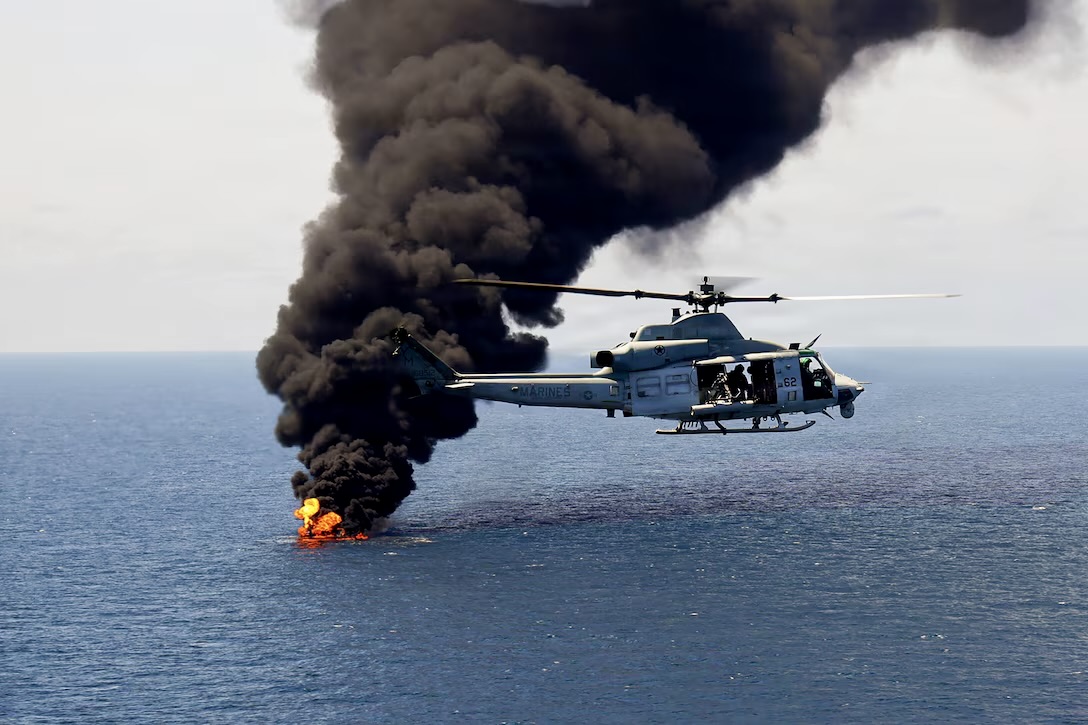
The second wave of strikes proved more powerful than the first. According to CENTCOM, the targets hit on the night of July 9 included:
- air defence systems;
- coastal surveillance facilities;
- missile and drone depots;
- naval facilities;
- military logistics infrastructure along Iran’s coast;
- more than 60 small vessels of the Islamic Revolutionary Guard Corps (IRGC).
According to Iranian media, explosions were heard in the counties of Bandar Abbas, Qeshm, Sirik and Chabahar, as well as on Abu Musa Island. In Chabahar, rocket fragments hit a hospital; in Iranshahr, airport infrastructure is on fire. According to an Iranian Health Ministry official, at least 14 people have been killed and 78 wounded over two days of strikes.
Iran’s Retaliatory Strikes: Bases in the Gulf Under Fire
Iran did not remain passive. The IRGC launched retaliatory strikes on US facilities in Bahrain, Kuwait and Qatar. According to Iranian media, the targets included:
- a Patriot air defence system in Kuwait;
- an early warning radar complex in Qatar;
- fuel storage facilities at a US military base in Bahrain.
Air raid sirens sounded in Bahrain and Kuwait. Iranian Deputy Foreign Minister Kazem Gharibabadi said that “no US action will go unanswered.” Iranian Parliament Speaker Mohammad Bagher Ghalibaf warned that the Strait of Hormuz will only open on Tehran’s terms.
Shipping in the Strait: Traffic Nearly Halted
The escalation has brought shipping in the Strait of Hormuz to a near standstill. According to Bloomberg, only 14 vessels carrying commodities passed through the strait on Thursday — the lowest figure since the memorandum was signed on June 18. By comparison, during the three weeks after the agreement, the average number of daily crossings was 34, with a peak of 59.
Notable traffic in the strait is observed exclusively along the route approved by Iran, which runs closer to the northern part of the strait. The US‑backed route along Oman’s coast is virtually unused. Signs of electronic interference have been detected in the Gulf of Oman, which may indicate the activation of defence systems against drone attacks.
Fragile Ceasefire Collapsed in Three Weeks
The escalation began with attacks on three commercial vessels in the Strait of Hormuz on July 6–7. In response, US forces carried out a first strike on more than 80 targets and revoked the sanctions waiver that had allowed Iran to sell oil.
On June 17, the US and Iran signed the “Islamabad Memorandum of Understanding,” which provided for a 60‑day ceasefire and the launch of negotiations on a permanent peace agreement. However, just three weeks later, the sides returned to mutual strikes.
Trump, who earlier called Iran’s leadership “scumbags” and “sick people,” now claims Tehran “desperately wants to make a deal.” At the same time, he remains sceptical: “Frankly, they’re a little crazy. They’re a little out of control, but they want to make a deal.”
Over two nights, the US and Iran exchanged strikes that have called into question the very peace process established less than a month ago.
Shipping in the Strait of Hormuz has effectively been halted, and talks on a permanent peace agreement, which were supposed to resume after the funeral of Supreme Leader Ali Khamenei, are now in limbo.
As Neil Crosby, head of oil research at Sparta Commodities, noted, “the market currently does not have enough capacity” to compensate for the effects of the escalation, while analyst Alam Saleh of the University of Bradford stated: “Bombing doesn’t work. The US has reached a dead end with Iran.”