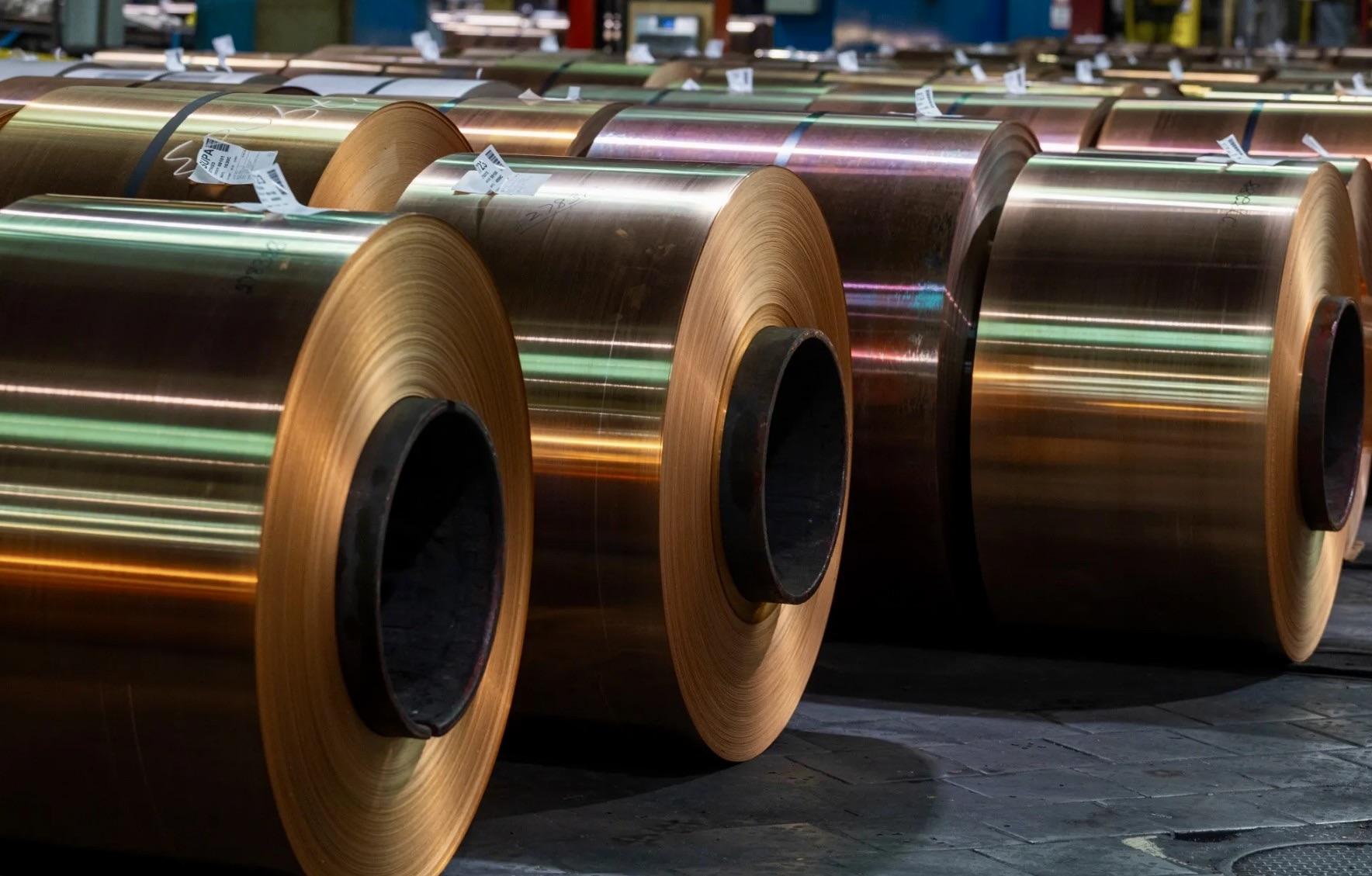
LONDON (Realist English). Copper prices on the London Metal Exchange hit an all‑time high on September 7, exceeding $14,530 per tonne.
The rally, which has been underway for several weeks, is fuelled by expectations of expanded US import tariffs on refined copper, disruptions in sulfuric acid supply due to the Strait of Hormuz blockade, and falling output in Chile. The metal has gained 17% over the past year.
“Tariff Arbitrage Rules”: How Copper Hit a Record
On September 7, LME three‑month copper futures rose 0.8% to $14,533 per tonne, surpassing the previous record of $14,527.50 set in January 2026.
On the New York Comex exchange, futures traded above $6.6 per pound, approaching the August high of $6.7. Copper on Comex has gained about 18% since the start of the year and more than 50% over the past 12 months.
According to Bloomberg, the key driver has been expectations that President Donald Trump will expand US tariffs on imports of refined metal.
Traders have been ramping up shipments to the US for months, seeking to profit on arbitrage: the price gap between New York and London has reached $640 per tonne. “Tariff arbitrage is ruling the roost, leaving demand growth far behind,” Michael Cuoco, head of metals at StoneX Financial, told Bloomberg.
In July, more than 200,000 tonnes of copper arrived at US ports — the highest monthly total since IHS Markit began tracking the data in 2014. Comex inventories have risen more than 40% since the start of the year, to a record 766,795 metric tonnes.
The Sulfuric Acid Crisis
Beyond the tariff factor, the market has been shaken by severe disruptions in sulfuric acid supply — a critical component for SX‑EW copper production, which accounts for more than 15% of global output.
The blockade of the Strait of Hormuz, caused by the escalating US‑Iran conflict, has cut off about half of seaborne sulphur shipments from the Persian Gulf.
At the same time, China, facing its own shortage, imposed a ban on sulfuric acid exports until December 2026. Together, roughly one‑quarter of global acid supply has disappeared from the market.
Producers in the Democratic Republic of Congo (about 1.5 million tonnes per year) and Chile (about 1.2 million tonnes) have been the hardest hit. According to Bloomberg, acid stocks at some mines have fallen to 30–60 days.
The Chilean Shock: Codelco Halts Expansion
The market also took a hit from state‑owned Chilean company Codelco, the world’s largest copper producer. In August, Codelco suspended the Andes Norte project at the El Teniente mine — the world’s largest underground copper deposit — citing an “emerging seismic phenomenon with characteristics different from previously known risks.”
Codelco CEO Bernardo Fontaine stated that “there is no way” to reach the target of 1.7 million tonnes per year within the next four to five years — output will remain around 300,000 tonnes.
The Chilean government has already cut its production forecast twice this year and now expects output to fall by 2.6%. According to the International Copper Study Group, global copper production fell 1.1% in the first half of 2026.
Key Market Indicators
| Indicator | Value |
| LME (3‑month futures), September 7 | $14,533 per tonne |
| Previous record (January 2026) | $14,527.50 per tonne |
| Comex (September contract) | $6.6–6.7 per pound |
| Annual gain | 17% (LME), >50% (Comex) |
| NY‑London premium | ~$640 per tonne |
| Comex inventories | 766,795 tonnes (record) |
| Copper inflows to US (July) | >200,000 tonnes |
| Global deficit forecast 2026 | ~35,000 tonnes |
“The US Has Swept Global Copper Into Its Backyard”
Market analysts note that tariff uncertainty has distorted global metal flows. “The US has effectively swept all global copper stocks into its own backyard,” Carlyle Group senior adviser Jeff Currie, former head of commodities at Goldman Sachs, told Bloomberg.
TD Securities strategist Ryan McKay noted: “Record imports and strong arbitrage will keep prices supported until tariff uncertainty is resolved.”
Meanwhile, the physical market is already signalling tightness: the LME is in backwardation, with spot copper trading at a premium of more than $100 to the three‑month contract — the widest gap since January.
A Market Distorted by Policy
Copper’s record‑breaking rally reflects a market fundamentally distorted by policy uncertainty. Tariff expectations have drawn vast quantities of metal into the US, draining availability elsewhere. Supply disruptions from Chile and the acid crisis have compounded the squeeze.
Yet the sustainability of this rally is far from certain. If tariff fears ease, the arbitrage that has fuelled the price surge could reverse, releasing inventories and pressuring prices lower.
Open questions remain. How long can the US continue to absorb global copper without triggering broader market dysfunction? Will the sulfuric acid shortage force production cuts beyond those already announced? And what happens to prices if Trump’s tariff plans fail to materialise as markets expect?
For now, copper’s record highs reflect a market in which politics — not supply and demand — is the dominant force. And until that politics clears, the metal’s trajectory is likely to remain hostage to Washington.