FRANKFURT (Realist English). Germany’s industrial sector — the engine of the European economy — suffered its steepest production decline in three and a half years in August.
Industrial output fell by 4.3% month‑on‑month, against a forecast of just 1%, while the annual decline accelerated to 3.9%. The automotive sector, a traditional pillar of German exports, collapsed by 18.5%, while mechanical engineering and pharmaceuticals also came under heavy pressure.
These figures are the most alarming signal for the eurozone’s largest economy since the 2022 energy crisis — and have called into question all optimistic recovery forecasts.
18.5% Plunge in Autos: How Volkswagen’s Crisis Hit the Entire Sector
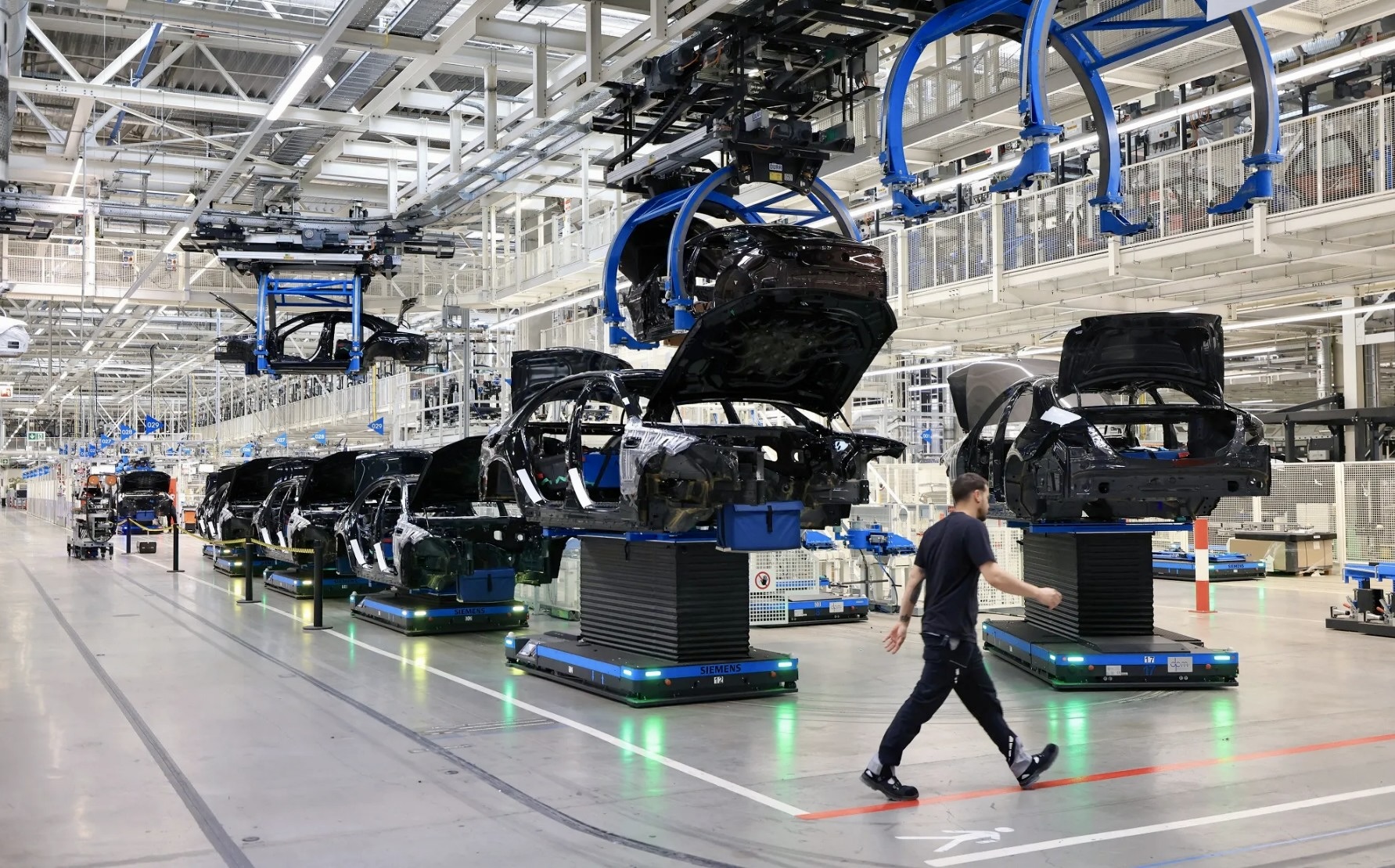
The main driver of the collapse was the automotive industry. In August, output in this sector fell by 18.5% — a decline that cannot be explained solely by summer plant shutdowns and model‑change disruptions.
Behind the figures lie systemic problems. Volkswagen, Europe’s largest manufacturer, approved a plan in early September to cut 100,000 jobs, while other automakers are also scaling back production amid falling demand in China and aggressive expansion by local electric vehicle manufacturers.
Machinery and Pharmaceuticals Also Hit
Beyond autos, the decline hit other key sectors:
| Sector | Change (m/m, August) |
| Automotive | −18.5% |
| Machinery | −6.2% |
| Pharmaceuticals | −10.3% |
| Computers, electronics, optics | −6.1% |
The only positive signal was a rise in new domestic orders, though weak external demand continues to hold back development.
Germany’s Economics Ministry described the data as a “mixed picture” reflecting “a high level of geopolitical uncertainty.”
Technical Recession Becomes a Real Threat
The 4.3% production drop came after Germany’s GDP contracted by 0.3% in the second quarter. ING economist Carsten Brzeski warned: “The risk of another quarter of contraction and thus a full‑blown technical recession is very real.”
| Indicator | Value |
| Industrial production (m/m, August) | −4.3% (forecast −1%) |
| Industrial production (y/y, August) | −3.9% |
| Industrial production (m/m, July) | +1.3% (revised) |
| Automotive (m/m, August) | −18.5% |
| Machinery (m/m, August) | −6.2% |
| Pharmaceuticals (m/m, August) | −10.3% |
| GDP (Q2) | −0.3% |
Trump’s Tariffs and the Exhaustion of the “Pre‑Buy” Effect
Over the summer, German industry faced a new blow: the imposition of US tariffs at 15% on most goods from the EU.
The temporary rise in exports before the tariffs took effect, according to Brzeski, was “almost entirely the result of pre‑emptive purchases ahead of the tariffs.” That effect has now faded, and the real state of exports has proven significantly weaker.
Economics Minister Katarina Reiche issued a statement on the September 7 data. The government had already halved its 2026 growth forecast in April — from 1.0% to 0.5% — in response to the energy shock caused by the Iran war.
A Collapse That Cannot Be Blamed on Seasonality
The 4.3% drop in industrial production in August is the steepest since March 2022. These numbers cannot be explained away by summer shutdowns or model changes. Behind them lies a systemic crisis of Germany’s industrial model, which for decades relied on automotive exports and cheap energy from Russia.
The automotive sector, which supports millions of jobs, finds itself at the epicentre of multiple storms: Chinese competition, falling demand for electric vehicles, Volkswagen’s protracted crisis and new Trump tariffs. Machinery and pharmaceuticals, traditionally considered resilient sectors, are also showing alarming declines.
The question is whether industry can recover in the second half of the year — or whether August’s collapse marks the beginning of a new recession that would make even the government’s pessimistic forecasts look optimistic. The answers will emerge in the coming months, when it becomes clear whether August was a temporary anomaly or a systemic failure of Europe’s largest economy.