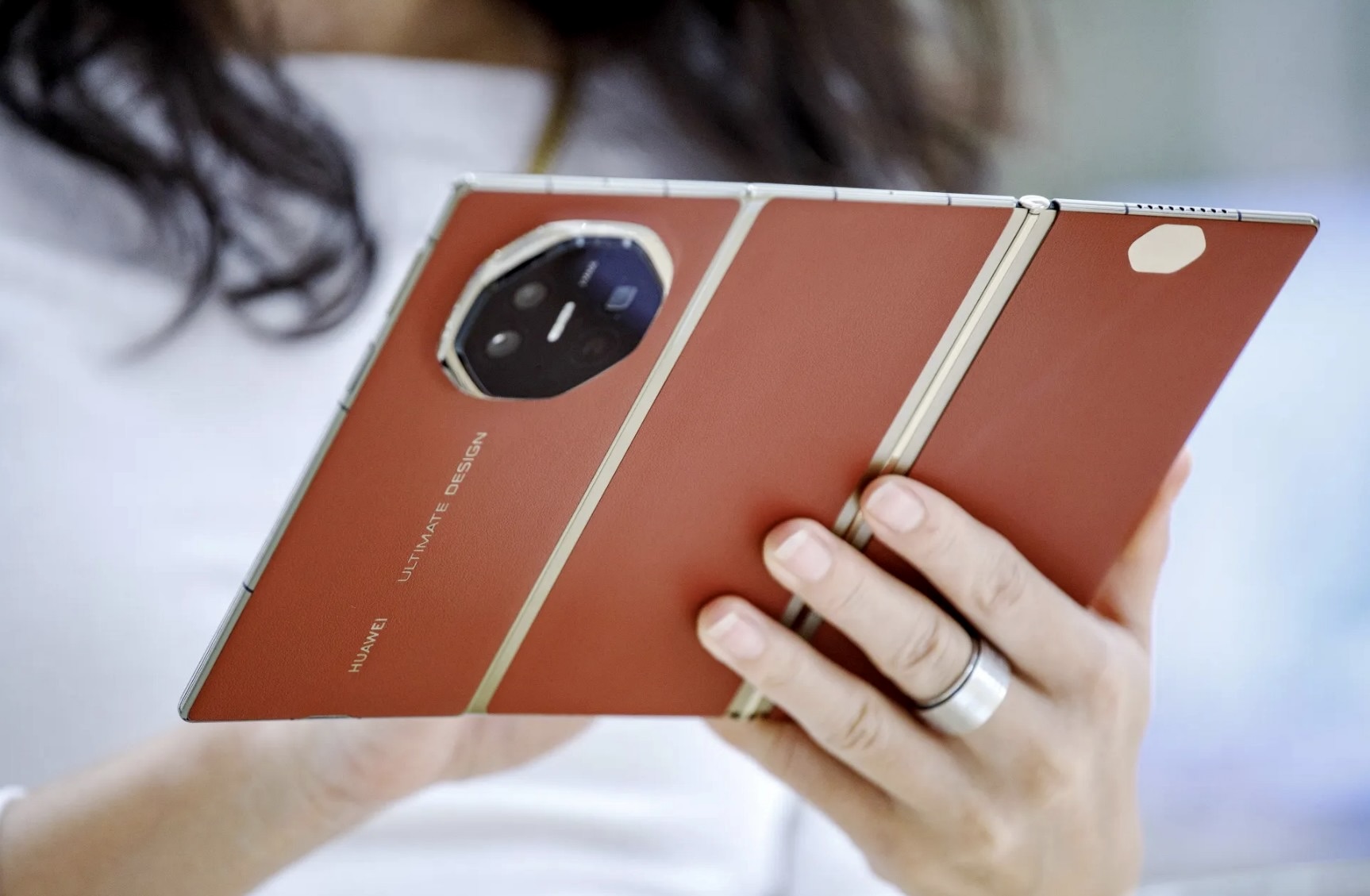
HONG KONG (Realist English). On September 7, an unprecedented battle kicked off in the global smartphone market: Huawei and Xiaomi held presentations of their new flagship foldable devices, just days ahead of Apple.
Within 72 hours, three tech giants will clash head‑to‑head for the wallets of premium buyers. This “super‑weekend” could dramatically reshape the foldable smartphone market, where Apple — despite its late entry — could capture up to 41% of the market as early as next year.
The “Super‑Week” Timeline: Three Giants in 72 Hours
While the global smartphone market is experiencing a record decline — with Counterpoint predicting shipments could fall 14% in 2026 — Chinese manufacturers are betting on the premium segment.
On the evening of September 7, two premieres took place in China:
- 14:30 local time — Huawei unveiled the second generation of its unique triple‑fold device, the Mate XT 2.
- Later that evening — Xiaomi showcased its first clamshell‑style foldable with an unconventional design — the Xiaomi 18 Fold.
The culmination will be Apple’s September 9 event, where new CEO John Ternus will unveil the iPhone 18 and the first foldable iPhone in history, rumoured to be called the iPhone Ultra or iPhone Fold.
Huawei Mate XT 2: Three Screens in One Device
Huawei has bet on innovation, presenting the second generation of its triple‑fold device, the Mate XT 2. Unlike its competitors, this device features two hinges and folds into three sections, transforming from a smartphone into a full‑fledged tablet.
The new model features a “U‑shaped” hinge design, where both hinges fold inward. The device also incorporates the proprietary LogicFolding architecture, designed to boost performance. Pricing is expected to be at least 10,000 yuan (approximately $1,400).
Xiaomi 18 Fold: Betting on Self‑Sufficiency
Xiaomi has taken a different path, focusing on technological independence. The Xiaomi 18 Fold’s key feature is that it is made entirely of domestically sourced components:
- Xring O3 processor — in‑house developed
- Memory from Chinese manufacturer CXMT
- Innovative “mid‑fold” hinge design
The device’s “passport‑style” design is rumoured to resemble the design of Apple’s future foldable iPhone.
The Threat to China: Apple Aims for Leadership
Apple’s entry into the foldable segment poses a dual challenge for Chinese manufacturers. Analysts project:
| Metric | Forecast |
| Apple’s foldable market share in 2026 | 25 % |
| Apple’s share in 2027 | 41% (world No. 1) |
| Foldable iPhone price | Over $2,000 |
“Apple has the largest premium user base in the world. Their foldable smartphone will sell well and quickly capture market share,” said Counterpoint analyst Ivan Lam.
The Pressure Factor: Falling Market and Rising Costs
Behind the launches lie not only ambitions but also harsh economic realities:
- Xiaomi has reported three consecutive quarters of declining profits.
- Huawei, despite rising shipments, has also faced profit erosion due to increasing component costs.
- Chinese manufacturers have raised prices to offset rising costs.
However, Apple could change the game by drawing attention to the category and expanding the market.
A Triple Strike on the Market — Apple Advances, China Defends
What is happening in the smartphone market on September 7–9, 2026, could be described as a tectonic shift. Over 72 hours, the three largest manufacturers — Huawei, Xiaomi and Apple — will present their visions for the future of mobile devices.
Significantly, the Chinese companies have launched a pre‑emptive strike: they deliberately held their presentations ahead of Apple to capture market attention. This suggests they view the arrival of the foldable iPhone as an existential threat.
Their bet on unique form factors (triple‑fold for Huawei, “mid‑fold” for Xiaomi) and component localisation is an attempt to create a product that Apple cannot easily replicate.
Yet Apple’s entry is not without a positive side: analysts expect interest in foldable devices to grow so much that it will boost sales not only for Apple but also for its competitors. The question is who will be best positioned to capitalise on this uplift.
The main intrigue of the “super‑weekend” is not who will unveil the thinnest foldable smartphone, but whether Apple, years late to the category, can catch up with its Chinese rivals. Huawei and Xiaomi have bet on unique form factors and localisation; Apple is relying on its premium brand and ecosystem. The answers will emerge in the coming days, when final pricing and specifications of the three flagships are revealed — and they will determine who dominates the premium segment in 2027.