HELSINKI (Realist English). On September 7, Finland officially completed construction of a 200‑kilometre border fence along its eastern frontier with Russia. The barrier, erected along the longest land border between NATO/EU and Russia (1,340 km), is intended to strengthen the alliance’s eastern flank and prevent illegal migration.
In Helsinki, it is called a “practical necessity”; in Moscow, “yet another round of confrontation.”
“Every State Must Safeguard Its Borders”: How the Project Was Completed
A ceremony marking the completion of the works took place in Lappeenranta, near the Nuijamaa border crossing. The event was attended by Interior Minister Mari Rantanen (Finns Party), Border Guard Commander Vice‑Admiral Markku Hassinen, project leadership and contractor representatives.
The decision to build the fence was made in October 2022. The pilot section was laid in April 2023 in Pelkola near Imatra. Major construction work began in 2024. The fence runs in separate sections across 17 municipalities — from Lapland to the coast of the Gulf of Finland.
Interior Minister Mari Rantanen stated that construction was necessary because the security situation in Europe had changed significantly, and the eastern border required enhanced control.
“In such a situation, every state must safeguard its own security and the integrity of its borders,” Rantanen stressed.
Strengthening Defence Capabilities
Defence Minister Antti Häkkänen (National Coalition Party) said on the day the fence opened that the barrier would strengthen the defence of NATO’s eastern flank and increase the cost of any hybrid actions against Finland. “The time to strengthen national defence is now,” the minister emphasised.
Technical Specifications and Cost
| Parameter | Value |
| Total length of fence | 200 km (124 miles) |
| Total border length | 1,340 km |
| Proportion of border covered | ~15% |
| Fence height | 4.5 metres (15 feet) |
| Longest section (south‑east) | ~140 km |
| Section in North Karelia | ~35 km |
| Sections in Kainuu and Lapland | ~25 km |
| Construction cost | €356–380 million |
| Annual maintenance | €1.5 million |
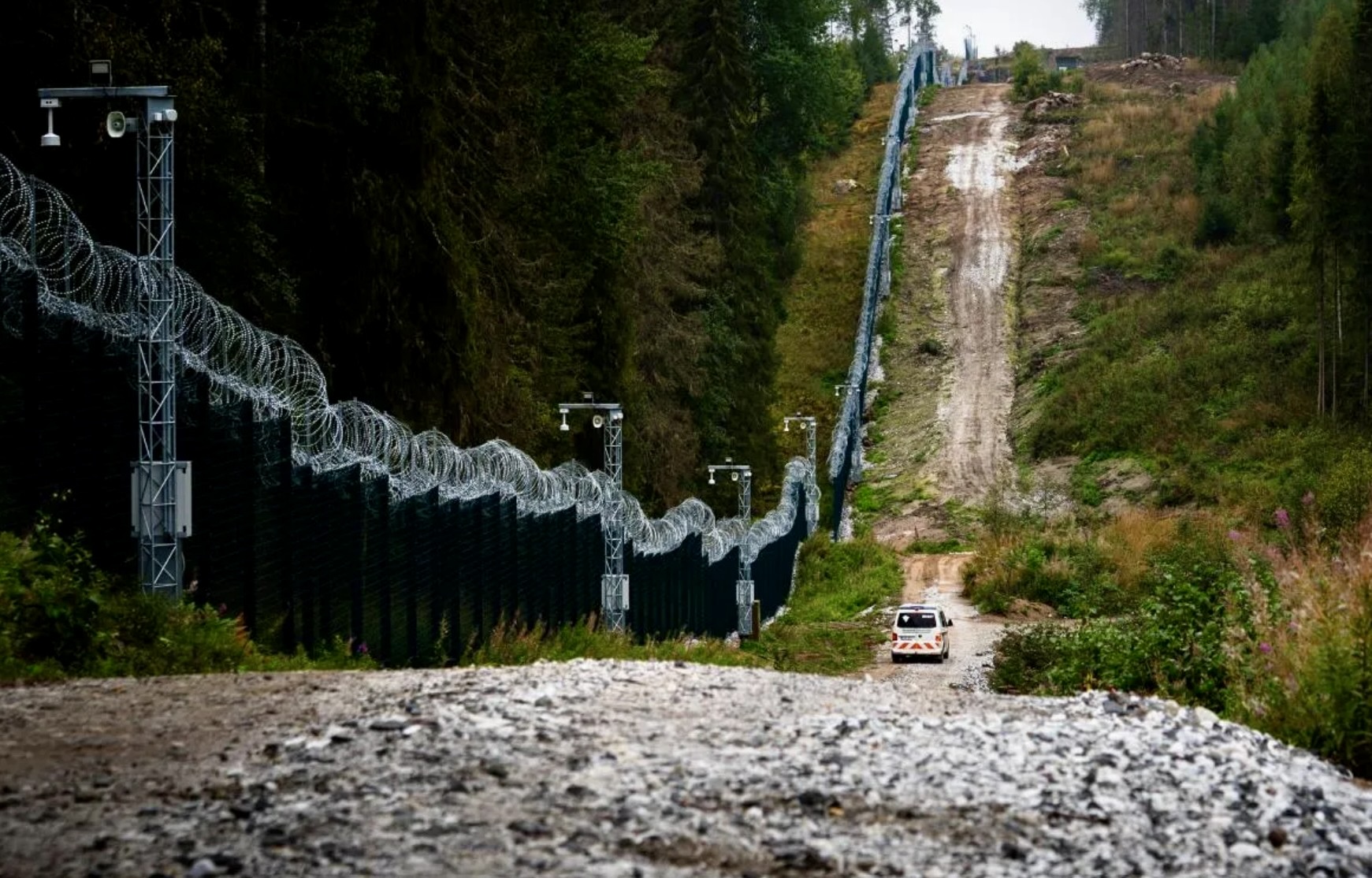
The barrier consists of a metal fence supplemented by technical surveillance systems (cameras, floodlights, loudspeakers), a patrol road and a cleared corridor.
The fence runs across land belonging to approximately 1,000 landowners; the state paid them compensation totalling around €3 million. One landowner — Raimo Jokela from the Virolahti municipality — unsuccessfully challenged the fence’s route in court.
The Fence as a Symbol of NATO Alignment
The barrier has become the most visible symbol of Finland’s pivot to NATO following its accession to the alliance in 2023. As Bloomberg notes, Finland has completed the fence, “stepping up surveillance along the longest stretch of NATO’s border with its main adversary.”
The Finland‑Russia border is the longest land border that the EU and NATO share with Russia.
Construction of the fence accelerated after Finland closed its eastern border in autumn 2023 amid a sharp increase in the number of foreigners attempting to enter the country from Russia.
According to Reuters, between August and December 2023, 1,300 asylum seekers — mainly citizens of Syria, Somalia and Yemen — crossed the Russian border. Helsinki believes that Moscow deliberately created a migration crisis by channelling migrants to the border. Russian authorities have denied these allegations.
Next Steps: Expansion and Legislation
Rantanen did not rule out further fence construction. “In my view, at some point we will need to assess whether there is a need to build further. It is particularly important that the EU’s eastern flank countries receive funding from the EU for such projects,” the minister said.
In parallel, the Finnish government has proposed extending for another two years the Border Security Act, which allows the closure of checkpoints and countering “directed migration” — a tactic of hybrid warfare in which large groups of asylum seekers are deliberately directed towards border crossing points.
According to Rantanen, Finland does not intend to reopen border crossings on the eastern frontier, as “the threat there has not changed.”
A Wall Without a Clear End
The completion of the 200‑kilometre fence is a milestone in Finland’s post‑NATO‑accession defence posture. Yet questions remain.
Will the 200‑kilometre wall prove sufficient protection if tensions at the border escalate further? Is Finland prepared to finance the expansion of the barrier from its own budget if EU funding is not forthcoming? Can the extension of the border law serve as a genuine deterrent, or is it merely a bureaucratic delay? And how long will Moscow remain silent in response to the strengthening of NATO infrastructure along its borders?
For now, the fence stands as a symbol of a new security reality — one in which Finland’s eastern border is no longer a gateway to the continent but a fortified line against it.