NEW YORK (Realist English). The oil market is ending the week with steady gains, despite a correction on 13 and 14 August.
As of 8:25 AM Moscow time on 14 August, October Brent futures on the ICE Futures London exchange were trading at $87.1 per barrel, up 0.03%. September WTI futures on the NYMEX electronic trading platform rose 0.11% to $81.34.
Since the start of the week, both benchmarks have gained approximately 4%, recovering some of July’s losses. On a yearly basis, Brent is up 31.5%, while WTI has gained 28.4% – reflecting a market repricing driven by war rather than fundamentals.
US threats and the negotiation deadlock
The main driver of this week’s rally has been tough statements from Washington. US Defence Secretary Pete Hegseth said American forces could maintain the naval blockade of Iran “indefinitely.” Treasury Secretary Scott Bessent promised to soon apply “measures unprecedented in the history of economic isolation.”
These statements came against the backdrop of a lack of progress in US‑Iran negotiations. A senior Iranian source reported on 12 August that the sides had made no headway in attempts to revive the temporary agreement reached in June. As ING analysts note, a stalemate persists between Washington and Tehran, and no major new developments have occurred.
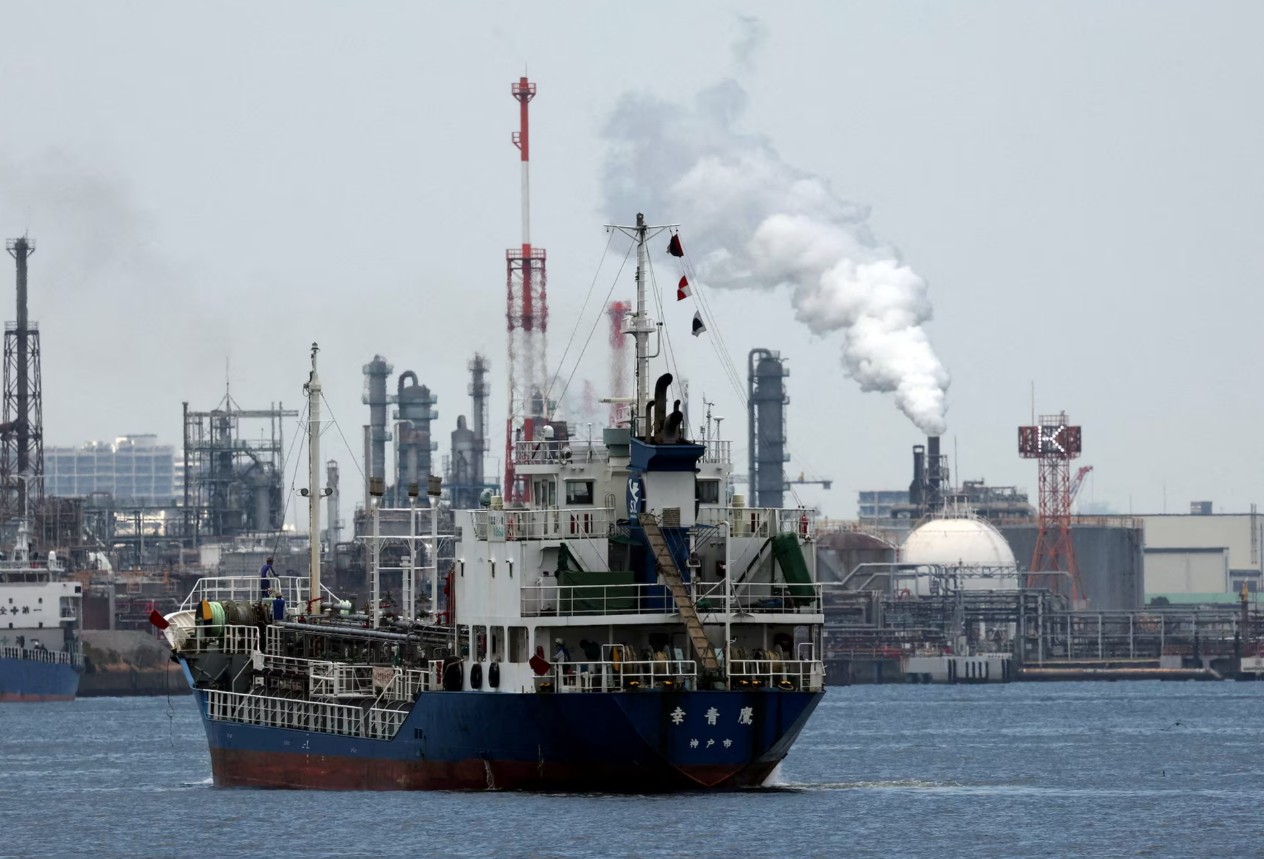
Iran continues to restrict tanker traffic through the Strait of Hormuz. On 13 August, two vessels belonging to UAE oil and gas corporation ADNOC came under attack in the strait. According to US data, about 9 million barrels of oil per day are currently passing through the strait.
Correction amid weak demand forecasts
On Thursday, 13 August, the market corrected after six consecutive sessions of gains. Brent fell $1.91 (2.15%) to $87.07, while WTI lost $2.02 (2.4%) to $81.25. The trigger was the simultaneous release of August reports from OPEC and the International Energy Agency (IEA), both of which lowered their 2026 demand forecasts.
The IEA now expects global oil demand to fall by 1.6 million barrels per day in 2026 – 510,000 bpd more than anticipated in the July report, which had assumed a gradual restoration of transit through Hormuz.
At the same time, the agency forecasts that in the current quarter the market will face a deficit of 1.8 million bpd due to the ongoing conflict.
OPEC lowered its global demand growth forecast for the fourth consecutive time – to 580,000 bpd.
Additional pressure on prices came from US Energy Information Administration (EIA) data: commercial crude inventories for the week ending 7 August rose by 17.4 million barrels – to 424.4 million barrels. This was the largest weekly increase since January 2023.
OPEC+ ramps up production
From August, seven OPEC+ countries (Russia, Saudi Arabia, Iraq, Kuwait, Kazakhstan, Algeria and Oman) increased production by 188,000 bpd. The total OPEC+ quota now stands at 36.019 million bpd. This is the sixth consecutive quota increase.
At the same time, analysts note that the production increase is taking place amid persistent geopolitical risks and uncertainty around the Strait of Hormuz.
Expert assessments
Goldman Sachs maintains its baseline forecast: Brent at $80 per barrel in Q4 2026, and $75 in 2027. However, in the event of escalation, Brent could spike to $140.
The EIA raised its 2026 forecast to $87 per barrel for Brent (from $82 previously).
ING analysts note that the lack of progress in negotiations means supply disruption risks remain, though investors have begun paying more attention to demand data.
The oil market finds itself caught between two forces. On one side – geopolitical risks linked to the Strait of Hormuz and US threats against Iran, which support prices. On the other – deteriorating demand forecasts and rising inventories, which weigh on prices.
As Investing.com notes, this combination is the defining feature of the 2026 oil market: supply is contracting faster than demand, creating a physical deficit, but demand destruction is so severe that any normalisation of supply would instantly tip the balance towards a surplus.
The key question for the coming weeks is whether Washington and Tehran can resume dialogue – or whether a new wave of escalation will push prices back above $90. For now, the market remains hostage to headlines, and any new statement from the White House or Tehran could instantly change the trajectory of prices.