BERLIN (Realist English). Europe’s largest carmaker, Volkswagen, is preparing for the most sweeping transformation in its history.
According to Manager Magazin, citing insiders, CEO Oliver Blume intends to cut up to 100,000 jobs worldwide and cease production at four plants in Germany.
The cuts would affect about 15% of the group’s global workforce, which at the end of fiscal 2025 numbered 667,000 employees. The plan will be submitted for discussion to the supervisory board on July 9.
100,000 Cuts and Plant Closures
The proposed restructuring is twice as large as the previously agreed‑with‑unions plan to cut 50,000 jobs by 2030.
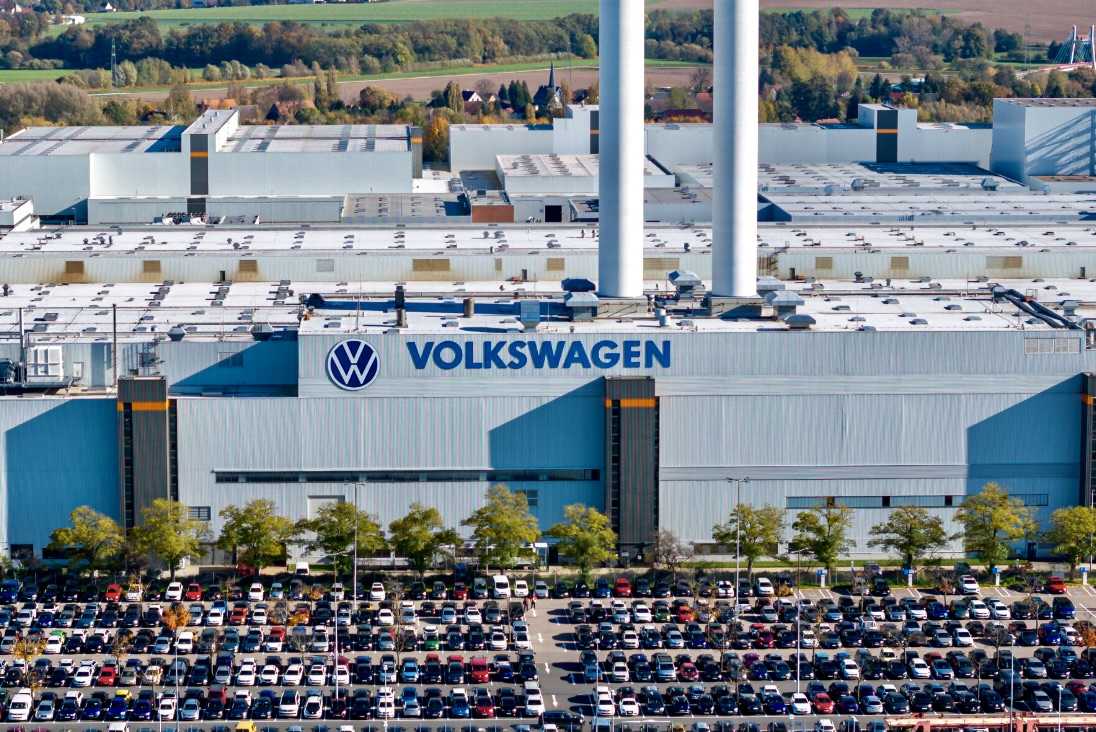
The four plants that could be closed in the medium term are all located in Germany: facilities in Hanover, Zwickau and Emden, as well as the Audi plant in Neckarsulm. Production at these sites will cease as the life cycles of the models built there come to an end.
In addition, the plan includes:
- cutting capital investment by about 15% — to just over €130 billion ($148 billion) over the next five years;
- reducing total overhead costs by €11 billion ($12.5 billion) by the end of the decade;
- spinning off the core Volkswagen brand and the components division into separate legal entities.
As noted in the Manager Magazin report, the key document deliberately does not specify an exact number of job cuts, in order to leave room for manoeuvre during the final implementation of the plan.
Reasons: Chinese Competitors, Tariffs and the Costly Shift to Electric
Blume is under growing pressure to rescue the world’s second‑largest carmaker. The company faces an unprecedented set of challenges:
- Chinese competitors. The share of non‑Chinese automakers in China fell from 57% in 2020 to 32% in 2025. Volkswagen, for years the leader in the Chinese market, lost the top spot to BYD in 2024 and dropped to third place in 2025, overtaken by Geely. Chinese brands, including BYD, Chery, SAIC and Leapmotor, doubled their combined share of the European market within a year.
- Tariffs and trade tensions. According to CFO Arno Antlitz, US tariffs cost the group approximately €4 billion in additional expenses annually.
- Costly EV transition. Slower EV adoption and low profitability in the electric vehicle segment are putting pressure on margins.
- Slumping sales. In the first quarter of 2026, the group’s net profit fell 28% to €1.56 billion, revenue declined 2% to €75.7 billion, and sales in China dropped 20%. Antlitz warned: “The savings planned so far are not enough. If we don’t manage this task, we are jeopardising our future.”
A Volkswagen spokesperson said the company does not comment on “internal confidential documents” but confirmed: “The entire group, including its brands and subsidiaries, must undergo far‑reaching changes.”
The statement also stressed: “The board has repeatedly stated that our current business model in its present form no longer works for all brands: developing cars in Germany, manufacturing them in Europe and exporting them around the world.”
Union Reaction: “We Will Do Everything We Can to Stop Them”
Volkswagen’s General Works Council and Germany’s powerful IG Metall union issued a joint statement, pledging fierce resistance. “If such plans are implemented, we will do everything we can to stop them.” They also noted that the plans “are causing concern among our employees and in the regions where we operate.”
The agreement with unions, reached at the end of 2024, guarantees no plant closures in Germany this decade and bans compulsory redundancies until the end of 2030. For Audi workers, protection extends until 2033.
The restructuring process promises to be lengthy and complicated. Worker representatives hold half the seats on the company’s supervisory board, while the state of Lower Saxony — Volkswagen’s second‑largest shareholder — has two additional seats and traditionally sides with the unions.
Industry in Transition: Not Only Volkswagen
Volkswagen’s problems reflect a systemic crisis across the European automotive industry. Last week, BMW lowered its annual profitability forecast from 4–6% to 1–3% due to weak demand in China.
Mercedes‑Benz plans to discuss deeper cost‑cutting with employee representatives. Renault announced it would cut 800 engineering jobs in France by the end of 2027.
“Chinese manufacturers are hitting the German giant hardest of all,” noted independent automotive analyst Matthias Schmidt.
Investors Skeptical
Volkswagen shares traded near a 16‑year low on Friday, down 0.4%. The stock has lost more than 25% of its value since the start of the year. As Reuters notes, investor scepticism stems from doubts that such an ambitious restructuring can be carried out.
Volkswagen’s supervisory board, the key decision‑making body, will meet on July 9. The coming weeks will show whether Blume can push through the most radical restructuring plan in the group’s history or whether it will be substantially softened under pressure from unions and the state government.