PARIS (Realist English). European equity markets are showing remarkable resilience: despite the protracted Middle East conflict, investors are returning to European assets.
In July, European exchange‑traded funds (ETFs) recorded their first net inflow since February – $4.4 billion, according to BlackRock. The main driver was record corporate profit growth, which outweighed geopolitical risks.
Profits break records: +22% for the quarter
According to FactSet and LSEG I/B/E/S, companies in the Stoxx Europe 600 index reported profit growth of 22–22.4% year‑on‑year for the second quarter of 2026 – the best performance since the third quarter of 2022. At the start of the earnings season, analysts had expected growth of just 12.5%.
Key growth drivers:
- Energy sector (+135.8%) – the main driving force thanks to high oil and gas prices;
- Basic materials (+57.6%) – chemical companies, steelmakers and mining corporations;
- Revenue grew by 12.6% – the fastest growth in the last 16 quarters.
Even excluding the energy sector, profits rose by 11.5%, significantly exceeding the 5.5% forecast at the beginning of July.
Investors return: $4.4 billion inflow
July was a turning point for the European market. According to Bloomberg, European ETFs recorded their first net inflow since February, when the US‑Iran conflict began. BlackRock reported $4.4 billion in inflows to its European funds.
Morgan Stanley analysts attribute this to “diversification interest” from investors amid the massive sell‑off in semiconductor stocks in July. The European market has become more attractive for those seeking an alternative to volatile tech stocks.
Market at records: Stoxx 600 hits new highs
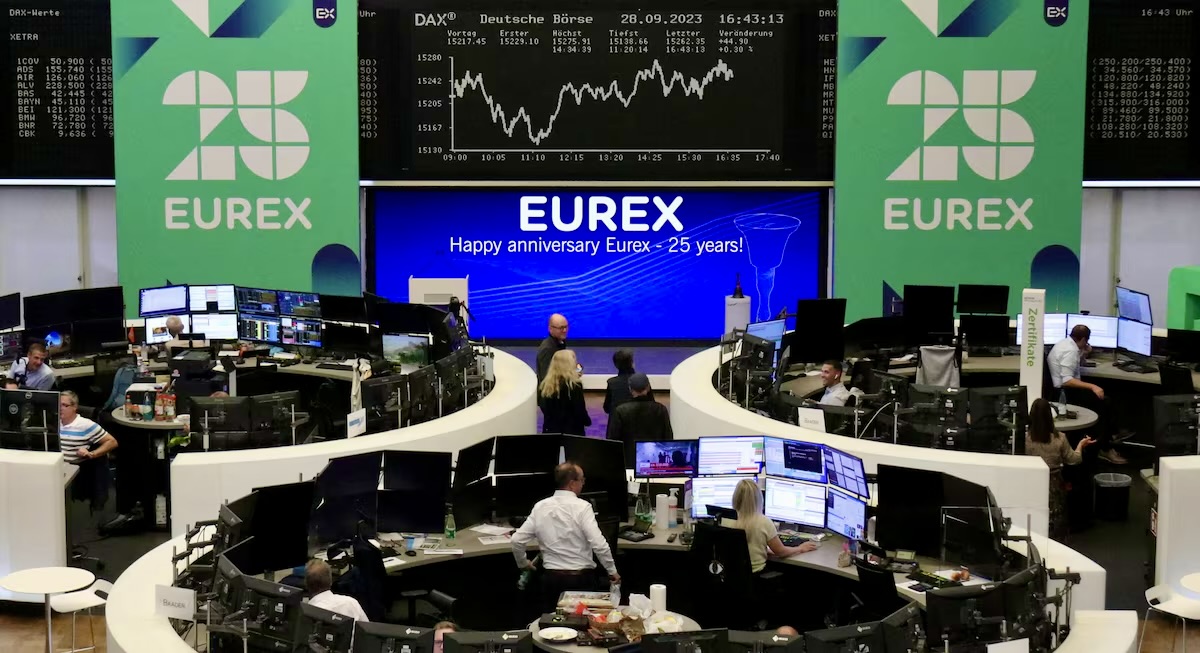
The Stoxx Europe 600 index hit record highs, closing at all‑time levels in three of the last four sessions. On 6 August, it reached an intraday record. The movement affected all major exchanges: Germany’s DAX, the UK’s FTSE 100 and France’s CAC 40 also set records over the past week.
As Kathleen Brooks of XTB noted, “corporate fundamentals are the key theme driving stocks right now.” Barclays analysts noted that company management is offering positive guidance, increasing capital expenditure and expressing confidence in margin resilience.
Geopolitics – not an obstacle
The European market’s rise comes amid active diplomatic manoeuvring over the Strait of Hormuz. Hopes for a peaceful settlement between the US and Iran – including a proposed Iran‑Oman deal – have supported investor sentiment. Falling oil prices below $80 a barrel have also helped the market, although traders remain cautious.
As Reuters notes, “optimism over corporate earnings has driven stock markets to new highs, with traders viewing the proposed deal as progress towards ending the US‑Iran conflict.” At the same time, the energy sector, which delivered the lion’s share of profit growth, remains under pressure due to falling oil prices.
The European market presents a classic dilemma: record profits versus geopolitical uncertainty. As long as corporate reports beat expectations, investors are willing to ignore the risks. However, as Deutsche Bank reminds us, “corporate guidance was also strong – the ratio of upgrades to downgrades reached its highest level since at least the first quarter of 2024.”
The earnings season is not yet over, but one thing is already clear: European companies have surpassed even the most optimistic expectations. The question is whether geopolitical stability can catch up with corporate performance.