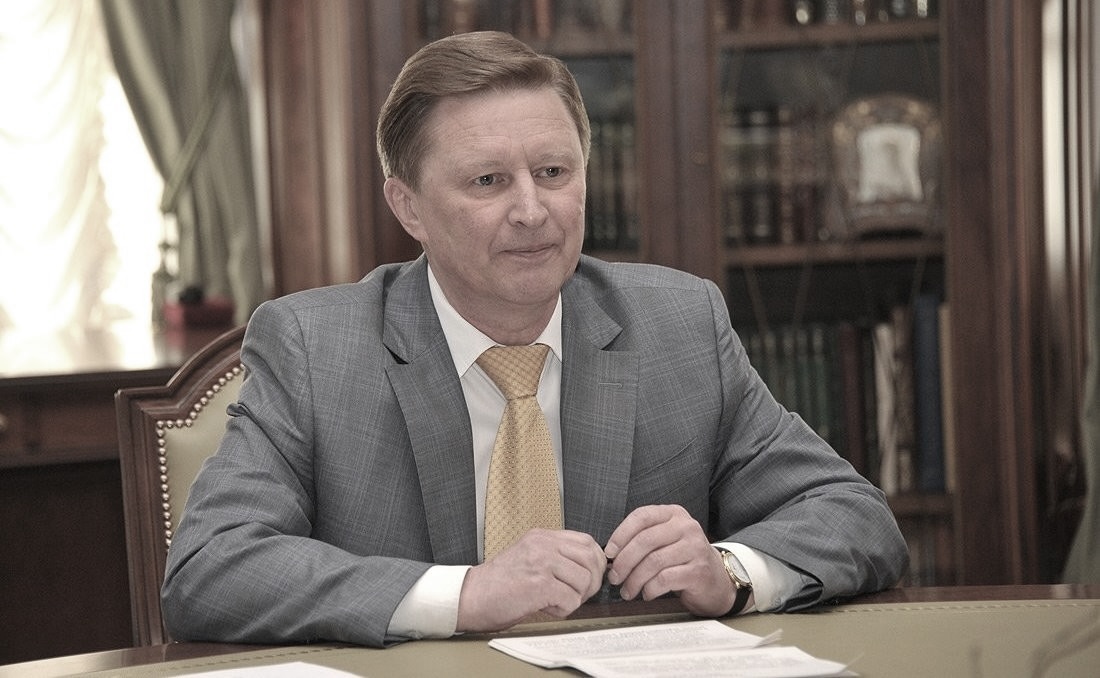
MOSCOW (Realist English). On June 26, Sergei Borisovich Ivanov, former Russian Defence Minister, ex-head of the Presidential Administration and special representative of the head of state, passed away at the age of 73.
One of President Vladimir Putin’s most trusted associates, with whom he shared more than half a century of acquaintance — dating back to their joint service in the KGB — Ivanov left a significant mark on the modern history of the country.
From Leningrad KGB to Ministerial Office
Sergei Ivanov was born on January 31, 1953, in Leningrad. In 1975, he graduated from the translation department of the Faculty of Philology at Leningrad State University, speaking English and Swedish. He later completed advanced KGB courses in Minsk and the Red Banner KGB Institute of the USSR.
In 1975, Ivanov was accepted into KGB service. In 1976–1977, he worked in the KGB directorate for Leningrad and the Leningrad Region — in the same unit as Vladimir Putin. Recalling those years, Ivanov noted with irony that they served together in “one very small unit of one very large organisation called the KGB.”
In 1981–1985, he worked as a second secretary at the Soviet embassy in London, then served in residencies in Finland and Kenya. In 1991–1998, he served in the Foreign Intelligence Service, concluding this stage of his career as First Deputy Director of the European Department of the SVR.
He later spoke of his intelligence work: “They taught us wisdom and reason. I was generally very lucky with my superiors in intelligence throughout my life; I am grateful to them for the rest of my life.” He added: “Intelligence requires clarity and specificity.”
In August 1998, when Putin headed the FSB, Ivanov was appointed Deputy Director of the FSB — Head of the Department of Analysis, Forecasting and Strategic Planning. From November 1999 to March 2001, he served as Secretary of the Russian Security Council.
Minister of Defence
On March 28, 2001, Sergei Ivanov was appointed Minister of Defence of Russia — the first civilian minister in the country’s history. He headed the military department until February 2007. In 2005, he became Deputy Prime Minister while retaining the post of Defence Minister.
In this role, Ivanov repeatedly surprised the public with his directness and sharpness of expression. When Western journalists asked whether Russia planned to attack NATO, he responded with caustic irony: “What, do you seriously think we want to start a war with NATO? Are we suicidal?” And to Georgia’s plans to join the alliance, he responded even more sharply: “Let them join wherever they want, even the League of Sexual Reform.”
In 2006–2007, Ivanov was considered one of the main contenders for the Russian presidency.
From 2007 to 2008, Ivanov was First Deputy Prime Minister, and from 2008 to 2011 — Deputy Prime Minister.
Presidential Administration
From December 2011 to 2016, Ivanov headed the Presidential Administration. During this period, he made one of the most unexpected statements of his career. In an interview with Rossiya 24, he admitted: “Personally, I would like the sanctions against us to last longer, rather than be lifted quickly. This is my personal opinion. We have long talked about diversifying the economy. You know, there is a saying: ‘There would be no happiness, but misfortune helped.’ Here it worked just like that.”
At the same time, he spoke about capital flight, calling the problem far-fetched: “Capital is not fleeing, it is moving freely. We have, thank God, a free country.”
In 2016, Ivanov was appointed Special Representative of the President for Environmental Protection, Ecology and Transport. On February 4, 2026, he left this post of his own accord. On February 16, 2026, President Vladimir Putin excluded him from the Russian Security Council.
In his final years, Ivanov refrained from political statements, focusing on transport and environmental projects, as well as public activities in the field of sports.
“I Do Not Consider Myself Part of the Elite”
For all his closeness to the supreme power, Ivanov demonstratively distanced himself from the status of an elite official. When asked about the privileged position of civil servants, he responded with characteristic directness: “I do not consider myself part of the elite, excuse me.”
Ivanov was also known as a critic of the state of Russian media. “I once lost my temper and said that many of our media outlets contribute to the debilitation of the population. Debilitation, unfortunately, continues. Savagery and moral decline are a serious problem,” he said.
At the same time, he remained a man who valued reputation above all else. “In my opinion, any normal person wants to have a clean slate and a good reputation,” Ivanov believed.