YEREVAN (Realist English). A year ago, Nikol Pashinyan stood at the UN podium preaching the “irreversibility of democracy” in Armenia. Today, that same “democracy” has turned into a witch hunt against the opposition, house arrests for competitors, and systemic repression.
Armenia’s domestic politics is no longer a battle of ideas – it is a war against political opponents waged through criminal investigation methods.
From ‘revolution’ to dictatorship: elections as farce
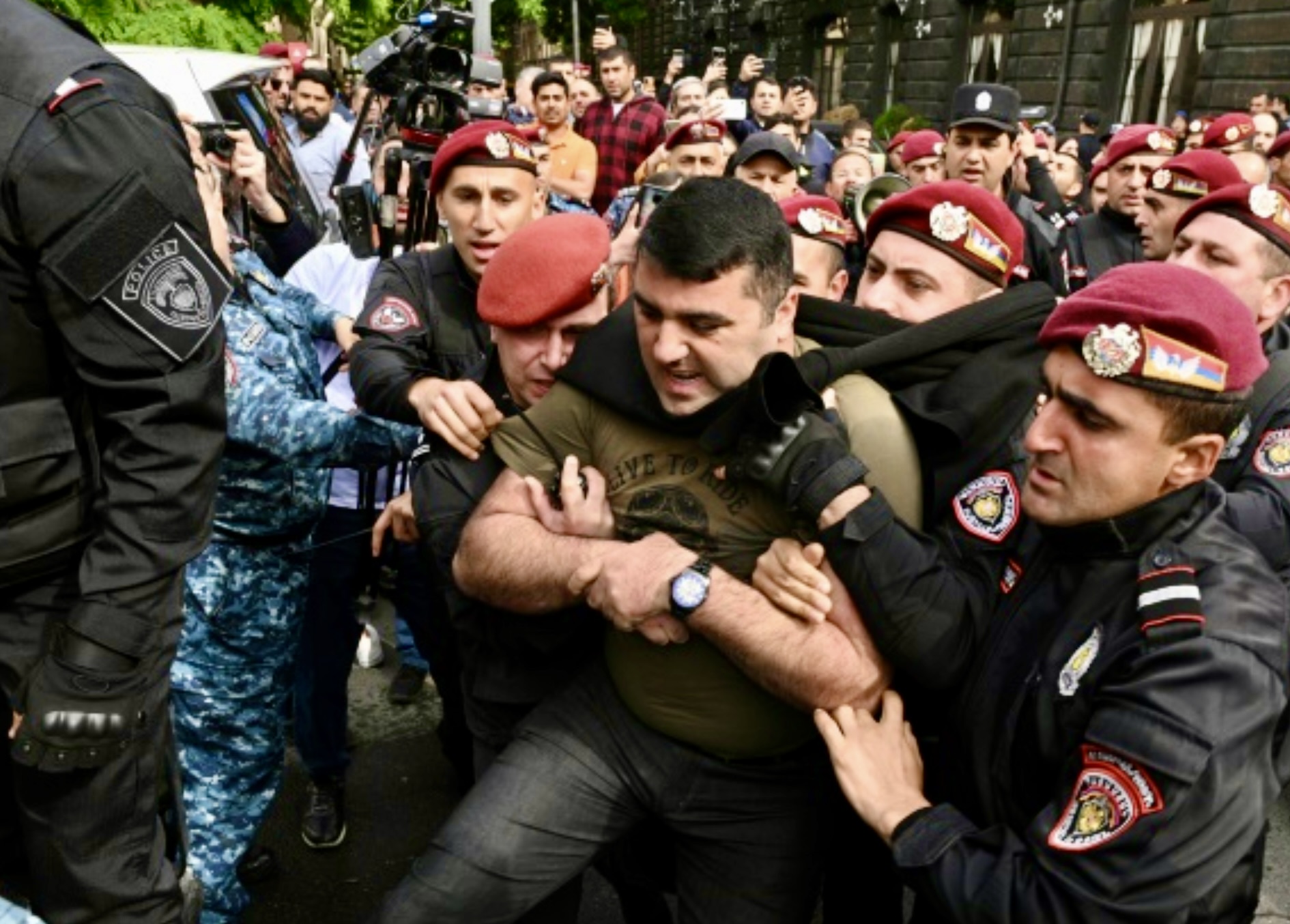
The parliamentary elections of 7 June 2026 were supposed to demonstrate the maturity of Armenian democracy. And they did – but in the opposite sense. Twenty‑four hours before polling, Armenian security forces arrested six opposition candidates. In the days leading up to the vote, more than 40 people were detained. On the night before the election, authorities detained two chairmen and the secretary of local electoral commissions.
The candidates were charged with vote‑buying and money laundering. Convenient charges – convenient timing. Coincidence? Hardly.
Pashinyan himself, two days before the vote, called on security forces to detain opposition representatives “within hours.” The prime minister personally gave the order – and the security forces obeyed. This is no longer an election – it is orchestration.
The Central Electoral Commission, following instructions, authorised the criminal prosecution of six candidates from the “Strong Armenia” bloc. Later, under pressure, the commission reversed its decision regarding Narek Karapetyan – which, according to his lawyer, had “no precedent.”
“The goal is simple: to remove the unwanted not with votes, but with articles,” the opposition sums up.
‘Everyone will sit’: opposition under investigation
The elections are over, but the pressure has not eased – it has intensified. “The election campaign in Armenia ended long ago, but pressure on the political opposition is only growing. All leaders of the largest opposition parties have become defendants in criminal cases.”
Samvel Karapetyan, head of the “Strong Armenia” bloc (second place with 23.3% of the vote), has been under house arrest for several months. He is charged with “preparing a coup” – for publicly supporting the Armenian Apostolic Church in its standoff with the authorities. His company, “Electric Networks of Armenia,” was nationalised – though the businessman won the case in international arbitration. But who needs arbitration when national interests are at stake?
Narek Karapetyan, Samvel’s nephew and head of the “Strong Armenia” party list, received a parliamentary mandate, but that did not stop the Prosecutor General’s Office from charging him with “materially incentivising participation in rallies” and money laundering – carrying up to 12 years in prison. Searches were conducted at his premises. He was released on bail of $2.75 million. “This is a political process. The authorities are trying to ban those who engage in politics from doing so,” Karapetyan himself stated.
Gagik Tsarukyan, leader of “Prosperous Armenia” – a party that fell just 0.004% short of entering parliament – has become a defendant in a tax evasion case. On 6 July, National Security Service officers surrounded his home with submachine gunners and drones, conducting 70 searches at companies within his conglomerate. Tsarukyan spent five hours being interrogated.
Robert Kocharyan, former president and leader of the “Armenia” bloc – has been banned from leaving the country and stripped of parliamentary immunity. Kocharyan stated that the elections were held “under government pressure and accompanied by arrests of opposition activists.”
Alik Aleksanyan, an associate of Karapetyan – arrested on charges of “material incentivisation” and money laundering.
Human rights advocates count about 250 political prisoners in Armenia. Larisa Alaverdyan, executive director of the organisation “Against Legal Arbitrariness,” notes: before 2018, there were isolated cases of political persecution; now they have become “systemic in nature.”
Church under attack
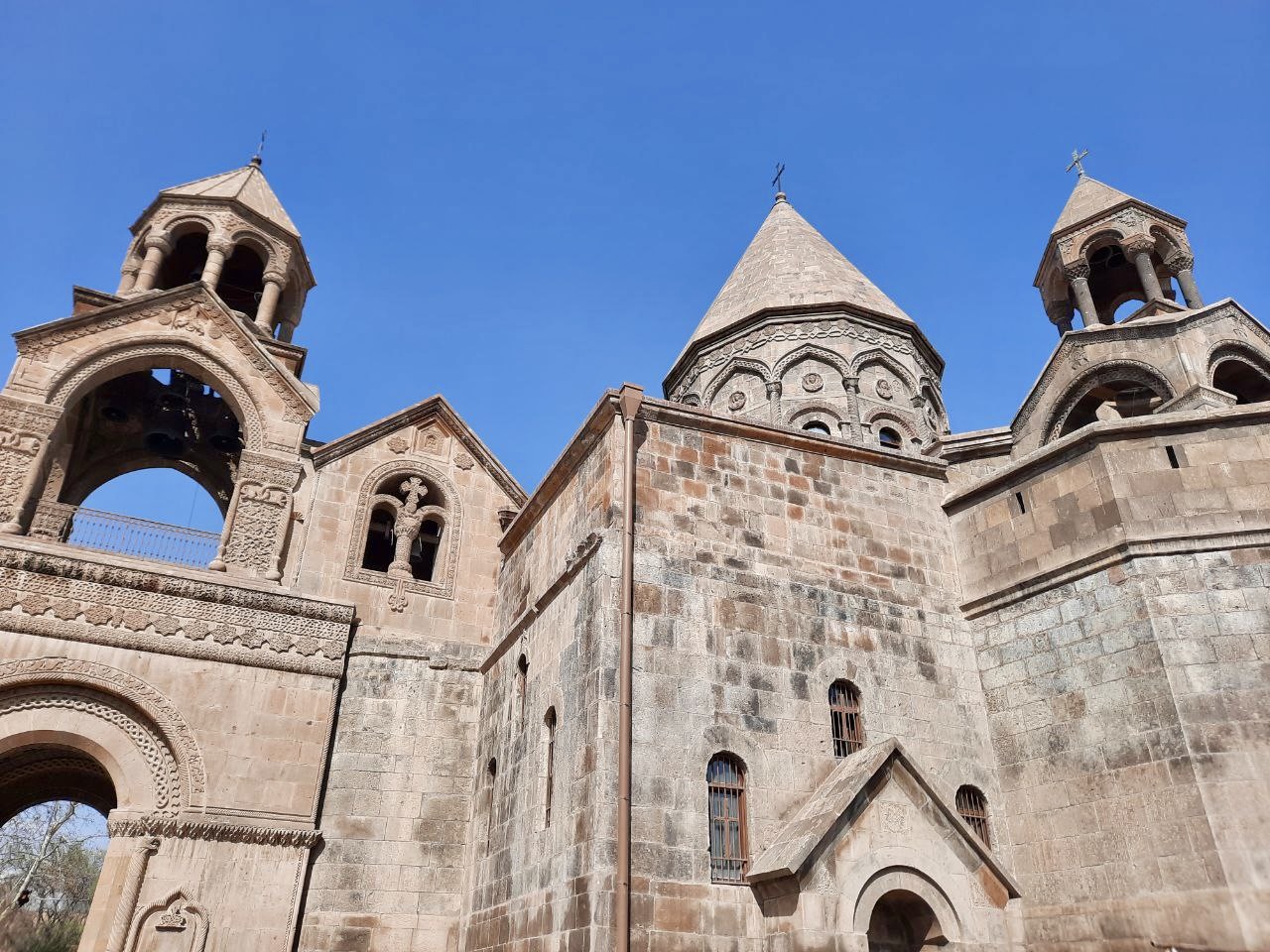
The authorities do not limit themselves to politicians. For the first time in Armenia’s modern history, three archbishops and one bishop of the Armenian Apostolic Church have ended up in prison. One of the archbishops spent 344 days in pre‑trial detention. The Catholicos of All Armenians has been forced to cancel meetings of the Holy Synod.
“Security forces are ransacking dioceses, arresting bishops and priests by the dozen,” experts state.
The European ‘carrot’: €2.5 billion for silence
The most cynical part of this story is the West’s reaction. Brussels and Washington have chosen to turn a blind eye.
Days before the election, the European Commission announced its “firm support” for Pashinyan and a €50 million aid package. And weeks after a vote that even in Armenia is considered rigged, Brussels expanded its investment commitments to €2.5 billion and advanced visa liberalisation talks.
“Among EU officials, rationalisation has become a dogma: ‘He [Pashinyan] is leading Armenia away from Russia.’ That phrase has become the EU’s entire policy toward Yerevan. This is a strategic error that makes Armenia less democratic and less secure,” writes analyst David Grigoryan.
US President Donald Trump expressed his “full and unconditional support” for Pashinyan’s re‑election. European Commission President Ursula von der Leyen assured that “Europe stands firmly with Armenia.”
The West forgives Pashinyan any crime – as long as he pulls the country away from Russia. “Even at the cost of destroying the last remnants of democracy,” observers summarise.
OSCE official observers delivered a mixed verdict: on the one hand – “genuine choice,” on the other – an admission that the campaign was “extremely confrontational” and marked by allegations of violations that led to numerous criminal cases against the opposition. Observers were denied access to result entry in 11 of 38 district commissions. The public broadcaster demonstrated “clear bias in favour of the ruling party.” State employees were pressured to attend ruling party events.
But in Brussels, apparently, they read only the first part of the report.
Russia: playing the long game
Moscow, for its part, watches what is happening with undisguised irritation. Russian diplomats see in the Armenian authorities’ actions “an attempt to commit a crime against democracy.”
Russia, which maintains a military base in Armenia, has warned that Yerevan’s western pivot could have “severe consequences.” In response – trade restrictions on key exports.
For now, Pashinyan is essentially playing out the “Moldovan scenario” – purging the political field according to EU playbooks. But unlike Moldova, Armenia has the unresolved Karabakh issue, dependence on Russian gas, and a shared border with Turkey and Azerbaijan. The risks are much higher.
Pashinyan has secured control of parliament. His party won 49.7% – enough to form a government, but not enough for confidence. The opposition’s share – more than 460,000 votes – is not a figure that can be ignored. So it isn’t ignored – its members are jailed.
The authorities are preparing new scandalous initiatives that could stir society. In response to the arrests, the opposition promises to “fight to the end.” Larisa Alaverdyan is calling on citizens to file mass appeals to courts and international bodies.
“There is nothing difficult for me in going to prison. For me and my comrades, there is nothing difficult in that path,” Narek Karapetyan declared.
Pashinyan’s “European dream” is costing Armenia dearly: Karabakh is lost forever, the Zangezur corridor has passed under Baku’s control, borders are closed, and the population is fleeing. And inside the country – not democracy, but police dictatorship.
The only question is how much longer Brussels and Washington are willing to pretend not to notice. For now – they are willing. And that, perhaps, is the saddest part.