

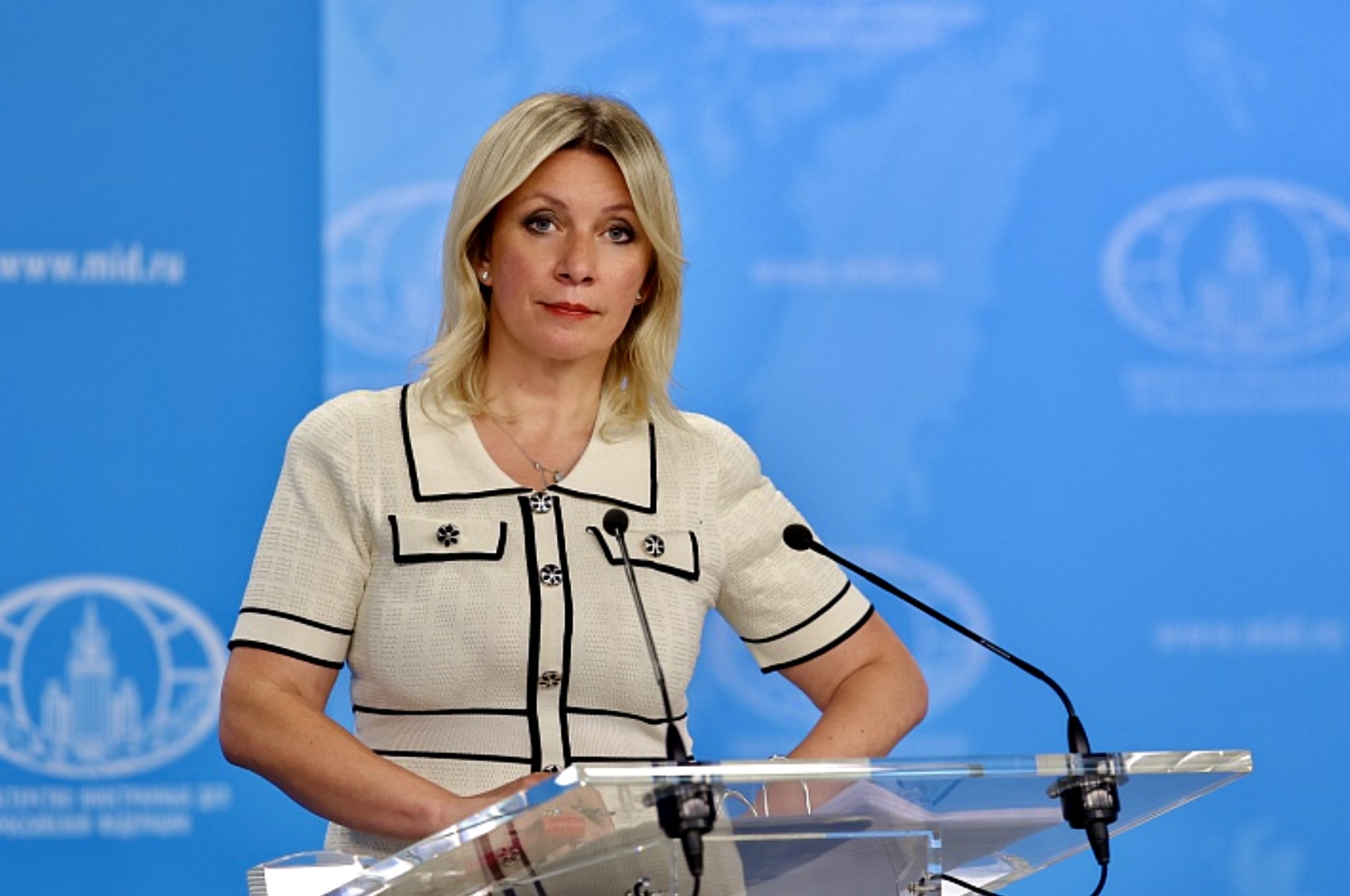
MOSCOW (Realist English). The official representative of the Russian Foreign Ministry, Maria Zakharova, has commented on the decision by Azerbaijan’s Prosecutor General’s Office to place three Russian journalists – Ivan Knyazev, Semyon Uralov and Alexei Chadayev – on the international wanted list.
They are accused of calling for the violent overthrow of the constitutional order and violating the country’s territorial integrity.
Ivan Knyazev, Semyon Uralov and Alexei Chadayev
In response to a media inquiry, Zakharova said that Moscow is aware of the situation, but stressed that the statements of the individuals in question “in no way reflect Moscow’s approaches to Azerbaijan or its relations with the Republic.”
The Russian diplomat recalled that bilateral ties should develop on the basis of the existing bilateral legal framework, primarily the Declaration on Allied Interaction signed at the highest level in Moscow on 22 February 2022.
‘Legitimate rights’ of Russians will be protected
Despite the diplomatic tone, Zakharova made it clear: Moscow will not leave its citizens without protection. “If necessary, we will ensure the protection of our citizens’ legitimate rights and interests in the context of the decision taken by the Prosecutor General’s Office of Azerbaijan to place them on the international wanted list,” the official Foreign Ministry representative said.
This means that in the event of attempts to detain or extradite the Russian journalists, Moscow is ready to deploy all available legal and diplomatic mechanisms.
Baku levels accusations, but indulges in anti-Russian rhetoric
Zakharova also drew attention to the fact that “unfriendly narratives towards Russia” are constantly present in Azerbaijan’s information space. According to her, Moscow has repeatedly offered its Azerbaijani colleagues to discuss “improving the information climate” during specialised consultations, without politicisation and “media hype.”
“We expect that such a dialogue will take place,” the diplomat concluded.
Russia-Azerbaijan relations: allied declaration and the reality of confrontation
The incident with the wanted list for Russian journalists is merely the tip of the iceberg in the complex relations between Moscow and Baku. The situation surrounding the prosecution of Russian citizens for comments that allegedly threaten Azerbaijan’s territorial integrity is just one episode in a long chain of provocations from Baku.
From ‘alliance’ to tension
On 22 February 2022, Vladimir Putin and Ilham Aliyev signed the Declaration on Allied Interaction. The document, which contains more than 40 points, was supposed to mark the transition of relations to a “qualitatively new level.” However, reality has proven far from the ceremonial statements.
As early as December 2024, the crash of an AZAL aircraft flying from Baku to Grozny led to a diplomatic pause in relations. Although both sides declared the incident “overcome” in April, the tension did not disappear. Baku, as observers note, constantly finds new reasons for confrontation with Moscow.
Aliyev’s ‘selfish interests’
As Russian media write, Ilham Aliyev, “confident that Russia, bogged down in Ukraine, cannot do anything against him,” increasingly allows himself steps that can hardly be called allied. From demonstrative anti-Russian narratives in Azerbaijani media to summoning the Russian ambassador to Baku to express “serious concern” and “firm protest” over “provocative, offensive and threatening statements” – Baku consistently demonstrates that it prefers a policy of pressure over diplomatic dialogue.
Notably, Aliyev himself declared in July 2026 that relations had been fully normalised. However, in practice, anti-Russian rhetoric in Baku not only continues but is gaining momentum.
Baku’s double standards
Baku levels accusations against Russian journalists for statements that, in the Azerbaijani view, threaten the country’s territorial integrity. However, Moscow rightly points out that anti-Russian narratives have become the norm in Azerbaijan’s information space.
The situation looks like a classic one‑way game: Baku allows itself unfriendly statements towards Russia, yet demands from Moscow total control over the statements of its citizens.
The situation surrounding the wanted list for Russian journalists is just another episode in the complex relations between Moscow and Baku. Baku levels accusations against Russian citizens for comments that allegedly threaten the country’s territorial integrity. However, Moscow rightly points out that Azerbaijani media are not shy about anti‑Russian statements, treating a friendly tone as weakness.
The question of prosecuting Russian citizens in Azerbaijan touches not only the legal but also the political dimension. Moscow does not intend to abandon the principle of protecting its citizens, but neither does it want to enter into public confrontation with Baku, which has declared itself a strategic partner. Zakharova’s response is an invitation to dialogue, seasoned with a reminder that Baku should not confuse allied declarations with the right to prosecute Russian citizens.
However, as practice shows, Baku prefers demonstrative gestures over dialogue. The summoning of the ambassador, the international wanted list for Russian journalists and anti‑Russian narratives in the media – all this shows that Aliyev continues to play by his own rules, ignoring the spirit and letter of the Declaration on Allied Interaction he himself signed. The question is how much longer Moscow will be willing to tolerate such behaviour from an “ally” who apparently sees a friendly gesture as a sign of weakness.