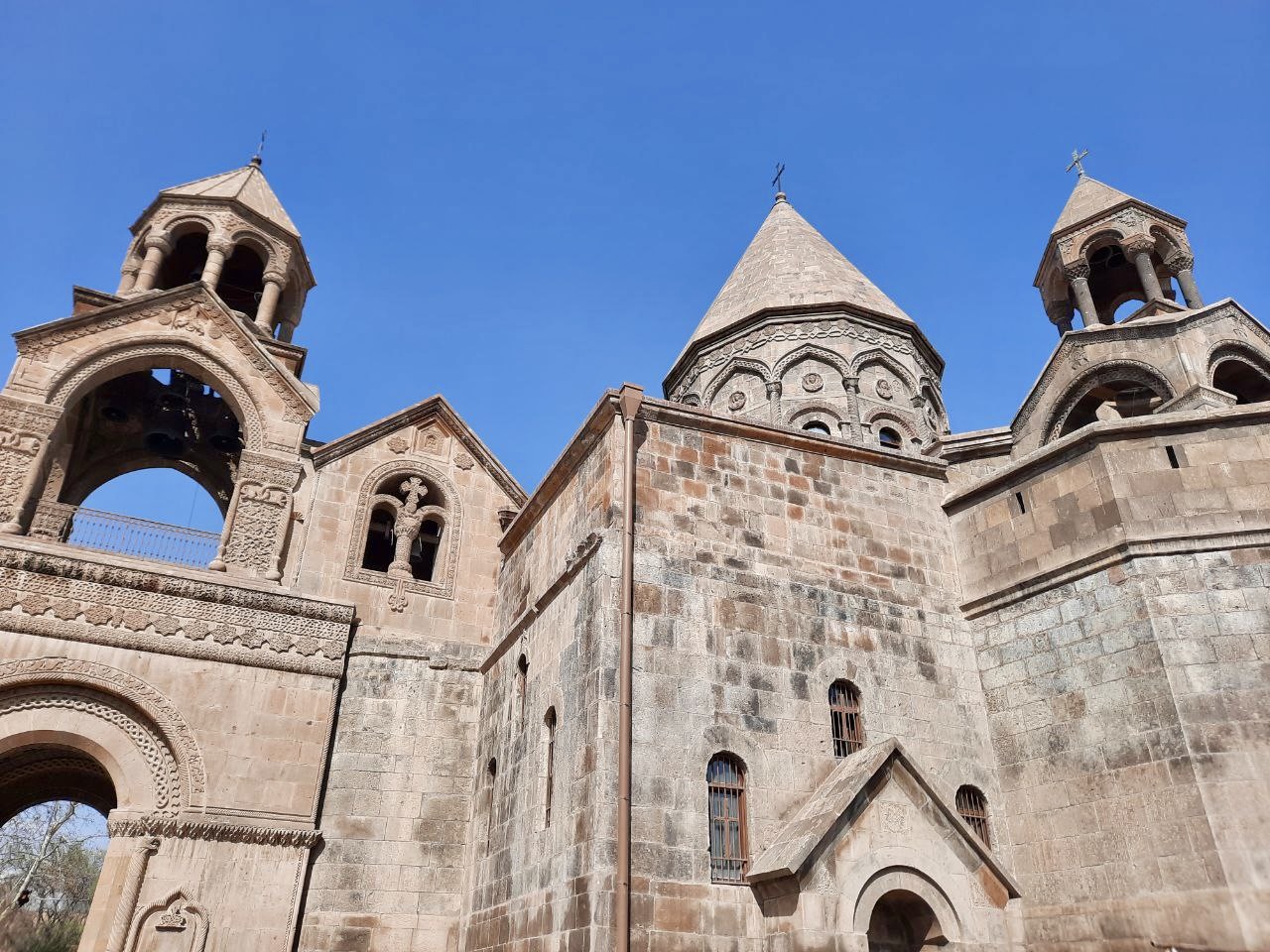
YEREVAN (Realist English). On 7 August, preliminary hearings began in Vagharshapat in an unprecedented criminal case against Catholicos of All Armenians Garegin II and six members of the Supreme Spiritual Council of the Armenian Apostolic Church.
For the first time in Armenia’s history, the head of the national Church has been brought to court. The reaction from the diaspora was swift — dioceses and patriarchates around the world condemned the authorities’ actions, calling them an “act of moral terror” and an “unprecedented and unacceptable event.”
Chronology of persecution: from the ‘roadmap’ to criminal charges
The conflict between the authorities and the Armenian Apostolic Church had been simmering for a long time. As early as 2025, pressure on non‑parliamentary opposition, unwanted representatives of the diaspora and the leadership of the AAC became “unprecedented.” On 4 January 2026, Prime Minister Nikol Pashinyan signed with a group of rebellious bishops the so‑called “roadmap for the improvement” of the Church — a document widely perceived as an attempt to place the spiritual institution under government control.
On 14 February 2026, the Prosecutor General’s Office of Armenia opened a criminal case against Catholicos Garegin II on charges of obstructing the execution of a court ruling. The Catholicos was banned from leaving the country. The formal pretext was Garegin II’s decision to defrock Bishop Gevorg Saroyan (in the world — Arman Saroyan), who had opposed the Catholicos and supported Pashinyan.
On 29 July 2026, the criminal case against Garegin II and six members of the Supreme Spiritual Council was sent to court. According to media reports, Prime Minister Pashinyan called on Garegin II to abdicate, accusing him of threatening national security, violating his vow of celibacy and usurping the patriarchal throne.
Diaspora reaction: ‘moral terror’ and unprecedented rejection
Amid the trial, Armenian communities around the world issued unprecedentedly harsh statements.
- The Russian and New Nakhichevan Diocese called what was happening an “act of moral terror” by the Armenian authorities against their own people.
- The Jerusalem Patriarchate described the prosecution of the Catholicos as an “unprecedented and unacceptable event.”
- Armenian organisations in Argentina spoke of a threat to religious freedom and demanded an end to the criminal prosecution.
- The Diocese of Canada also called for the immediate termination of criminal proceedings concerning the internal jurisdiction of the Church.
As the Catholicos’s lawyer stated, the Patriarch is being criminally prosecuted for performing his ecclesiastical and canonical duties. The Church itself has called the case illegal and politically motivated.
Systematic purge under the guise of ‘democracy’
The criminal prosecution of Garegin II is not an isolated episode. It is part of a systematic campaign by Pashinyan against anyone who dares to hold an independent opinion. As observers note, “Pashinyan is tearing the spiritual fabric from within, politicising the Church, breaking its autonomy and suppressing priests and the opposition.”
Earlier, the authorities had already “purged” parliamentary and non‑parliamentary opposition. Now it is the clergy’s turn. Pashinyan and his supporters claim that the conflict was caused by the clergy of the AAC, led by Garegin II, supporting “anti‑Armenian interests.” But behind this formulation lies a simple rejection of any alternative point of view.
The preliminary hearings began on 7 August. Garegin II and the church hierarchs involved in the case intend to attend the first session. The Armenian diaspora around the world continues to pressure the authorities, demanding an end to the “moral terror.”
Pashinyan, having secured control of parliament after the elections, is now methodically suppressing the last independent institution in the country – the Church. The European Union, as usual, prefers not to notice systemic violations in exchange for geopolitical loyalty.
Armenia, once proud of its ancient Christian tradition, is now watching its spiritual leader stand trial on fabricated charges. The question is how many more national shrines Pashinyan is willing to sacrifice for his political expediency.