BAKU (Realist English). Azerbaijan’s state oil company SOCAR has described the country’s pipelines as “vital arteries” connecting Caspian gas to European markets. In an interview with Euronews, company executives spoke about Baku’s growing role in ensuring EU energy security amid a 56% increase in gas exports since 2021.
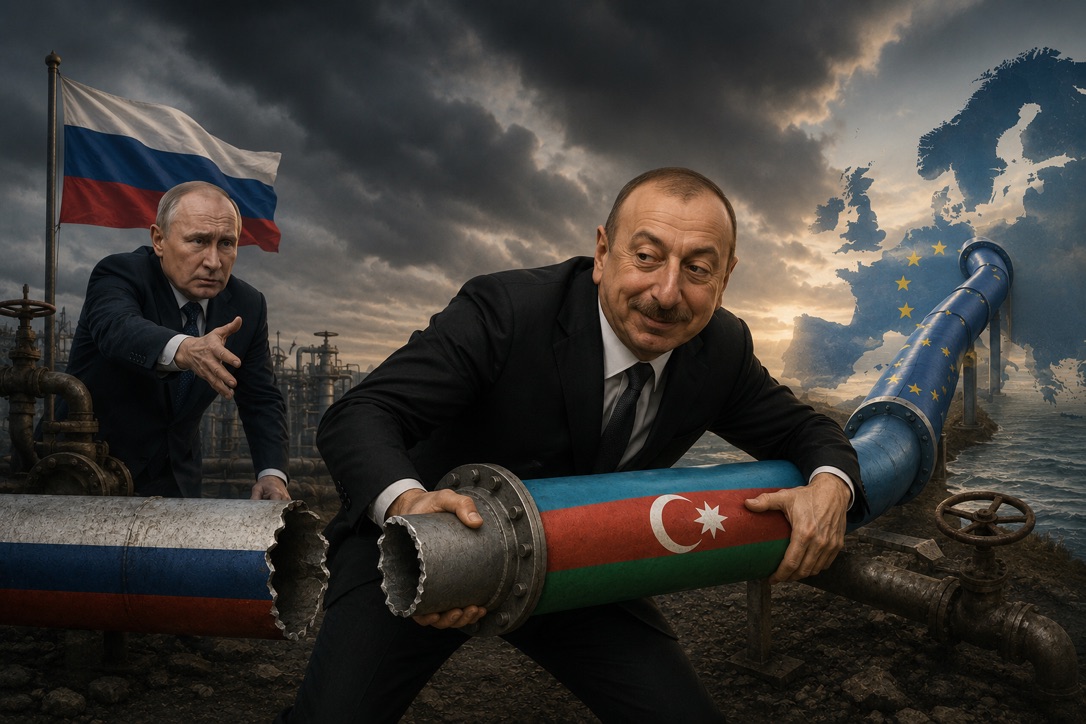
However, ambitious statements from Azerbaijan’s leadership about being ready to replace Russia in the European energy market are met with justified scepticism from experts. Azerbaijan’s resource base, the capacity of existing pipelines, and the scale of required investment call the realism of these plans into question.
‘Arteries’ of Caspian gas: what SOCAR says
Speaking on Euronews’ Business Horizons programme, SOCAR Vice President Vitaly Baylarbayev called the national transit corridors, including the Baku–Tbilisi–Ceyhan oil pipeline and the South Caucasus gas pipeline, “arteries connecting us to the rest of the world.”
Supplies are delivered via the 3,500‑kilometre Southern Gas Corridor – a network of pipelines that includes the Trans‑Anatolian (TANAP) and Trans‑Adriatic (TAP) pipelines, which SOCAR operates.
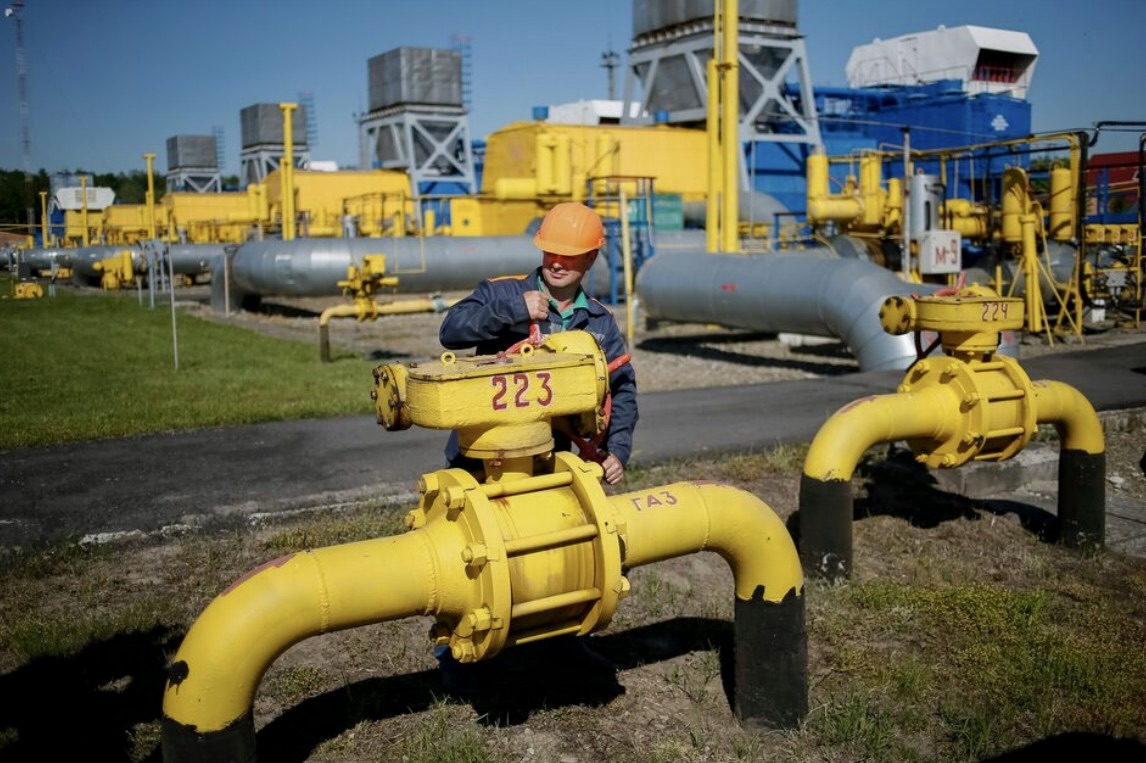
Operations Director Elkhan Sultanov stressed that “precision is key in our industry,” explaining that ensuring safe and uninterrupted supplies requires constant monitoring along the entire Southern Gas Corridor.
In 2025, Italy remained the largest European consumer of Azerbaijani gas, importing 9.5 billion cubic metres (bcm) , accounting for 16% of its total gas imports. Since January 2026, SOCAR has started gas supplies to Germany and Austria, bringing the total number of buyer countries to 16.
Figures and realities: what Azerbaijan can actually do
The real figures of Azerbaijan’s gas exports look more modest than the ambitious statements.
According to Azerbaijan’s Ministry of Energy, in the first half of 2026:
- 25.4 bcm of natural gas were produced;
- 12.7 bcm were exported, of which 5.9 bcm went to Europe (46% of total exports);
- In 2025, total gas exports from Azerbaijan amounted to 25.2 bcm, of which 12.8 bcm went to Europe.
For comparison: even in Russia’s “disastrous” 2025, pipeline gas and LNG supplies to EU countries amounted to approximately 32–37 bcm. And in 2021, before the Ukraine crisis, Gazprom supplied about 150 bcm of pipeline gas to Europe.
As Alexei Belogoriev, an analyst at the Institute of Energy and Finance, noted, “the scale of Azerbaijan’s production and exports is incomparable with Russian exports, which covered all of Europe’s needs.”
Pipelines at capacity: infrastructure limits
The Southern Gas Corridor, through which Azerbaijani gas reaches Europe, has limited capacity. As Aliyev himself admitted, TANAP and TAP are already operating at nearly full capacity.
Increasing supplies requires infrastructure expansion. However, even the expansion of TAP’s capacity by 1.2 bcm per year, which came into effect on 1 January 2026, allowed Azerbaijan to supply just over 13 bcm of gas to Europe annually.
Experts agree that for Azerbaijan to seriously claim the role of a key supplier, it would need not only new pipelines but also a significant increase in production. However, the proven reserves of the Caspian and current production volumes (about 50 bcm per year from the Shah Deniz field) do not allow for a quick qualitative leap. For comparison: Russia’s annual gas production is about 650 bcm.
Expert opinion: ‘pointless transport leg’
Analysts are sceptical about the prospects of completely replacing Russian gas with Azerbaijani supplies.
Alexei Belogoriev noted that “gas from Azerbaijan is important primarily for Italy and for the countries of south‑eastern Europe, where it partially displaces Russian gas. For the consumer, it costs exactly the same as Russian gas. For these countries, it is an additional source of supply, but not a key one.”
Supplies to Germany, according to him, “are episodic in nature. This is a long transport leg that is pointless from a logistics perspective – large volumes will definitely not go there.”
Other experts point out that “Azerbaijan will in no way be able to replace Russian gas supplies, neither in the near nor in the distant future, as they were before the military conflict in Ukraine began.”
Azerbaijan will continue to increase gas exports to Europe, remaining an important but limited‑scale supplier for south‑eastern EU countries. At the same time, Baku’s ambitious plans to completely push Russia out of the European energy market run into objective limitations: a modest resource base, full utilisation of existing pipelines, and the need for colossal investment in new infrastructure.
As analysts summarise, “the only thing that could change the situation in terms of Europe’s pipeline gas supply is a possible increase in production in Iran.” But even that prospect remains “very distant.”