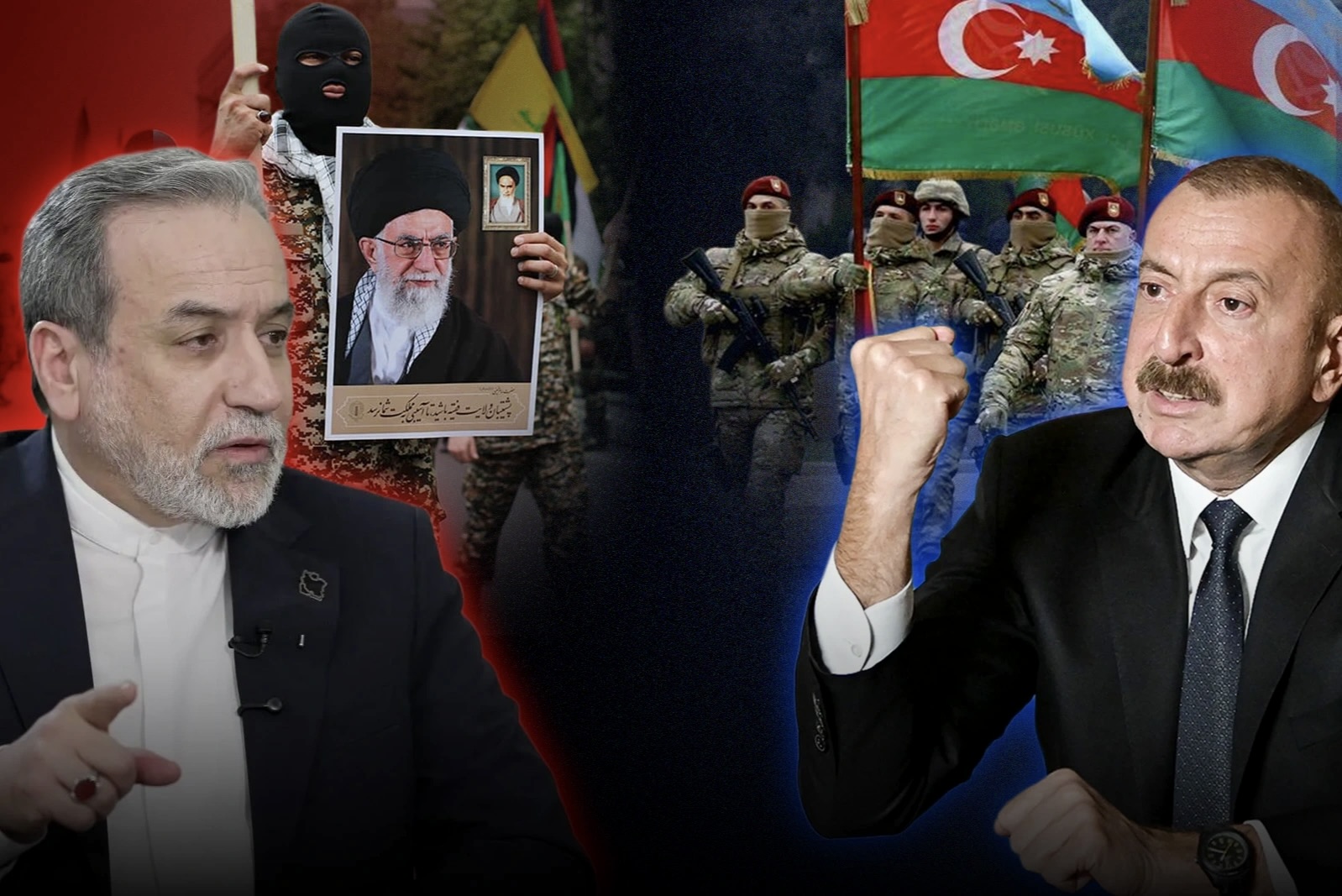
TEHRAN (Realist English). On July 27, Iran’s Ministry of Intelligence added Azerbaijan’s state television channel AzTV to its list of “hostile media structures.”
In response, Azerbaijan’s Media Development Agency (MEDİA) declared the activities of Iran’s Sahar TV and Mehr News Agency illegal on its territory.
The conflict, which began as targeted sanctions against individual media outlets, escalated within hours into a full‑fledged information war, exposing deep contradictions between the two neighbouring states.
However, behind this media confrontation lie far more profound geopolitical processes: according to a number of experts, Baku and Ankara are conducting systematic subversive work inside Iran, laying the groundwork for an uprising of ethnic Azerbaijanis, who are densely concentrated in the northwestern provinces of the Islamic Republic.
Iran’s Move: AzTV on the “Hostile” List
Iran’s Ministry of Intelligence placed AzTV on its list of “hostile media structures.” In a letter to Iran’s Prosecutor General, the agency cited espionage and cooperation with Israel and other hostile countries against the Islamic Republic as the reason.
The Iranian side threatened criminal prosecution of individuals cooperating with the media outlets on the list.
Baku’s Response: The Principle of Reciprocity
Azerbaijan responded immediately. The MEDİA agency declared the activities of Iran’s Sahar TV and Mehr News Agency illegal.
The decision also applies to all representatives of the aforementioned media structures. Baku applied the principle of reciprocity, relying on Article 11.4 of the Media Law. As MEDİA explained, the Iranian media in question are “conducting propaganda that contradicts Azerbaijan’s national interests.”
Baku’s Subversive Work: “South Azerbaijan” and the Turkish Factor
The media conflict is merely the tip of the iceberg. Western and regional experts have repeatedly pointed out that Baku and Ankara are conducting systematic work to destabilise the situation in Iran, relying on the ethnic factor.
Propaganda Campaign and Separatist Slogans
In January 2026, posters were displayed in the Turkish city of Antalya in support of the struggle of the Turkic population of so‑called “South Azerbaijan” — the northwestern regions of Iran predominantly populated by ethnic Azerbaijanis, including the provinces of East Azerbaijan, West Azerbaijan, Ardabil, Zanjan, and adjacent territories.
The posters contained political and identity‑based messages expressing solidarity with the demands of Iranian Azerbaijanis. These public statements emphasised that the “South Azerbaijan” issue is one of the key problems of the entire Turkic world.
Earlier, Azerbaijani MP Fazail Agamaly stated in an interview with Azerbaijani media that if cities with predominantly Azerbaijani populations joined the protests in Iran, “the mullahs’ regime could be overthrown.”
The Scenario of Iran’s Disintegration
In January 2026, political scientist Semyon Bagdasarov stated that in the event of Iran’s disintegration, Azerbaijan, with Turkey’s support, would annex the territories of three provinces — West Azerbaijan, East Azerbaijan, and Ardabil — where up to 75% of the population is Azerbaijani.
“If disintegration begins, Azerbaijan, with Turkey’s help, will annex this territory — you can be sure of that,” the expert said.
Political scientist Arthur Khachikyan also noted that there are plans to stir up Kurds and Azerbaijanis against Iran, and then Turkey. According to him, reports continue to emerge about the preparation of Kurdish forces for a ground invasion of Iran. A pretext has been created to draw Azerbaijan and Turkey into the war, after which Iran’s Azerbaijanis could also be drawn into the conflict.
Tehran’s Concerns
Tehran is well aware of these risks. Iranian authorities have repeatedly expressed concern that nationalists in Turkey and Azerbaijan are fuelling separatist sentiments among the Azerbaijani minority in Iran. In response, Iran has conducted military exercises near its border with Azerbaijan, which Baku has regarded as a provocation.
Joint Military Preparations
In March–April 2026, Turkey and Azerbaijan held joint military exercises “Indestructible Brotherhood — 2026” in Turkey’s Kars province. These manoeuvres, according to observers, demonstrate Ankara and Baku’s readiness for coordinated action in the event of escalation around Iran.
Underlying Causes: Mistrust and Geopolitics
The current incident cannot be viewed in isolation from the overall dynamics of bilateral relations in recent years. Since the Second Karabakh War, dialogue between Baku and Tehran has increasingly been accompanied by crises, mutual accusations in the security sphere, and sharp statements. Disputes over the so‑called Zangezur corridor, different views on the security architecture of the South Caucasus, and suspicions regarding Israel — all of this creates fertile ground for conflict.
The decision took effect from the moment the statement was published. Iran has not officially confirmed the inclusion of AzTV on the list, and Iranian media have not yet commented on the Azerbaijani side’s decision. Baku, with Ankara’s support, is consistently working to create conditions for an uprising in Iranian Azerbaijan, using both propaganda and, according to experts, organisational methods.
As the Zerkalo publication notes, “the information confrontation between Baku and Tehran has received a new loud episode.” However, in reality, this is not merely a media conflict but systematic subversive work aimed at weakening Iran from within. The question is whether Tehran can prevent the implementation of this scenario, or whether the region will once again find itself at the epicentre of a large‑scale geopolitical confrontation.