SÃO PAULO (Realist English). Brazilian President Luiz Inácio Lula da Silva has wrapped up his election campaign with a series of mass rallies that his supporters see simultaneously as a fight for re-election and as a farewell to the politician who has shaped Latin America’s left-wing agenda for four decades.
What happened
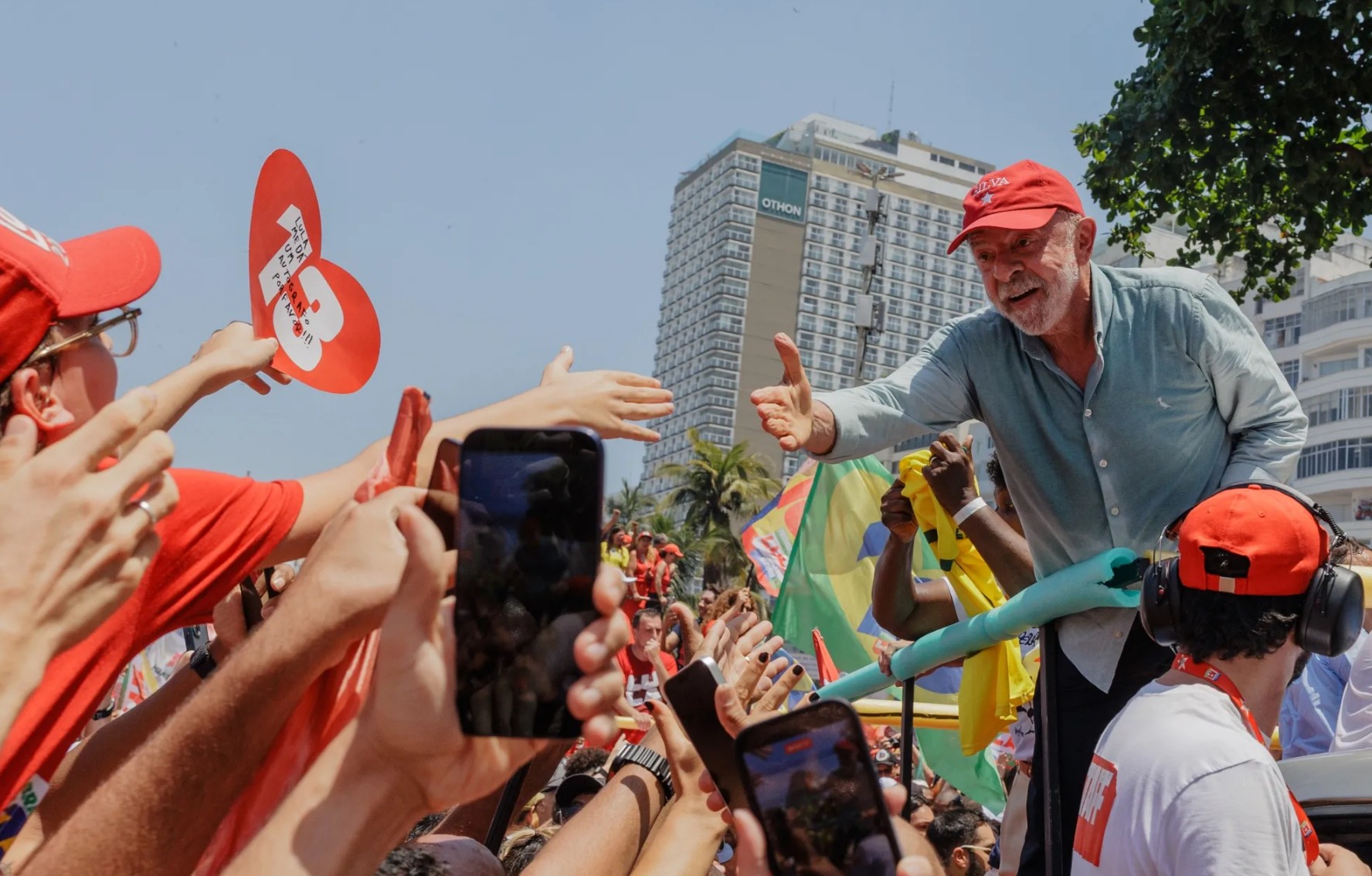
On October 24, Lula began the final day of the campaign with a march along the Copacabana promenade in Rio de Janeiro, where thousands of supporters joined him. Later, he led another march along Avenida Paulista in São Paulo — a traditional site for political demonstrations. According to Lula’s website, about 2 million people gathered on Paulista; the president sang the national anthem holding the Constitution and the Brazilian flag.
“We will win the election for a simple reason: the truth is that the people want change, but they want to move forward. They do not want to go back,” Lula told journalists before the rally.
The race
The runoff is scheduled for October 26. Lula, a former metalworker and union leader, is seeking an unprecedented fourth term. His rival is 45-year-old Senator Flávio Bolsonaro, son of former President Jair Bolsonaro, who is serving a sentence for attempting a coup. In the first round, Bolsonaro unexpectedly took first place, beating Lula by more than 2.2 million votes.
Polls before the runoff show a minimal gap. According to CNT/MDA, Bolsonaro leads Lula by 1.3 percentage points (46.3% to 45.0%); Datafolha shows a 1-point gap (48% to 47%); AtlasIntel/Bloomberg — 1.5 points (49.9% to 48.4%). All results are within the margin of error.
A farewell campaign
For many of Lula’s supporters, these rallies have a bittersweet tone. The 80-year-old president is expected to be participating in his last election campaign, giving the final events the atmosphere of a farewell tour. “He is one of a kind. He has had an incredible, remarkable and difficult journey. We are very proud of him,” said 62-year-old pensioner Olga Leal at the rally in São Paulo.
Lula himself, however, shows no intention of stepping down. He criticized his rival, calling him “a liar, a militiaman and a disqualified candidate,” and urged supporters to stay mobilized until the end of voting.
Lula’s campaign has become more than a fight for votes. The mass rallies on Copacabana and Paulista are a demonstration of a political machine that remains powerful but no longer guarantees victory.
Lula, whose career was built on direct contact with workers and union rallies, is now running in an environment where digital platforms and young “politician-influencers” dominate the information space. His rival, Flávio Bolsonaro, actively uses YouTube and social media, and polls show that this is enough to keep pace.
For Latin America, this could be the end of an era: if Lula loses, the region will lose its most prominent representative of the “pink tide,” and Brazil will return to politics inheriting the legacy of Bolsonaro senior. If he wins, it will be his fourth term, but already in the status of a politician whose time, by general consensus, is coming to an end. In any case, the rallies on October 24 will remain in memory as the moment when the Brazilian street came out for Lula so massively for the last time.