WARSAW (Realist English). Polish Minister of National Defense Władysław Kosiniak-Kamysz stated that Warsaw intends to pursue participation in the American Nuclear Sharing program and simultaneously develop cooperation with France in the field of nuclear deterrence. In an interview with WNP, he emphasized: “One does not exclude the other.”
What exactly is proposed
According to the minister, Poland wants to move “step by step” toward participation in Nuclear Sharing — a NATO program that allows countries without their own nuclear arsenal to participate in planning and the potential hosting of American warheads. At the same time, Warsaw is developing dialogue with Paris within the framework of the “nuclear umbrella” initiative that France offers to European partners.
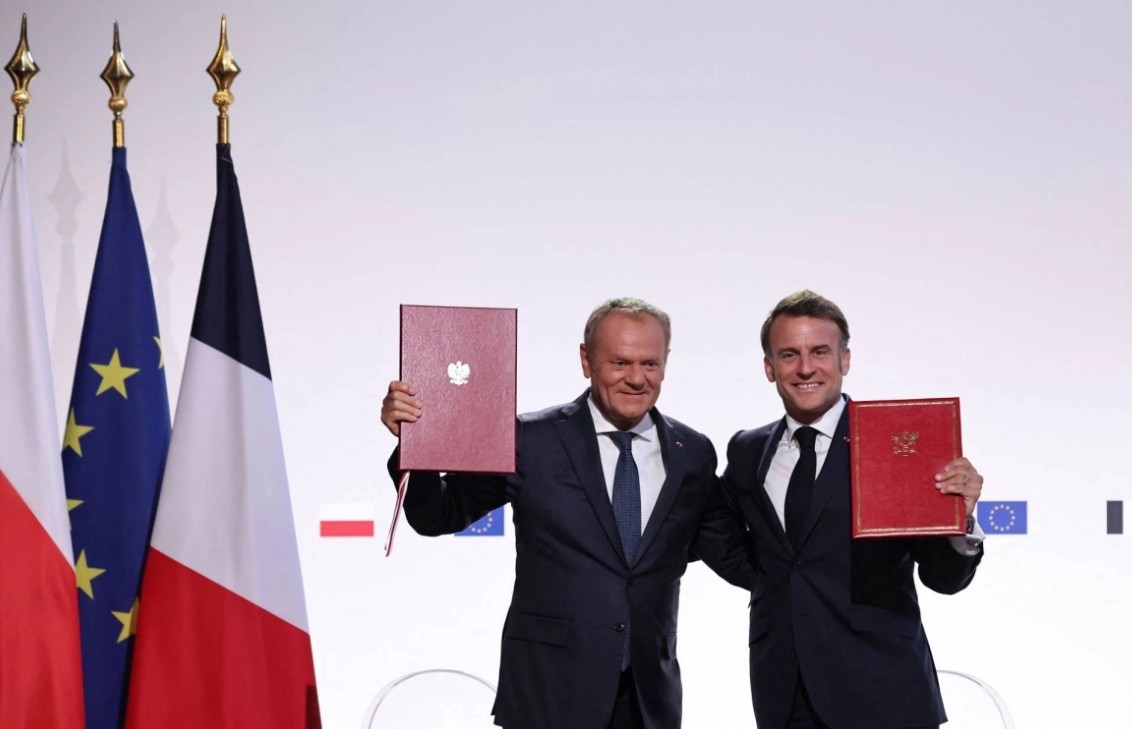
Kosiniak-Kamysz specified that concrete decisions must be made at the allied level, and the timeline for hosting weapons has not yet been determined. Earlier, in July 2026, Poland and France held the first consultations of a bilateral steering group on nuclear cooperation. Among the discussed forms are information exchange, joint exercises, and possible force deployment.
Context: from denial to request
As recently as August, Poland stated it did not intend to host American nuclear warheads on its territory. However, even then Warsaw was negotiating with the US on strengthening a permanent military presence. Now the position has shifted: Poland has become the first country to openly state its desire to combine two Western “nuclear umbrellas” on its territory.
At the same time, in February 2026, a representative of the Polish president questioned France’s role in European nuclear planning, calling the US the only credible partner in the nuclear sphere. This indicates that the French track remains for Warsaw rather additional than primary.
Internal disagreements
There is no unified position within the Polish leadership. Deputy Defense Minister Paweł Zalewski stated that the country does not plan to host nuclear warheads, but Kosiniak-Kamysz refuted this. President Karol Nawrocki and Prime Minister Donald Tusk have previously spoken of a desire to have their own nuclear potential, but achieving this goal is complicated by obligations under the Non-Proliferation Treaty and the lack of infrastructure.
Related project: American base
In parallel, Warsaw is considering the construction of a permanent American military base worth up to $4.4 billion, capable of hosting about 5,000 military personnel. A final US decision has not yet been made.
Kosiniak-Kamysz’s statement is not a decision but an indication of direction. Poland is trying to obtain the maximum degree of protection without choosing between Washington and Paris, which reflects its perception of the threat and disappointment with the pace of European defense initiatives.
However, practical implementation runs into three constraints: allied consent (especially from the US), lack of consensus within the Polish leadership, and the legal framework of Nuclear Sharing, which does not imply automatic hosting of warheads.
For NATO, this creates a delicate situation: if Warsaw indeed begins to combine the two umbrellas, the alliance will have to coordinate what previously developed in parallel. For Russia, this is a signal of further militarization of the eastern flank, which will likely be used in rhetoric about “red lines.”