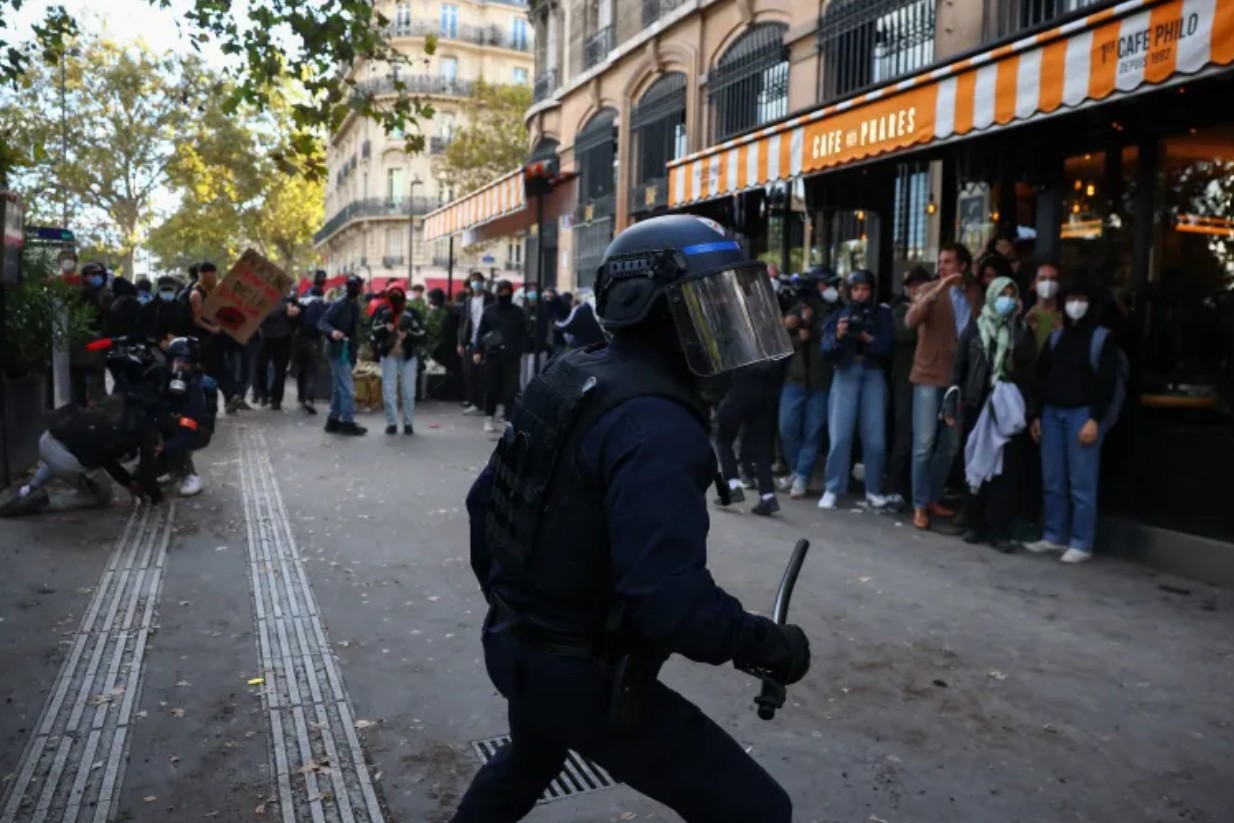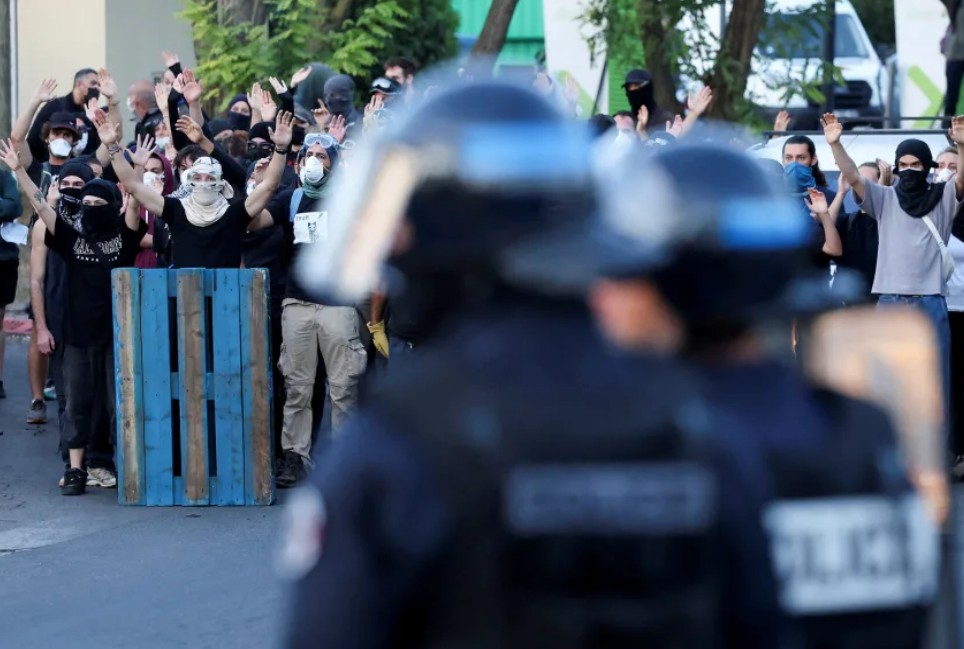
PARIS (Realist English). France has mobilized a record number of security forces and closed major Paris museums ahead of a new wave of nationwide protests scheduled for October 24. The authorities are seeking to prevent a repeat of the October 17 unrest, which Interior Minister Laurent Nuñez described as “violence of extraordinary intensity.”
Scale of deployment
According to the Interior Ministry, up to 70,000 police officers and gendarmes have been deployed across the country. They have helicopters, armored vehicles, and water cannon at their disposal. Turnout is expected to be mass again: on October 17, more than half a million people took to the streets. In Paris, a march agreed with the police prefecture will go from Place de la Bastille to Place de la Nation, although the route from Porte d’Italie to Porte de Vincennes was initially reported.
What is closed
The French Ministry of Culture announced the “exceptional closure for security reasons” of the Louvre, the Musée d’Orsay, the Orangerie, and the National Picasso Museum.
Also closed are the Grand Palais, where the Art Basel Paris fair was to take place — its October 24 program was canceled — as well as the Carnavalet Museum, the Maison de Victor Hugo, the Cognacq-Jay Museum, and the Petit Palais. The Louis Vuitton Foundation, Bourse de Commerce, and Fondation Cartier also announced closure for October 24–25. Paris galleries, including Gagosian and Hauser & Wirth, will follow suit.
Reasons for the protests
The movement began in September with demands from schoolchildren and students to improve conditions in educational institutions — increase funding, address staff shortages, and reform the university admissions system.
Over time, unions and the “Yellow Vests” joined the students, and the protests grew into a broad movement against the rising cost of living and economic inequality. Among the demands were higher wages and pensions, lower prices, and an additional €10 billion for education.
Bans and curfew
President Emmanuel Macron decreed that on October 24 only demonstrations organized by recognized unions would be permitted. Authorities in Lyon, Nice, and Montpellier went further, announcing a complete ban on any gatherings. In Paris, a curfew in effect from 23:00 to 6:00 in the area of Place de la République and Les Halles has been extended until October 26. Unions criticize the bans as a violation of the constitutional right to freedom of expression.
The decision to close the Louvre and other museums is a strong symbolic gesture. In 2018–2019, the “Yellow Vests” repeatedly blocked access to cultural sites, but the systematic closure of the capital’s major museums for a full day due to the threat of unrest is an unprecedented measure for the Fifth Republic. It shows that the government views the current wave of protests not as an episode but as an existential challenge to public order.
At the same time, the ban on demonstrations in Lyon, Nice, and Montpellier and the extension of the curfew in Paris set a dangerous precedent: authorities are increasingly relying on forceful restrictions rather than dialogue.
For Macron, whose approval rating is at a historic low, this exacerbates the legitimacy problem: force is being applied in the name of the state but does not address the structural causes of discontent — the cost of living, inequality, and the crisis of trust in institutions. If the October 24 protests pass relatively peacefully, the government will gain a respite. If not, France could face an escalation that goes beyond another “Saturday of wrath.”