RIYADH (Realist English). Saudi Arabia is expanding its ballistic missile production complex in Al-Duwadimi, approximately 200 km west of Riyadh. This is evidenced by an analysis of commercial satellite imagery conducted by researchers Sam Lair and Michael Duitsman of the nonpartisan Foreign Policy Research Institute (FPRI) in Philadelphia, Reuters reports.
What the images revealed
The satellite company Planet Labs captured images of the complex between April 2025 and September 2026. The researchers identified a new building that they assess houses casting pits — recesses into which a mixture of fuel components is poured into a missile engine casing to solidify. The building is at least twice the size of what is believed to house the plant’s existing casting pits and is surrounded by walls to protect neighboring structures from accidental explosions.
A second new building may be used for storing fuel components or finished missile assemblies. According to FPRI, construction began in April 2025 with site clearing; by September 2026, both buildings were nearly complete — without part of the roof but with “heavy blast-deflection walls.”
Missiles: from DF-15 to DF-21
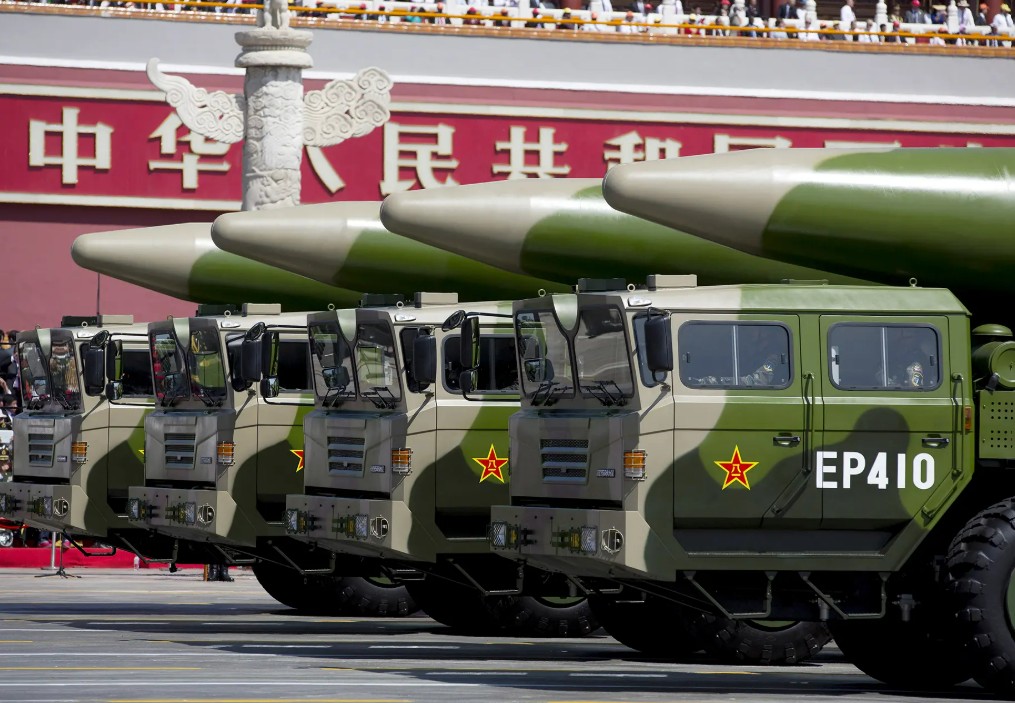
Lair and Duitsman assess that Saudi Arabia may already be producing Chinese-designed DF-15 solid-fuel missiles, and the expansion of Al-Duwadimi is likely linked to the production of the longer-range DF-21 or a similar system. Debris from DF-15A missiles found in Yemen indicates that Riyadh has already employed missiles purchased from China for decades.
The size of the casting pit is a key constraint on missile diameter: the engine must fit into the pit. The new building with larger pits allows either the production of larger-diameter missiles or an increase in output through additional pits.
The China trail
Saudi Arabia secretly acquired about 40 DF-3 liquid-fuel missiles from China in 1987, according to a declassified 1991 CIA assessment. Two of them were first displayed at a military parade in April 2014. According to FPRI, in 2021 sources confirmed that China was actively helping Saudi Arabia produce its own ballistic missiles. Riyadh is believed to have turned to Beijing because Washington has long restricted exports of longer-range missile systems.
Strategic calculus
Sasha Bruchmann, a research fellow at the International Institute for Strategic Studies (IISS) in London, notes that longer-range missiles would allow Saudi Arabia to strike Iran without risking American F-15 fighters against Iranian air defenses.
“You need a system to threaten what is sacred to Tehran if you don’t have the political will to send F-15s with JDAMs over Tehran,” he said. “Iran has an advantage because its missiles and drones can hit Saudi Arabia anywhere. The Saudis could close that gap somewhat.”
Risks: arms race and nuclear deal
The expansion of missile production could fuel a regional arms race. CNA analyst Decker Eveleth, who has tracked the construction of Al-Duwadimi, states: “This is being replicated across the Middle East. The same thing is happening in the UAE. The same thing is happening in Turkey. Everyone is doing this now.”
In addition, the plant’s expansion could strengthen bipartisan opposition in the US Congress to the Saudi-American civil nuclear agreement that would allow Riyadh to enrich uranium. Opponents of the deal argue that it lacks sufficient safeguards against the covert development of nuclear weapons; the kingdom denies such plans. Saudi Arabia states that its nuclear program is peaceful, but Crown Prince Mohammed bin Salman said in 2018 that the kingdom would develop nuclear weapons if Iran did.
The expansion of Al-Duwadimi is not a one-time breakthrough but the gradual materialization of a strategy begun years ago with Chinese assistance. Saudi Arabia is creating the capacity to produce missiles that would give it regional reach without dependence on American platforms and Washington’s political restrictions.
This changes the balance of power in the Gulf: Tehran can no longer count on Riyadh lacking means of reach other than aviation vulnerable to air defenses.
However, the price of this shift is not only a regional arms race but also the complication of the nuclear deal with the US. If Congress sees that Saudi Arabia is simultaneously building up its missile potential and obtaining the right to enrich uranium, opposition to the agreement could become insurmountable. The key question is whether the plant’s expansion will remain a purely defensive signal or become part of a broader program that could eventually lead to the kingdom acquiring nuclear weapons.