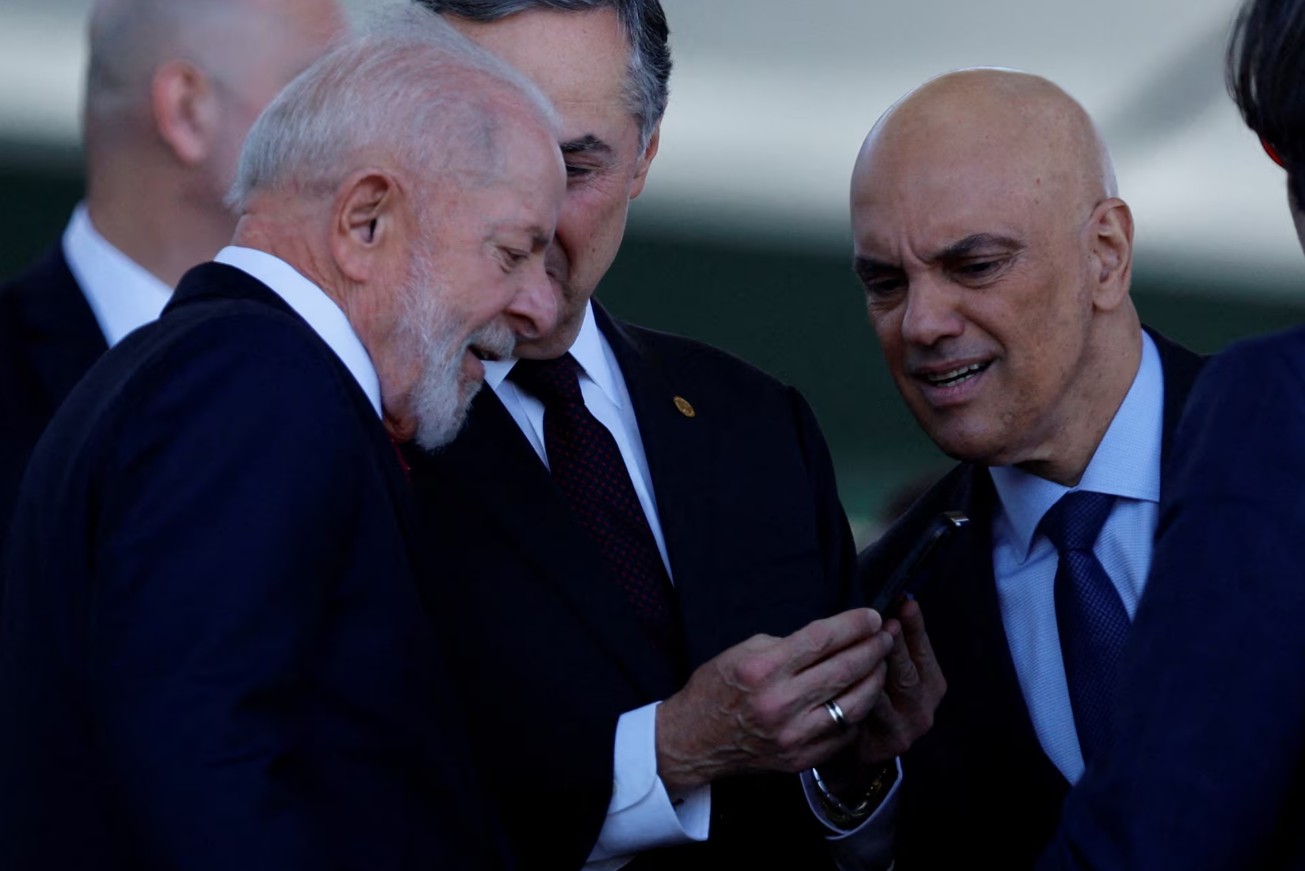
SÃO PAULO (Realist English). Brazil’s President Luiz Inácio Lula da Silva, who turns 81 on October 27, has become a smartphone owner for the first time in his life. According to Reuters, the device — a Samsung Galaxy S26 Ultra — was given to him by the governor of Piauí, Rafael Fonteles, on October 21 during a campaign rally in Belo Horizonte.
What happened
Lula, known for his dislike of mobile phones, publicly admitted that he had “never had” a personal device. “I’m becoming the selfie king, a real internet user,” he told supporters, hinting at new efforts to master social media. Earlier, in March 2026, he used a phone belonging to a photographer from the presidential administration to record a video.
The gift came with a promise: Lula will join the “Lula’s Army” (Exército do Lula) channel on WhatsApp, run by Congressman André Janones. At the time of the presentation, the channel had more than 7 million subscribers; the goal is 10 million. Janones had previously said that Lula would buy a phone when the channel reached 5 million. Now the commitment has been fulfilled.
Why it matters
Lula’s move into the online space is not just a personal adaptation but an acknowledgment of a structural shift in Brazilian politics. In the congressional elections held alongside the first round of the presidential vote, young “politician-influencers” dominated their races. Nicolas Ferreira (30) and Lucas Pavanato (28) of the Liberal Party each received more than 3 million votes; left-wing candidates Erika Hilton (33) and Ana Elisa Silva (21) — more than half a million each.
A candidate’s ability to convert millions of followers on TikTok, Instagram, and WhatsApp into votes has become a decisive factor. Lula, whose political career was built on union rallies and personal contact with workers, found himself in the position of catching up. After a disappointing first round in which he lost to Flávio Bolsonaro, his inner circle was joined by 21-year-old law student Ana Elisa Silva, who is helping him navigate the unfamiliar digital landscape. “Digital communication is not a generational privilege,” she told Reuters. “Age may affect familiarity with platforms, but it does not determine the ability to mobilize and build community.”
The runoff
The vote will take place on October 26. Lula, a former metalworker and union leader, is seeking an unprecedented fourth term. His rival is 45-year-old Senator Flávio Bolsonaro, son of former President Jair Bolsonaro, who surprised pollsters by taking first place in the first round. Bolsonaro Jr. actively uses his own YouTube channel for direct communication with voters.
A smartphone in the hands of an 81-year-old president is a symbol, not a technological revolution. Lula will not become an influencer in the week before the vote, and one WhatsApp channel will not compensate for years of absence from the digital environment. However, the very fact that he has publicly acknowledged the need to catch up shows that in Brazilian politics, traditional charisma and a union base no longer guarantee victory.An online presence has become as essential a tool as the ability to speak before a crowd once was. The question is whether Lula can convert the symbolic gesture into votes — or whether the runoff will show that the digital generation has already voted differently.