LONDON (Realist English). The British government is pushing a scheme that could turn tourist flows into a new class of financial assets. This is the so-called securitization of tourism — a mechanism in which future tax revenues from tourists are packaged into securities and become collateral for municipal borrowing.
The essence of the plan: introduce a tax on overnight visitors
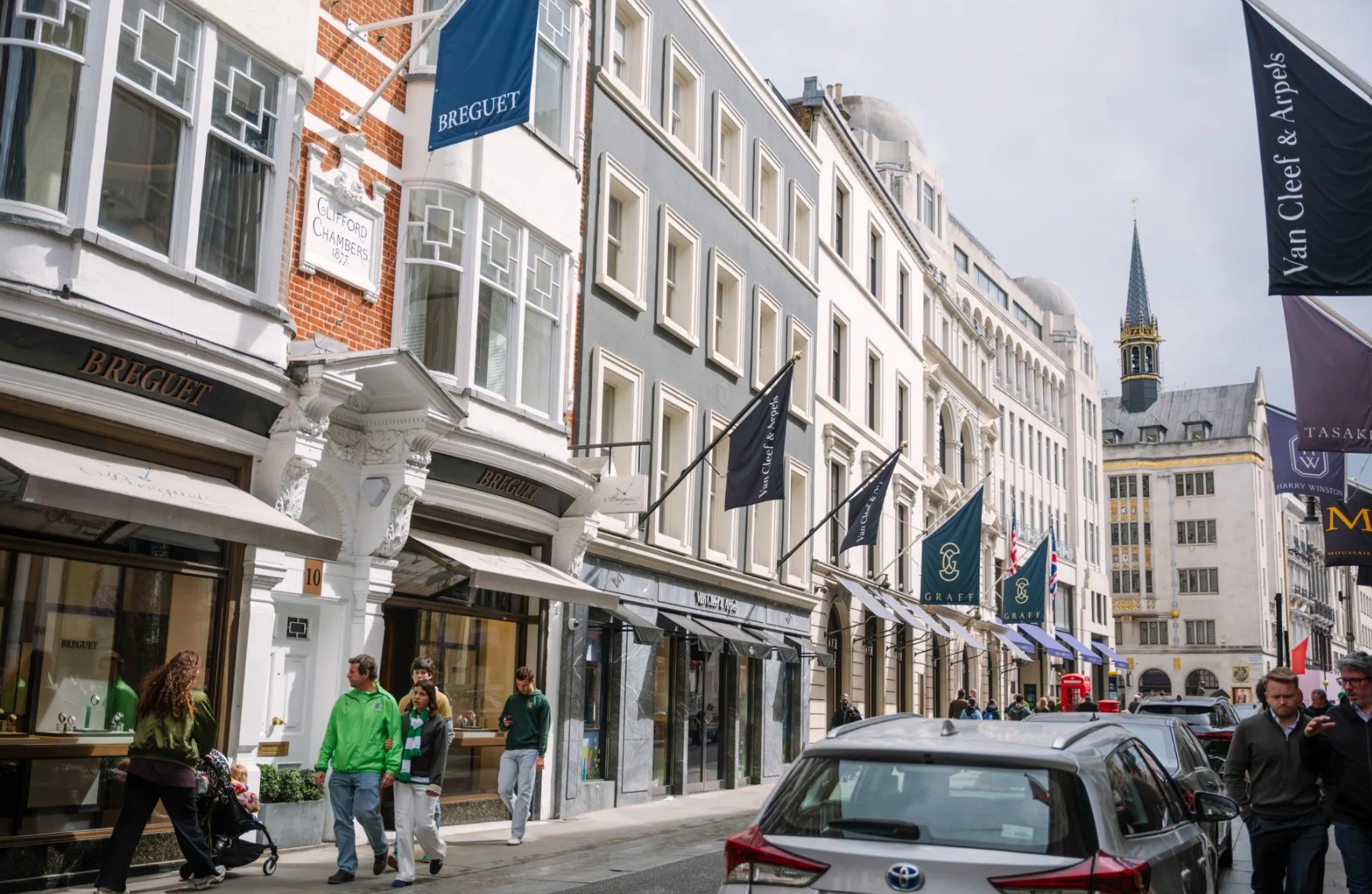
The plan is to introduce an Overnight Visitor Levy (OVL) in areas with high tourist traffic — such as London’s Bond Street and Oxford Street — and then use the expected revenues to issue municipal bonds. In effect, city authorities monetize future tourist spending into current borrowing capacity before the money actually reaches the treasury.
Who can introduce the tax and how it will work
Under the OVL scheme promoted by the government in 2026, powers to introduce the tax have been transferred to local strategic authorities in England. The key parameters are as follows:
— Who introduces it: Mayoral Strategic Authorities and foundational strategic authorities. Liverpool, London, and a number of other cities have already stated their intention to move in this direction.
— Who it applies to: registered accommodation providers — hotels, guesthouses, short-term apartment rentals. Stays with relatives and friends are not included.
— How it is calculated: charged as a percentage of accommodation cost, not a fixed sum, which allows low-cost accommodation to remain cheap.
— Rate ceiling: London Mayor Sadiq Khan has stated the rate “will not exceed 5%,” but the law itself does not establish a hard ceiling.
— Use of revenues: theoretically — for investment in the tourism economy, infrastructure, and cultural projects. However, there are no strict restrictions: the mayor can decide independently.
The policy was officially presented in a government response in September 2026. It is planned that in early 2028 local mayors will have to present concrete plans for using the funds.
How the securitization mechanism works
The path of so-called “tourism securitization” looks as follows:
- Creation of tax authority. Local authorities gain the right to tax overnight tourists.
- Expectation of cash flow. Based on historical tourist data, tax revenues for several years ahead are estimated.
- Issuance of debt. Municipal bonds are issued against this expected revenue stream as collateral or a source of repayment.
- Advance funding. Money raised from bonds can immediately be directed to infrastructure or marketing investment.
The economic meaning of this model is that tourist consumer spending ceases to be merely a one-off transaction and financially turns into an asset that can be drawn upon in advance.
It is precisely because retail rents on Bond Street are among the highest in the world that the cash flow from foreign tourists behind them is repeatedly capitalized: brands, by directly buying ownership of shops, in effect acquire an option on a continuous flow of visitors.
Debate around the model: development or shifting risks
Supporters believe this will allow Britain to align with Paris, Rome, New York, and other international metropolises that already levy a tourist tax. In their view, the scheme will give local authorities the budgetary space so scarce in the “post-pandemic era” and force tourists to contribute to the infrastructure they use.
Critics point out that the consequence of securitization will be shifting risks onto future tourists and taxpayers. If forecasts for tourist numbers prove wrong, losses will fall precisely on them.
Once an initially controlled “small surcharge” gains the ability to be financed through the bond market, its scale will be limited only by bond investors’ confidence in tourist numbers, not by the framework of democratic debate.
Britain already levies some of the highest effective rates among developed economies on corporate profits, incomes, and consumption. Adding another layer of “earmarked revenue collateral,” according to critics, only expands extraction rather than solving the problem of spending discipline.
Broader fiscal logic
This is not an isolated policy experiment. At the same time, the British government is promoting other tourism product development projects, such as the Connected Destinations Fund, and has set a goal of attracting 50 million international tourists by 2030.
The securitization of the tourist tax is an innovation on the financing side of this “growth narrative”: the bet is placed not on central budget allocations, but on institutional design that turns tourist flow into an asset class against which one can borrow.
The main tension here is that a city’s key competitiveness — for example, the retail experience of Bond Street — itself largely depends on tourists’ willingness to come and spend. Advance securitization of this cash flow means increased leverage on the bet about the continuity of future human flow — which is precisely the most unstable variable in the tourism economy.
Will Britain be able to turn tourists into a reliable financial asset? Or will the bond market one day discover that the stream it bet on has dried up?