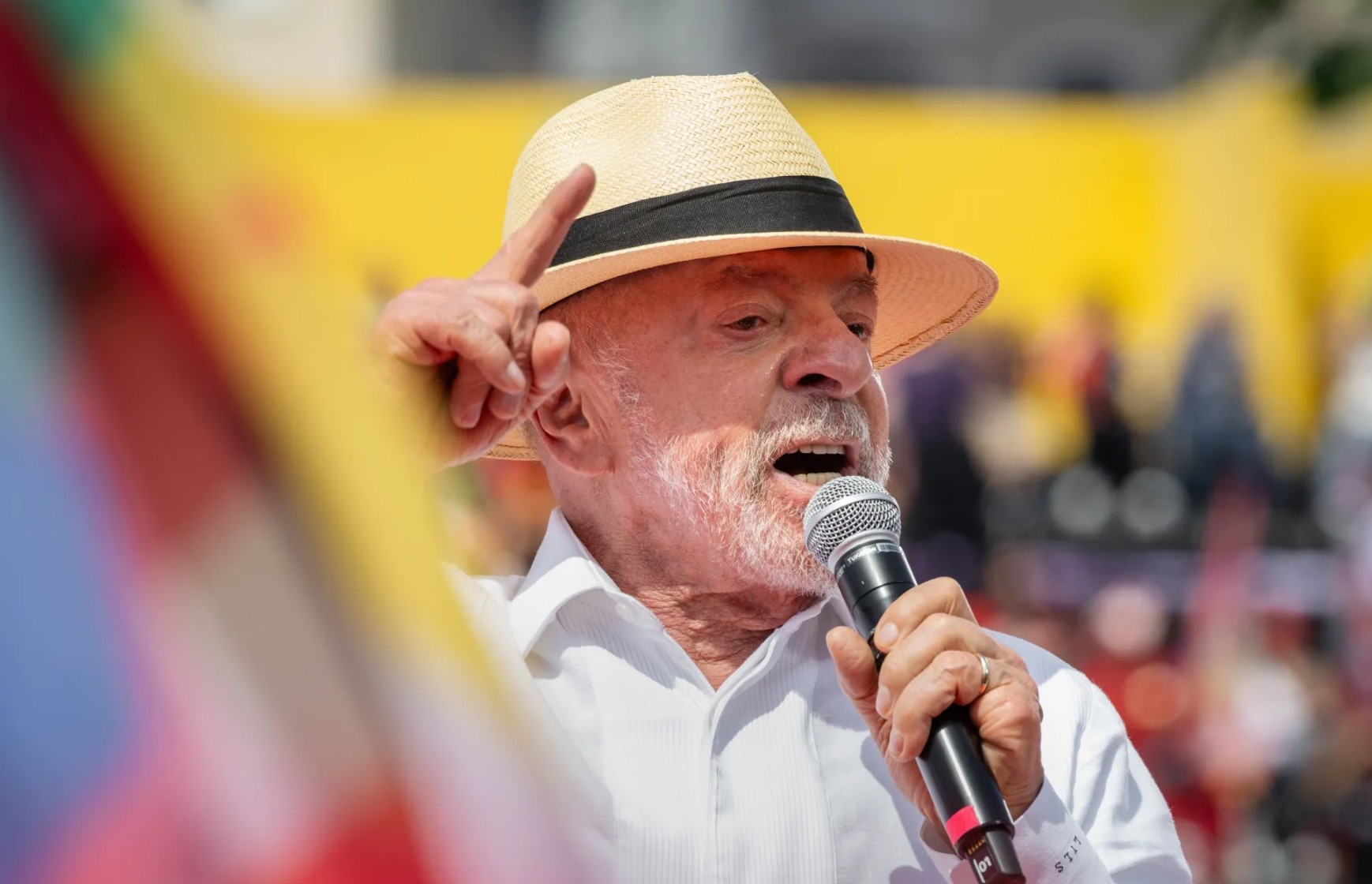
SÃO PAULO (Realist English). Brazil is entering the final phase of its presidential campaign. On Sunday, October 4, about 160 million voters will determine who will lead Latin America’s largest economy: incumbent President Luiz Inácio Lula da Silva, seeking a fourth term, or Senator Flávio Bolsonaro, son of former President Jair Bolsonaro.
Candidates: two poles
Lula, who turns 81 in October, represents the left and is one of the key figures in Latin American politics of the last two decades. His candidacy was officially nominated by the Workers’ Party (PT), with Geraldo Alckmin of the Brazilian Socialist Party (PSB) again as his vice-presidential running mate.
Flávio Bolsonaro, a 45-year-old senator from the Liberal Party (PL), positions himself as the continuer of his father’s course — Jair Bolsonaro, who is in prison and has been ruled ineligible.
At the party convention in July, Flávio presented the support of Argentine President Javier Milei, as well as a video address from Israeli Prime Minister Benjamin Netanyahu and an AI-generated message from his father.
Polls: technical tie
Data as of October 1 shows an extremely tight race. Datafolha gives Lula 42% against 38% for Flávio in the first round — within the double margin of error. Real Time Big Data records a nearly mirror image: 45% for Lula and 46% for Flávio. In a hypothetical second round, Datafolha shows 48% against 45% in favor of the incumbent president, also within a technical tie.
Quaest confirms the trend: Lula fluctuates in the 37–39% range, Flávio — 33–34%, the gap is minimal.
Funding and support
Lula’s campaign received 77.3 million reais, of which 75 million are transfers from the PT national leadership from the Electoral Financing Fund. Flávio’s campaign has 61.7 million reais, of which 55.2 million are from the PL.
Among celebrities, Lula has the advantage: nearly 150 cultural and artistic figures have publicly supported him, including Ivete Sangalo, Chico Buarque, Caetano Veloso, and Maria Bethânia. Flávio’s support is more modest — among others, country singer Amado Batista and TV host Penélope Nova.
Background: division and fatigue
The campaign is taking place amid deep political division. Brazil remains one of the last left-wing strongholds in the region, while in Argentina, Chile, and other countries right-wing forces backed by Donald Trump have come to power.
Both candidates have a high rejection rate — 45% each. Polls record a significant share of voters disappointed with all candidates. “This is a two-pole polarization that leaves no space for an alternative,” analysts note.
If no one wins an absolute majority on October 4, the second round will be held on October 25. Given current ratings, the likelihood of a second round is high.
Will Lula be able to mobilize the left-wing electorate for a fourth term? Or will Brazil follow the regional trend and return the right to the presidential seat?